





The Old Playbook Is Outdated
For decades, the path to a successful career in India's booming IT sector was clear: learn to code, and learn it well. Proficiency in languages like Java, Python, or C++ was a passport to a stable job. Companies hired armies of engineers to write, test,
and maintain lines of code, building the digital infrastructure for global clients. Repetitive tasks like basic coding, manual testing, and data entry formed the bedrock of many entry-level roles. This model made India an undisputed global tech hub. But the rise of generative AI is now automating many of these routine functions. AI tools can now write clean code, generate test cases, and handle basic debugging, leading to a fundamental change in the industry. The era of valuing pure technical execution above all else is drawing to a close.
AI as a Powerful Co-worker
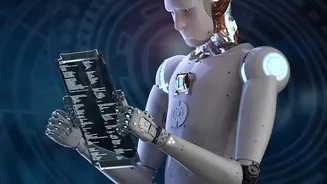
Instead of viewing AI as a job replacement, it’s more accurate to see it as a powerful collaborator. The consensus among experts is that while AI will displace millions of jobs, it will also create millions of new ones. The shift is from reactive problem-solving to proactive strategy. Think of AI as a super-intern: it can handle the grunt work, freeing up human developers to focus on higher-value tasks. For instance, AI can draft boilerplate code or optimize a database, but it can’t understand a client’s business frustrations or design a system that fits a company's unique culture. This is where the human element becomes more critical than ever. The role of the IT professional is moving from being a creator of code to an orchestrator of systems, a supervisor who directs and refines AI-generated work.
The New Premium: Context and Judgment
The headline of this new era is the shift from 'coding' to 'context'. Context is the blend of skills that AI cannot replicate: business acumen, domain expertise, and strategic thinking. It’s about understanding why a piece of software is being built, not just how to build it. A developer in the financial sector who understands regulatory compliance, or one in healthcare who grasps patient data privacy, is infinitely more valuable than someone who only knows a programming language. Employers are increasingly seeking this combination of technical and functional knowledge. The most secure and high-paying jobs are those that demand human judgment, such as site reliability engineers, security specialists, and platform architects who make high-stakes decisions. Communication, critical thinking, and collaboration are the new power skills that will define the next generation of technology careers.
Emerging Roles in the AI-Powered World
As old roles evolve, entirely new ones are being born. The demand for AI-specific talent in India is growing much faster than the available supply. Beyond the much-hyped 'Prompt Engineer', we are seeing a surge in demand for roles like AI/AIOps Integration Specialist, who embeds AI agents into existing IT systems. Other emerging jobs include AI Ethicist, ensuring fairness and transparency, and AI Solutions Security Analyst. Forward Deployed Engineers are also in high demand; these professionals act as consultants who embed within client companies to build custom AI solutions. These roles require a mix of engineering, strategic consulting, and communication skills, reflecting the broader trend away from siloed technical expertise.
Future-Proofing Your Career in India's IT Sector
For the millions of professionals in India's IT workforce, the message is not to fear AI, but to adapt to it. The key is continuous learning. Indian IT giants are already investing heavily in reskilling their workforce. Initiatives like NASSCOM's FutureSkills Prime are aiming to create a 'digital talent nation' ready for the new landscape. For individuals, the path forward involves several steps. First, develop strong AI literacy to understand what these tools can and cannot do. Second, cultivate domain expertise in a specific industry like finance, healthcare, or retail. Third, hone your 'human' skills—problem-solving, creative thinking, and communication. Professionals who can bridge the gap between technical possibility and business reality will not just survive the AI revolution; they will lead it.