





A New Dawn for Orbiting Labs
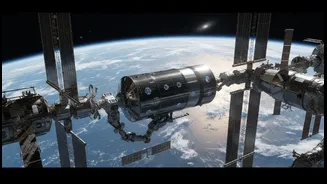
For over two decades, the International Space Station (ISS) has been the world's premier laboratory in low-Earth orbit, a symbol of global cooperation and a hub for groundbreaking science. However, the aging outpost is costly to maintain—consuming about
a third of NASA's annual human spaceflight budget—and access for researchers is limited and highly competitive. With its operational life concluding at the end of this decade, NASA is shifting from being an owner and operator to becoming just one of many customers in a new commercial marketplace. Through its Commercial Low-Earth Orbit Destinations (CLD) program, NASA is funding and partnering with private companies to develop replacements, ensuring there's no gap in U.S. presence in orbit. The goal is to create a robust orbital economy where services are purchased from multiple providers, driving down costs and opening up space to a wider array of users.
The Heirs to the ISS Throne
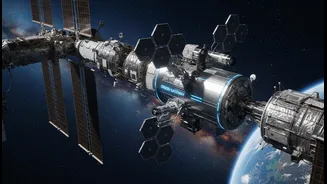
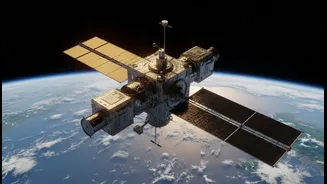
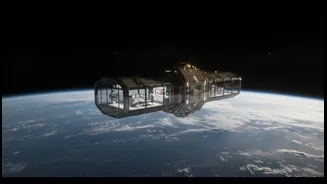
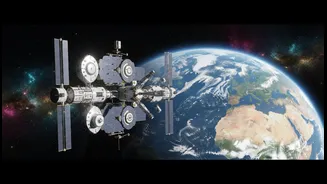
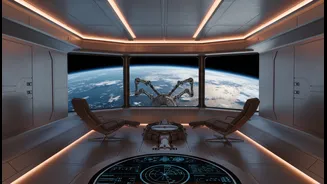
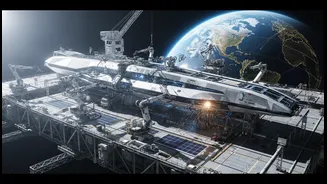
Several major players are racing to build the next generation of orbital habitats. Axiom Space is developing a modular station, with its first components planned to attach to the ISS before detaching to fly independently as early as 2028. Another major contender is Starlab, a joint venture between Voyager Space and Airbus, which is designing a station with the capacity for over 400 experiments per year, matching the ISS. Then there's Orbital Reef, a concept from Blue Origin and Sierra Space, envisioned as a "mixed-use business park in space" that will cater to researchers, manufacturers, and even space tourists. These ventures, along with others like Vast, are not just replacing the ISS; they are building a new commercial infrastructure in the sky, complete with advanced robotics, modern labs, and even partnerships with brands like Hilton.
Democratizing Science in the Stars
The most significant change these commercial stations promise is the democratization of space access. For decades, microgravity research has been the domain of national space agencies and a handful of well-funded institutions. A commercial marketplace is expected to lower the barrier to entry significantly. Universities, smaller countries, startups, and private corporations will be able to lease space and crew time, much like renting lab space on Earth. This shift could unleash a wave of innovation. Instead of a single, monolithic program, a competitive environment with multiple destinations will offer more flexibility and potentially lower costs, allowing a more diverse group of scientists and engineers to pursue projects that were once out of reach.
From Pure Science to Commercial Products
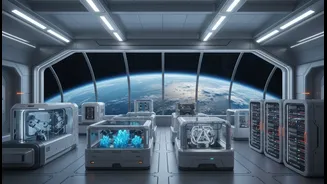
While the ISS has focused primarily on fundamental research, commercial stations are being designed with a strong emphasis on industrial applications. The unique microgravity environment allows for breakthroughs in areas like pharmaceuticals, materials science, and biotechnology that are impossible on Earth. For example, growing protein crystals in space can lead to better drug designs, and manufacturing new alloys without the interference of gravity can result in superior materials. Companies are already booking space on these future stations for biopharma research and even in-space manufacturing, like 3D printing organs. This marks a transition from space research as a government-funded pursuit to a commercially viable enterprise, where discoveries in orbit lead directly to new products on the ground.
Navigating the Final Frontier's Hurdles
The transition to a fully commercialized low-Earth orbit is not without its challenges. Building and operating a space station is an enormously expensive and complex undertaking, and creating a sustainable business model is a major hurdle. These companies are making a massive bet on a future market that is still developing. There are also concerns about ensuring a seamless transition from the ISS to avoid any gap in U.S. orbital presence, especially as China expands its own Tiangong space station. In early 2026, NASA briefly considered altering its strategy due to concerns about the business case, but after industry pushback, it reaffirmed its commitment to supporting free-flying commercial stations. The success of this new era will depend on consistent government support, continued private investment, and the growth of a real market for in-space activities beyond just government contracts.