




Create a Dry and Cosy Haven
The constant dampness can make your home uncomfortable for a cat that is sensitive to environmental changes. The first step is to secure their environment. Ensure balconies and windows are safely secured to prevent accidental falls during a downpour.
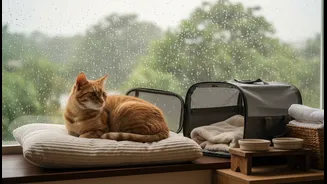
Designate a warm, dry spot away from drafts and damp walls. A simple cardboard box lined with a dry, soft blanket can become a perfect hideaway. For senior cats, whose joints may be more sensitive to the cold, a warm water bottle wrapped in a cloth can provide extra comfort in their bed. Regularly wash and, more importantly, thoroughly dry their bedding to prevent the growth of mould and mildew, which can cause respiratory issues.
Prioritise Health and Hygiene
Humidity is a breeding ground for bacteria, fungi, and parasites like fleas and ticks. This makes grooming and hygiene non-negotiable. If your cat gets wet, even just its paws, dry them thoroughly with a towel to prevent skin infections. Regular brushing is crucial, especially for long-haired breeds, to prevent matting and trap moisture that leads to skin problems. Pay special attention to their paws; clean them with a soft cloth after they've been on a damp balcony or floor. Also, clean their ears weekly with a vet-approved solution, as the dampness can lead to ear infections. Keep their litter box impeccably clean and in a well-ventilated area to manage odours and bacterial growth.
Adjust Diet and Hydration
A cat's appetite and dietary needs can change during the monsoon. Reduced activity might mean they need fewer calories, so adjust portions accordingly. Humidity can also make wet food spoil faster, so it's best to serve smaller, fresh meals. Never serve food straight from the fridge; lukewarm meals are more appealing. A balanced, protein-rich diet will help boost their immune system. Some vets suggest a fibre-rich diet to maintain good digestive health during this time. Most importantly, ensure they have constant access to clean, fresh drinking water. Water-borne diseases are common, so consider boiling their drinking water to be extra safe.
Combat Indoor Boredom
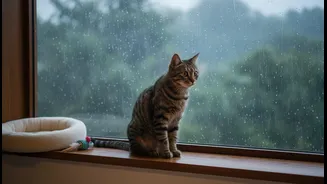
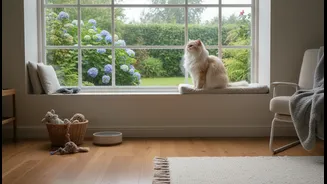
With outdoor adventures off the table, your cat may become bored or restless. It’s essential to provide mental and physical stimulation indoors. Schedule a few short play sessions throughout the day using feather wands or laser pointers to mimic hunting. Rotate their toys every few days to keep things interesting. Puzzle feeders are an excellent way to engage their minds and make them work for their treats. You can also create vertical spaces for them to explore, like cat trees or secure shelves. Even a simple cardboard box or a window perch can provide hours of entertainment as they watch the rain from a safe distance.
Manage Thunderstorm Anxiety
Loud thunder and bright lightning can be terrifying for many cats. They are highly sensitive to changes in atmospheric pressure and sound, so their anxiety may start even before the storm hits. Create a 'safe cave' for them in a quiet, interior room or closet where sounds are muffled. Close the curtains to block out lightning flashes and play soft, calming music to drown out the thunder. Pheromone diffusers can also help create a sense of calm. Never force your cat out of its hiding spot. Let them decide what feels safest, whether it's hiding alone or seeking comfort by sitting near you.
Prepare an Emergency Kit
In areas prone to severe monsoons, power cuts or even flooding can occur. It's wise to have an emergency kit ready for your pet. This should include a few days' supply of their food (both wet and dry), bottled water, any medications they take, a spare litter box with litter, a first-aid kit, and copies of their vaccination records. Having a secure carrier is also essential in case you need to evacuate quickly. This preparation ensures you can care for your cat even if you're temporarily cut off from supplies.