







A 'Hot Jupiter' Playing Hide-and-Seek
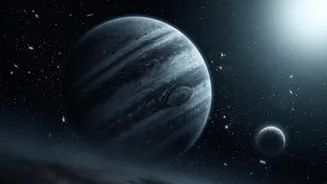
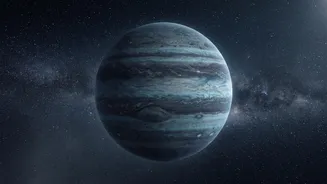
TOI-2535 b is what astronomers call a 'hot Jupiter'—a gas giant similar in size to our own Jupiter, but orbiting incredibly close to its star. It completes a full lap around its sun in just over eight days, a blistering pace compared to Mercury's 88-day
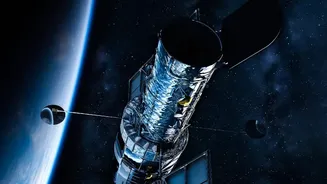
year. For seven years, from 2019 to early 2026, NASA's Transiting Exoplanet Survey Satellite (TESS) watched this planet faithfully cross in front of its star, an event known as a transit. But then, something strange happened. The planet's scheduled appearances became erratic, arriving up to six hours early or late, before it stopped showing up altogether in March 2026.
The Science of Finding Planets
To understand why this is so peculiar, it helps to know how we find most exoplanets. The transit method is the most common technique. Telescopes like TESS stare at a star and measure its brightness with incredible precision. When a planet passes directly between the star and Earth, it blocks a tiny fraction of the star's light, causing a minuscule, temporary dip in its brightness. This requires a perfect alignment of the star, the planet, and our point of view. For years, TOI-2535 b was perfectly aligned for us to see its transits. Now, it is not.
The Culprit: An Unseen Neighbor
So, where did the planet go? It hasn't been destroyed or flung out of its system. Instead, astronomers believe it has been pulled into a cosmic game of hide-and-seek by an unseen accomplice: another large planet in the same system. This hidden neighbor's gravity is tugging on TOI-2535 b, causing its orbit to wobble like a spinning top that's about to fall over. This phenomenon, known as orbital precession, has slowly tilted TOI-2535 b's orbit just enough that it no longer passes in front of its star from our perspective on Earth. Researchers say it's the most extreme and rapid example of this orbital tilt ever witnessed.
A Decades-Long Wait
This cosmic dance means that TOI-2535 b has effectively disappeared from our view. Astronomers predict that its orbit will not wobble back into a transiting alignment for another 30 to 50 years. While the main attraction is now hidden, there's a silver lining. Scientists believe the gravitational data could help them locate the unseen planetary companion, which might even move into a transiting position sooner. The strange behaviour of this system challenges our conventional 'clockwork' view of the universe, where planetary orbits are thought to be regular and predictable.
Why This 'Missing' Planet Matters
The case of TOI-2535 b is more than just a celestial magic trick. It provides crucial clues about how planetary systems form and evolve. The existence of two massive planets so close to each other, locked in a gravitational tug-of-war, suggests a different formation history than what is typically assumed for hot Jupiters. These planets are thought to form far from their star and migrate inward. The relatively stable, though wobbly, orbits in this system suggest a slow, spiraling migration rather than a violent, chaotic one. Studying these unusual dynamics helps scientists refine their models of a process that happens across our galaxy.