


What Exactly Is Tadka?
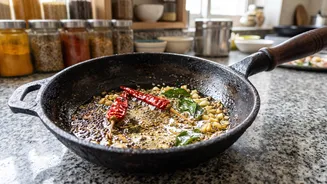
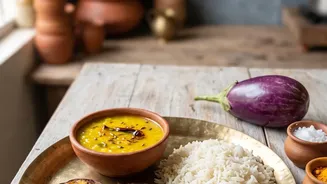
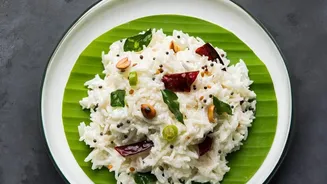
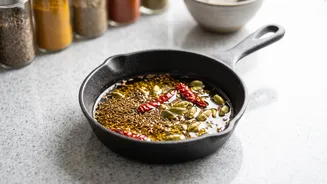
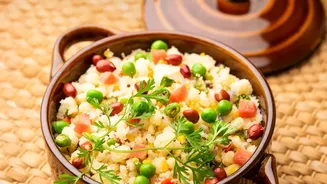
At its heart, tadka — also called chhaunk, vaghar, or tempering — is the simple act of briefly frying whole or ground spices in hot oil or ghee. This aromatic fat is then poured over a finished dish, such as dal, sabzi, or chutney. This final flourish
does more than just garnish the food; it infuses the entire meal with a complex layer of flavour and aroma that wouldn't be possible if the spices were simply stirred in raw. It is both a finishing touch and a foundational flavour-building technique, representing the science and soul of Indian cooking in a single, sizzling step.
The Science of Flavour Extraction
So, how does that sizzle create so much flavour? The secret lies in chemistry. Many of the aromatic compounds that give spices like cumin, mustard seeds, and chillies their distinct character are fat-soluble, not water-soluble. This means their flavour molecules dissolve in oil, but not in water. When you add these spices to hot fat, the oil acts as a perfect solvent, pulling out those essential oils and flavour compounds from within the spice. This process is often called 'blooming'. The heat also triggers chemical reactions, like the Maillard reaction and caramelization, which create new, deeper, and more roasted flavour notes that weren't present in the raw spices. The infused oil then efficiently distributes this concentrated flavour throughout the entire dish, ensuring every bite is aromatic and delicious.
Unlocking The Power of Spices
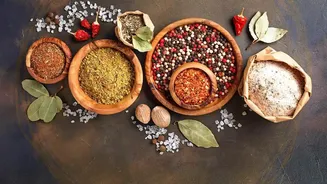
Different spices react uniquely to the hot oil. Mustard seeds pop, signalling they’ve released their pungent flavour. Cumin seeds turn a rich brown, developing a nutty, earthy aroma. Asafoetida (hing), which has a strong, sulphurous smell when raw, mellows into a pleasant, onion-like flavour that is crucial for many lentil dishes. The heat doesn't just extract flavour; it transforms it. By blooming spices in fat, you are essentially conducting a rapid, controlled chemical experiment to build layers of complexity, turning simple ingredients into a symphonic meal.
More Than Flavour: A Boost for Digestion
The wisdom behind tadka extends beyond taste. Ayurveda has long celebrated spices for their digestive properties, and modern science is beginning to understand why. Many spices used in tadka can help support the digestive process. For example, cumin has been studied for its potential to stimulate the activity of digestive enzymes. Turmeric, another common ingredient, contains curcumin, which is known to stimulate bile production from the liver, aiding in the digestion of fats. Similarly, asafoetida is traditionally used to reduce gas and bloating. The process of tempering in fat is key here as well. It makes the beneficial compounds in these spices more 'bioavailable'—meaning, easier for our bodies to absorb and use.
The Ultimate Digestive Duo
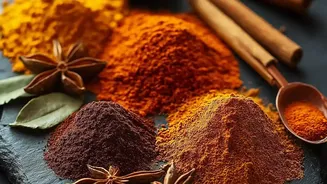
Perhaps the most famous example of this enhanced bioavailability is the combination of turmeric and black pepper. Turmeric’s star compound, curcumin, is notoriously difficult for the body to absorb on its own. However, piperine, the active component in black pepper, has been shown to increase curcumin’s bioavailability by as much as 2000%. Since both curcumin and piperine are fat-soluble, preparing them together in a hot oil tadka is an incredibly effective delivery system. It ensures that you are not only getting the vibrant colour and earthy flavour of turmeric but also maximizing its potential wellness benefits, a principle that has been intuitively practiced in Indian kitchens for centuries.