



The Bodyline Series (1932-33)
To counter the genius of Australian batsman Don Bradman, England's captain Douglas Jardine devised a brutal tactic: have his fast bowlers aim at the batsmen's bodies. Known as 'Bodyline', the strategy involved fast, short-pitched bowling with a packed
leg-side field, designed to intimidate and injure. It led to bruised bodies, a fractured skull for one Australian player, and so much outrage that it almost caused a diplomatic rift between Australia and England. While technically within the rules at the time, Bodyline was seen as a violation of sportsmanship and led to law changes restricting such aggressive field placements.
The Underarm Bowling Incident (1981)
In a One-Day International, New Zealand needed six runs off the final ball to tie the match against Australia. To ensure they couldn't, Australian captain Greg Chappell instructed his brother, Trevor, to bowl the last ball underarm, rolling it along the ground. The batsman, Brian McKechnie, blocked the ball and threw his bat down in disgust. While legal at the time, the act was universally condemned as the ultimate act of poor sportsmanship, with even the then-Prime Minister of New Zealand calling it an "act of cowardice." The incident was so infamous that underarm bowling was subsequently banned in one-day cricket.
Hansie Cronje's Match-Fixing Confession (2000)
South African captain Hansie Cronje was one of the most respected figures in world cricket until Delhi Police revealed they had recordings of him conspiring with a bookie. After initial denials, Cronje confessed in a stunning admission that he had accepted money from bookmakers for forecasting results and sharing information. He admitted to taking thousands of dollars, shattering his reputation and the innocence of the sport. The scandal led to a life ban for Cronje and exposed the deep roots of corruption in the game, revealing that he had been first introduced to a bookie by former Indian captain Mohammad Azharuddin.
Mohammad Azharuddin’s Life Ban (2000)
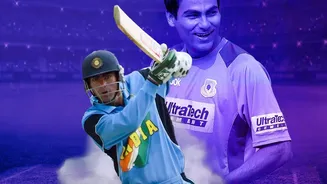
One of India’s most elegant batsmen and a successful captain, Mohammad Azharuddin’s career ended in disgrace when he was implicated in the same match-fixing scandal as Hansie Cronje. Following a CBI report, the BCCI banned him for life for his alleged role in match-fixing. Cronje had claimed Azharuddin introduced him to bookies. Azharuddin’s ban left him stranded on 99 Test matches. Though an Indian court later lifted the ban in 2012, calling it illegal, the scandal remains a dark chapter for Indian cricket.
Pakistan's Spot-Fixing Scandal (2010)
During a Test match against England at Lord's, a British tabloid uncovered a spot-fixing plot involving three Pakistani players: captain Salman Butt, Mohammad Asif, and the young prodigy Mohammad Amir. An undercover journalist posing as a bookie had paid an agent to have the bowlers deliver no-balls at specific, pre-arranged times. The bowlers did exactly as promised. The scandal was proven with video evidence and led to criminal convictions and jail time for the players, as well as lengthy bans from cricket.
The IPL Spot-Fixing Scandal (2013)
The glamour and riches of the Indian Premier League were tainted when Delhi Police arrested three Rajasthan Royals players—S. Sreesanth, Ajit Chandila, and Ankeet Chavan—for spot-fixing. The most famous of them, Indian international Sreesanth, was accused of agreeing to concede a set number of runs in an over for money from bookies. The investigation widened to include team officials and owners, leading to the suspension of entire franchises like Chennai Super Kings and Rajasthan Royals for two years. Sreesanth was initially handed a life ban by the BCCI.
Sandpapergate (2018)
In a Test match against South Africa, Australian batsman Cameron Bancroft was caught on camera attempting to alter the condition of the ball using a small piece of yellow sandpaper hidden in his trousers. The investigation revealed a premeditated plan involving Bancroft, captain Steve Smith, and vice-captain David Warner. The trio admitted to the plot, causing a massive outcry in Australia and around the world. Smith and Warner were banned for a year, and Bancroft for nine months, in one of the biggest and most embarrassing cheating scandals in modern sport.
The 'Monkeygate' Affair (2008)
A heated Test between India and Australia in Sydney exploded into a major international incident over an alleged racial slur. Australian all-rounder Andrew Symonds accused Indian spinner Harbhajan Singh of calling him a "monkey". Harbhajan vehemently denied it, claiming he used a common Hindi phrase that was misheard. With no definitive audio proof, it became one team's word against another. Harbhajan was initially banned for three matches, a decision that prompted the Indian team to threaten to abandon the tour. The charge was eventually downgraded, but the incident created deep animosity between the two powerful cricketing nations.
Warne and Waugh's Bookie Payments (1994)
Years before match-fixing became a global headline, two of Australia's biggest stars, Shane Warne and Mark Waugh, were secretly fined by their own board for taking money from an Indian bookmaker. During a tour of Sri Lanka in 1994, they accepted payments in exchange for providing information about pitch and weather conditions. The Australian Cricket Board kept the fines secret for four years, and the cover-up caused as much outrage as the original offense when it finally became public. Both players described their actions as "naive and stupid."
Pakistan's Oval Test Forfeiture (2006)
In over a century of Test cricket, only one match has ever ended in a forfeiture. It happened at The Oval in London when umpires accused the Pakistani team of ball-tampering and awarded five penalty runs to England. Feeling their honour had been questioned, the Pakistani team, led by captain Inzamam-ul-Haq, refused to take the field after the tea break in protest. After a long wait, the umpires removed the bails and declared England the winners. In a strange twist, the ICC later cleared Pakistan of the ball-tampering charge but upheld the forfeiture.