




More Than Just a ‘Goldilocks’ Planet
For decades, the search for life has focused on the “habitable zone,” often called the “Goldilocks zone.” This is the orbital band around a star where temperatures are just right—not too hot and not too cold—for liquid water to exist on a planet’s surface.
Liquid water is considered a key prerequisite for life as we know it. However, scientists have long known that location alone isn't enough. A planet’s ability to actually sustain liquid water and protect potential life depends almost entirely on whether it has a substantial atmosphere. An atmosphere acts like a planetary shield and climate regulator, trapping heat, distributing it around the globe, providing air pressure to keep water from boiling away into space, and blocking harmful stellar radiation. Without it, a perfectly placed planet is just a barren, lifeless rock.
The Great Escape: A Planet's Biggest Threat
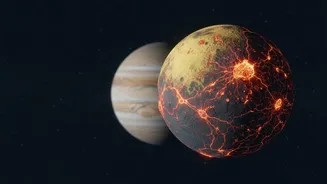
The biggest challenge for a rocky planet, especially one smaller than Earth, is holding onto its atmosphere over billions of years. A planet’s host star, while providing life-giving warmth, is also a source of intense radiation and stellar winds. This constant bombardment can slowly, or sometimes violently, strip a planet’s atmosphere away, a process known as atmospheric escape. This is particularly true for planets orbiting red dwarf stars. While red dwarfs are the most common type of star in our Milky Way galaxy, they are notoriously active, unleashing powerful flares that can erode the atmospheres of their nearby planets. Until recently, many scientists worried that most rocky worlds around these stars would be found to be bare rocks, significantly narrowing the places we might find a habitable environment.
Webb’s Telltale Clues in Starlight
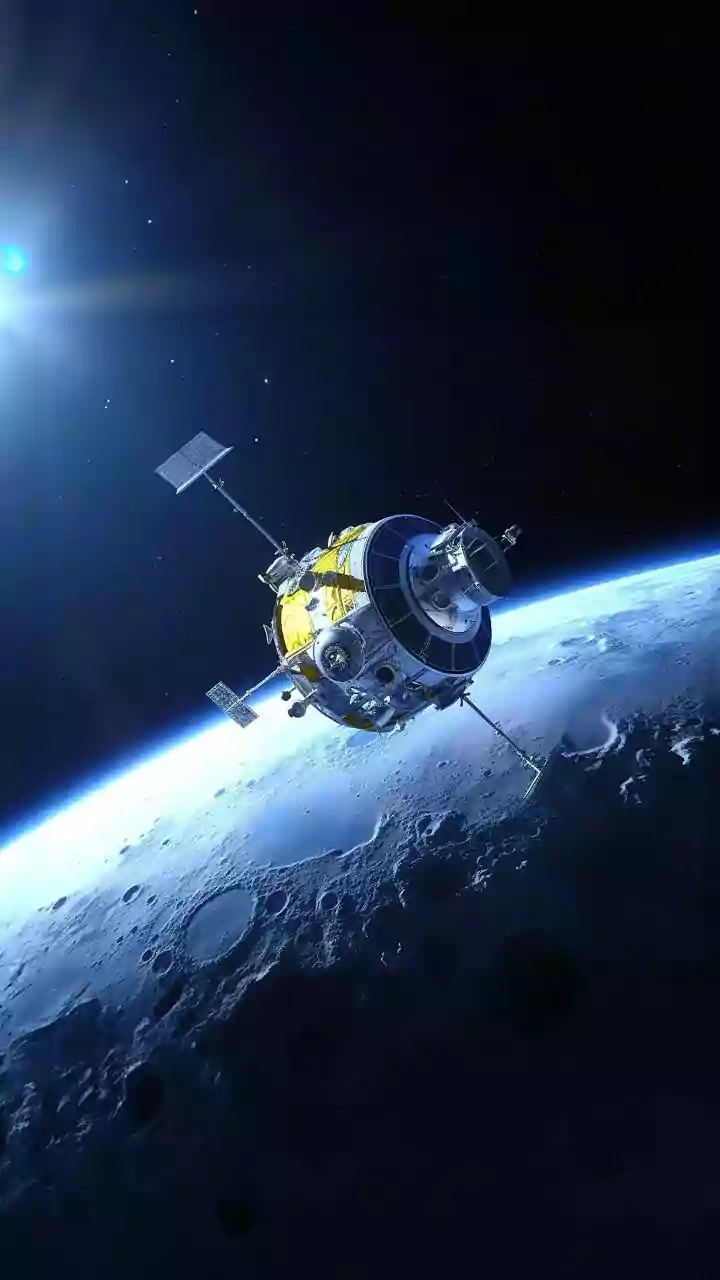
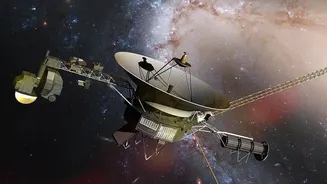
This is where the James Webb Space Telescope (JWST) has become a game-changer. Using a technique called transmission spectroscopy, the telescope provides an unprecedented look into the chemistry of distant worlds. As an exoplanet passes in front of its star from our point of view, a tiny fraction of the starlight filters through the planet's atmosphere. The gases in that atmosphere absorb specific colours, or wavelengths, of light. By analysing the starlight that reaches its sensitive instruments, JWST can identify the chemical fingerprints of elements like water, carbon dioxide, and methane. Crucially, it can also detect gases like helium as they are actively escaping the planet's gravitational pull, giving scientists a direct view of atmospheric loss in action.
A Breakthrough for Rocky Worlds
Recent discoveries have shown just how powerful this capability is. In a landmark finding from mid-2026, astronomers using JWST confirmed the presence of an atmosphere around a rocky “super-Earth” named LHS 1140b, located 48 light-years away. This planet is particularly significant because it orbits within its red dwarf star’s habitable zone. By detecting helium escaping from its upper atmosphere, scientists proved that the planet has managed to retain a substantial atmosphere for over 3 billion years, despite the harsh stellar environment. This was a huge moment. After several other rocky planets around similar stars were found to be bare, this discovery provided the first strong evidence that a rocky world in a habitable zone could indeed hold onto its air, pushing back the known boundaries of habitability.
Redefining the Search for Another Earth
By studying both planets that have lost their atmospheres and those that have kept them, JWST is helping scientists build a more complete picture of planetary evolution. For instance, dramatic observations of gas giants like WASP-107b, a so-called “super-puff” planet, show it shedding its atmosphere in a massive trail of gas that actually precedes it in orbit. While not a rocky world, studying this extreme process helps refine the physical models that are then applied to smaller, Earth-like planets. This new wealth of data is transforming the search for life from a wide, speculative hunt into a strategic mission. Scientists can now create prioritized shortlists of the most promising candidates for closer study—not just planets in the right place, but planets that have proven they have the atmospheric resilience to be truly habitable.