



The Cosmic Curtain
Imagine trying to watch a grand celestial show, but a thick curtain is drawn across the stage. For astronomers using traditional telescopes that see visible light, this has been the reality for centuries. Vast clouds of interstellar dust, composed of tiny
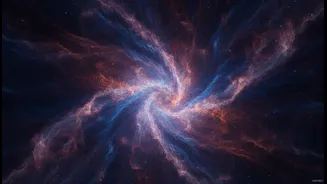
particles of carbon, silicates, and other elements, drift between the stars. These clouds absorb and scatter starlight, effectively blocking our view of what lies within and beyond them. Important regions, such as the glowing heart of our own Milky Way galaxy or the chaotic nurseries where new stars are born, have remained shrouded in darkness, their mysteries locked away behind this cosmic dust.
A New Way of Seeing
The game-changer is infrared light. While visible light has wavelengths that are easily blocked by dust particles, infrared light's longer wavelengths can slip past them more easily. Think of it like the difference between trying to see through thick smoke with your eyes versus using a thermal camera that detects heat. The thermal camera pierces through the smoke, revealing the scene behind it. Infrared telescopes, like NASA's James Webb Space Telescope (JWST), do something similar for the cosmos. They collect the infrared radiation that passes through the dust clouds, unveiling a hidden universe of stars and galaxies that were previously invisible to us.
Dust as a Storyteller
But infrared astronomy does more than just peer through the dust; it allows us to study the dust itself. These particles are not just passive blockers of light. Warmed by nearby stars, the dust itself glows, emitting its own infrared radiation. By analysing this glow, astronomers can determine the dust's temperature, density, and chemical composition. This information is a treasure trove. It reveals the raw materials available for building celestial bodies. The dust grains are the very seeds from which future stars and planets will form, making them active participants in the cosmic cycle of creation.
Unveiling Stellar Nurseries
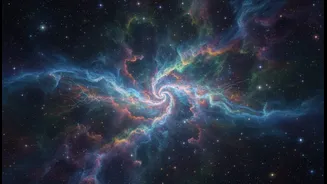
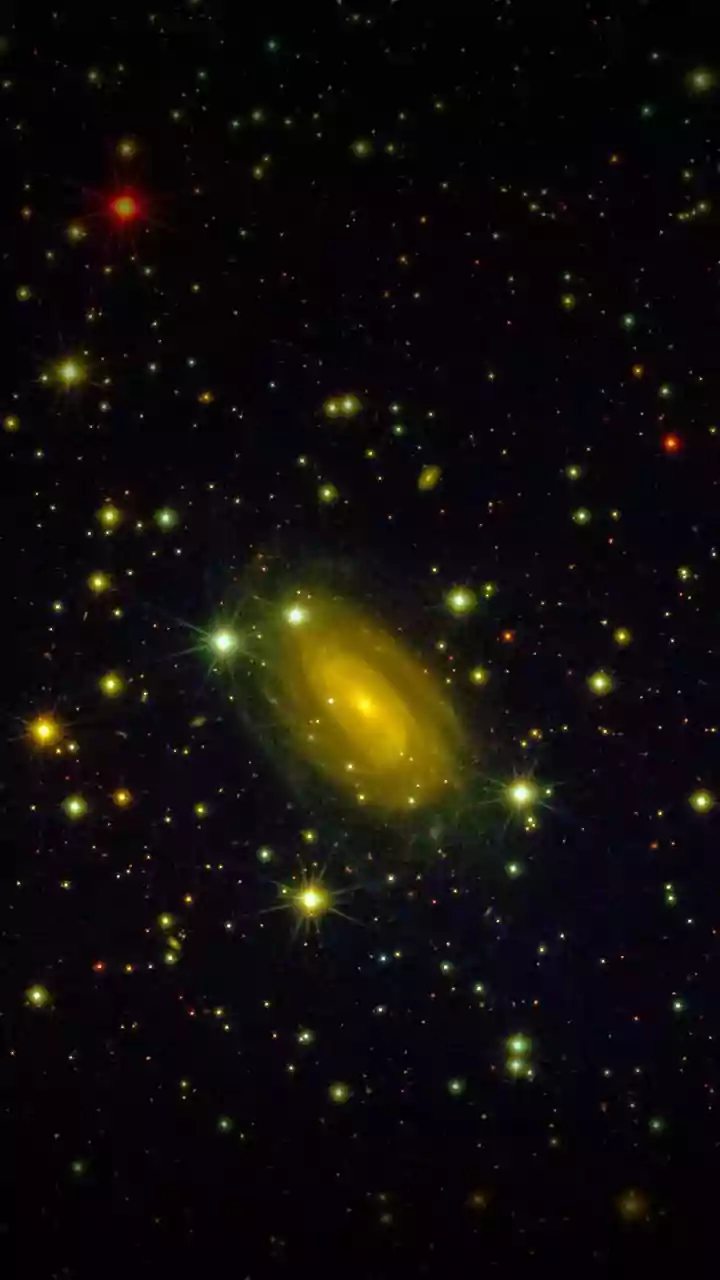
Perhaps the most exciting application of this technique is the study of star formation. Stars are born inside dense, cold, and dusty molecular clouds. These stellar nurseries are completely opaque in visible light, but in infrared, they come alive. Telescopes like the JWST can now pierce these dusty cocoons to observe young protostars as they gather mass and begin to shine. By studying the glowing dust, scientists can map the structure of these nurseries and understand the processes that lead to the birth of new solar systems. Many of the glowing points seen in recent infrared images are these nurseries, showing how cosmic dust provides the ingredients for future generations of stars and planets.
India's Gaze into the Infrared
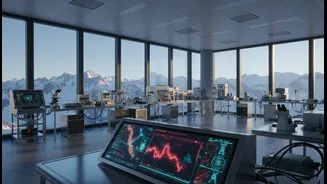
India is an increasingly important player in this field of discovery. The Indian Astronomical Observatory in Hanle, Ladakh, is one of the highest-altitude sites in the world for optical and infrared astronomy. Its flagship Himalayan Chandra Telescope, an optical-infrared instrument, has been contributing to our understanding of the cosmos for over two decades. Looking ahead, India has announced ambitious plans for even larger facilities, including a new 3.7-metre optical-infrared telescope slated for 2030 and a proposed 13.7-metre National Large Optical-Infrared Telescope. These facilities, situated in the pristine skies of the Himalayas, will ensure that Indian scientists remain at the forefront of unravelling the universe's dusty secrets.