







The Story in Numbers
The first week of July 2026 was extraordinary even by Mumbai's monsoon standards. In just the first four days, the city received nearly 74% of its average rainfall for the entire month. Some weather stations recorded over 980 mm of rain between the end
of June and July 6, surpassing the total rainfall for all of July in the previous year. This intense spell, where the city received more rain in a week than Delhi gets in a year, was caused by several active weather systems converging over the coast. However, the storm has passed for now. The India Meteorological Department (IMD) has withdrawn its red and orange alerts, issuing a green alert for July 10, indicating a shift towards light to moderate showers.
Impact on Your Commute
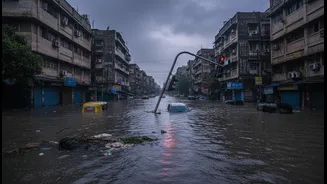
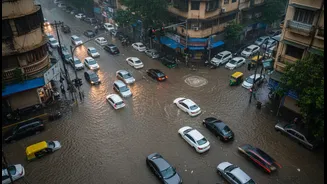
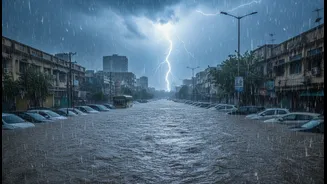
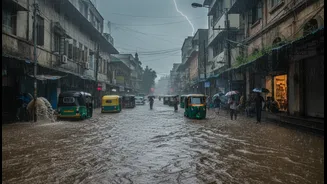
The heavy rains earlier in the week caused significant disruptions. Waterlogging was severe in low-lying areas like the Andheri subway, Hindmata, and the Vasai-Virar belt, leading to major traffic snarls. Local train services, the city's lifeline, were heavily impacted. Western Railway services ran 25-30 minutes late, and some routes, particularly between Vasai and Virar, were temporarily suspended. As of Friday, July 10, the situation has improved dramatically. Most waterlogged roads have cleared, and both Central and Western Railway report that local trains are running normally, with only minor, residual delays. BEST buses and other public transport are also back on track, though commuters are advised to check for real-time updates before travelling.
Official Forecast and Advisories
For the immediate future, Mumbai can expect a welcome respite. The IMD forecasts light to moderate rain for the city and suburbs over the weekend, with no major warnings in place. Skies are expected to be partly cloudy, with maximum temperatures around 31-32 degrees Celsius and minimums near 27-28 degrees. While the worst is over, the Brihanmumbai Municipal Corporation (BMC) advises continued caution. During the intense downpour, the BMC had issued advisories urging citizens to stay indoors, avoid parking under trees, and stay away from dilapidated structures. These are good practices to maintain throughout the monsoon season.
A Crucial Health Warning
One of the most critical takeaways from any period of waterlogging is the health risk that follows. The BMC has issued a specific advisory regarding leptospirosis, a bacterial infection that spreads through contact with contaminated water, often containing urine from infected animals like rats. The bacteria can enter the body through small cuts or abrasions on the skin. Symptoms can include high fever, headache, muscle aches, and vomiting. The advisory strongly urges anyone who has waded through floodwaters to be vigilant. If symptoms appear, it is crucial to seek medical advice immediately, as early treatment is highly effective. The key advice is to avoid walking through stagnant water whenever possible.
The Bigger Climate Picture
While Mumbaikars are accustomed to heavy rain, the intensity seen in early July points to a worrying trend linked to climate change. Experts note that rainfall patterns are shifting, with monsoon moisture getting concentrated into shorter, more extreme bursts rather than being spread out over the season. In a week, the city received a volume of rain that rivals the annual total for other major Indian cities. This pattern of “cloudburst-like” episodes puts immense pressure on urban drainage systems, which were designed for more evenly distributed rainfall. This extreme weather event serves as a stark reminder of the challenges that densely populated coastal cities face in an era of changing climate, highlighting the urgent need for infrastructure that can withstand the new reality of the monsoon.