


More Than Meets the Eye
When we think of 'light,' we're usually thinking about the rainbow of colors our eyes can see. But that's just a tiny sliver of the full picture. Scientists call it the electromagnetic spectrum, a vast range of light with different energy levels and wavelengths.
This spectrum includes everything from low-energy radio waves and microwaves, through the infrared and visible light we know, and up to high-energy ultraviolet, X-rays, and even gamma rays. Imagine it like a piano keyboard that extends far beyond the keys we can see. Each type of light tells a different story about the universe. Hot, violent events like matter swirling around a black hole might blast out X-rays, while cool, dusty clouds where stars are born glow in the infrared. To understand a galaxy completely, astronomers need to observe it across as many of these wavelengths as possible.
A Telescope for Every Occasion
Our atmosphere is great for protecting us from harmful radiation, but it also blocks most of this invisible light from reaching the ground. That’s why the major investments in space-based observatories are so critical. Each one is a specialist, designed to see a specific part of the spectrum. NASA's Chandra X-ray Observatory, for instance, is our eye for the super-hot and high-energy universe. The James Webb Space Telescope is an infrared powerhouse, built to pierce through cosmic dust and see the ancient universe. The venerable Hubble Space Telescope is a master of visible and ultraviolet light, capturing the starlight we're most familiar with. On the ground, arrays of giant dishes like the Very Large Array (VLA) listen for the faint whispers of radio waves. Viewing an object with only one of these would be like listening to a symphony with only the violin section audible; you get part of the music, but you miss the full composition.
A Galaxy's Many Faces: Centaurus A
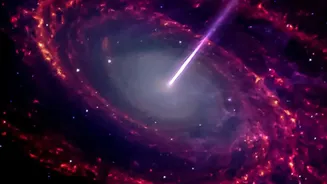
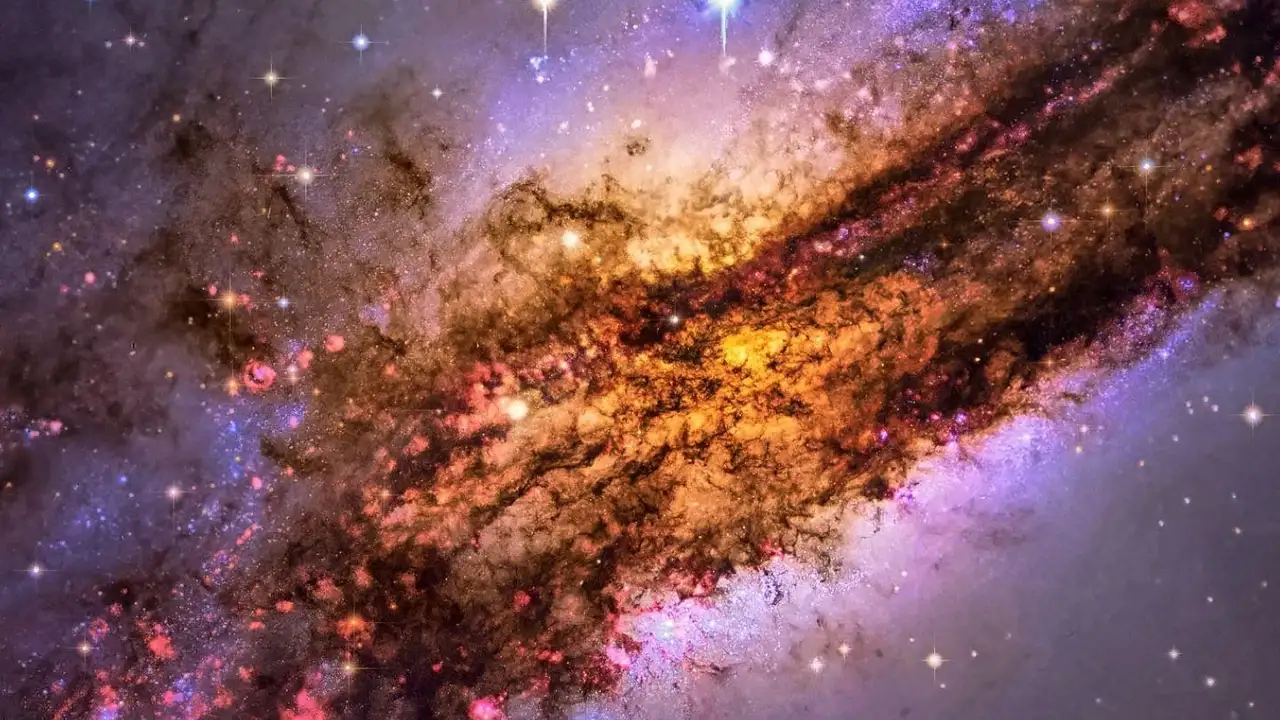
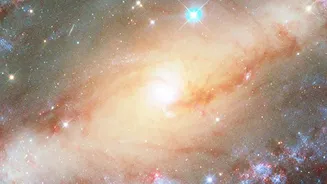
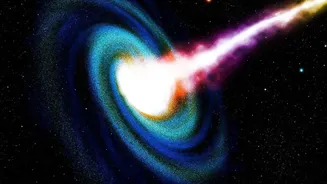
Let's take a real-world example: the galaxy Centaurus A. When Hubble looks at it in visible light, we see a bright, oval-shaped collection of older stars, slashed through the middle by a thick, dark band of dust. It looks like a classic case of a galactic merger. But that's just one version of the story. When an infrared telescope like the recently retired Spitzer looks at it, that dark dust lane begins to glow, revealing its own structure and the heat from potential star formation hidden within. The picture changes even more dramatically in other wavelengths. When Chandra observes Centaurus A in X-rays, it reveals a completely different feature: a colossal jet of superheated material being blasted away from the supermassive black hole at the galaxy's core. Radio telescopes see this jet, too, tracing its path for over a million light-years into space. None of this high-energy drama is visible in the standard optical image.
Creating the Complete Cosmic Picture
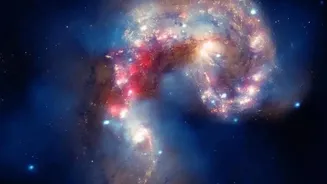
The real magic happens when astronomers combine all this data. By taking the information from X-ray, visible, infrared, and radio telescopes, they can build a single 'composite' image. In these images, each wavelength is typically assigned a different color (known as false-color imaging) to create a comprehensive view. For Centaurus A, this means we can see the starlight from Hubble, the glowing dust from Webb or Spitzer, and the powerful black hole jets from Chandra all in one frame. Suddenly, the galaxy is no longer just a static ball of stars with a dust lane. It becomes a dynamic, living system where a central engine is pumping energy out into space, interacting with the gas and dust left over from a cosmic collision. This multiwavelength approach turns flat, single-note images into a rich, three-dimensional understanding of how galaxies work.