



A New Generation of Explorers
NASA is actively funding the next wave of robotic explorers through initiatives like STRIDE (Science Transport and Robotic Innovation for Deployment and Exploration). In early July 2026, the agency awarded contracts to seven companies to develop advanced
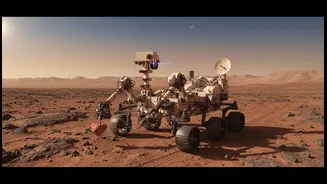
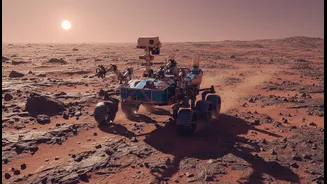
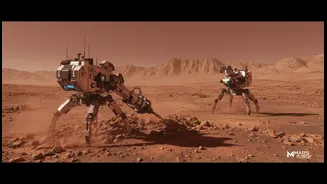
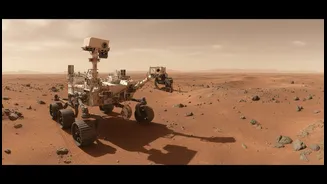
mobility systems for Mars. This move signals a strategic shift away from designing a single, large, do-it-all rover every decade, like the car-sized Curiosity and Perseverance rovers that have been so successful. Instead, the focus is on creating a diverse toolkit of smaller, potentially more specialized robots that can work collaboratively. These new systems are being designed to handle the challenging Martian terrain that has been difficult for previous missions to access, including steeper slopes and rougher ground.
Strength in Numbers: The Swarm Approach
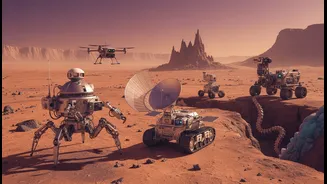
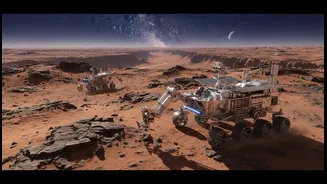
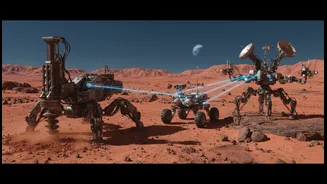
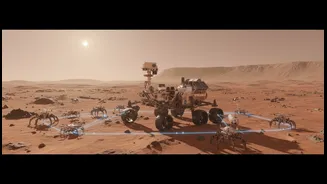
A key concept driving this new approach is multi-robot cooperation. One of the most promising technology demonstrations is a project called CADRE (Cooperative Autonomous Distributed Robotic Exploration). Though its first test will be on the Moon, the technology is explicitly designed for future use on Mars. CADRE uses a team of shoebox-sized, four-wheeled rovers that communicate with each other and a base station. They are designed to be largely autonomous, meaning they can make decisions on their own without constant step-by-step commands from Earth, a crucial feature given the communication delays between the planets. This team approach allows for science that a single robot could never achieve, like creating a 3D map of the subsurface by taking simultaneous radar readings from different locations.
Overcoming Past Limitations
Past rover missions, while revolutionary, have faced significant challenges. The Spirit rover's mission ended after it became stuck in Martian sand, and dust storms have been a persistent threat to solar-powered explorers like Opportunity. A swarm of smaller, more nimble robots offers a solution through redundancy. If one robot gets stuck or fails, the rest of the team can continue the mission. This cooperative system allows for greater risk-taking; a team of robots could be sent into a hazardous but scientifically interesting crater that would be deemed too dangerous for a single, multi-billion dollar asset. By distributing the tasks and the risk, NASA can explore more ground, more quickly and safely than ever before.
Paving the Way for Humans
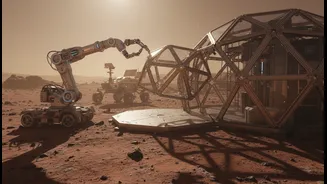
These new robotic missions are not just about scientific discovery; they are a critical step in preparing for human exploration of Mars. Future missions like the proposed SkyFall, which will send a trio of advanced helicopters to Mars, are designed to scout for resources like subsurface ice and identify safe landing zones for astronauts. Autonomous robots could be tasked with prospecting for materials needed for survival, a concept known as In-Situ Resource Utilization (ISRU), which involves finding and processing resources like water and oxygen on-site. They might even begin constructing habitats and landing pads before the first humans ever leave Earth, taking on the dangerous and laborious initial setup work. The technology being developed under programs like STRIDE and demonstrated by CADRE will form the foundation of a sustained human presence on the Red Planet.
India's Role in the New Space Age
This shift towards more agile and collaborative robotics resonates with the global space community, including India's own ambitious plans. The Indian Space Research Organisation (ISRO) has its sights set on future Mars missions, including a second Mars Orbiter Mission (MOM 2) and the Gaganyaan human spaceflight program. The development of autonomous robotic systems is a field of growing importance worldwide. India's development of the AI-powered humanoid robot 'VyomMitra' for its uncrewed missions shows a parallel focus on advanced automation. As nations push further into the solar system, the lessons learned from NASA’s new robotic teams on the Moon and Mars will inform and inspire future Indian missions, contributing to a collective human endeavor to explore the cosmos.