




The Power Grid Puzzle
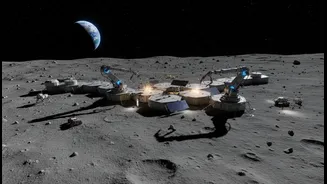
Any permanent settlement, on Earth or off-world, needs a reliable power grid. The Moon presents a unique challenge: a lunar night lasts for 14 Earth days, plunging temperatures hundreds of degrees Celsius below zero and cutting off solar power. Standard
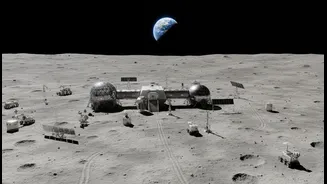
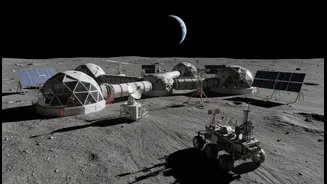
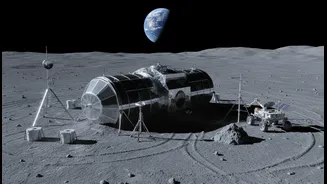
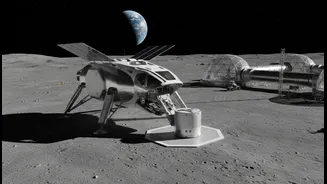
batteries are too heavy and inefficient to bridge this gap alone. This has made developing a robust power solution a top priority. NASA is exploring a mix of technologies, including advanced solar arrays and energy storage systems designed for the extreme environment. A key long-term solution is fission surface power—small, scalable nuclear reactors that can provide a steady 10 kilowatts of power, day or night, forming the backbone of the Artemis Base Camp's grid.
Solving the Dust Dilemma
One of the biggest lessons from the Apollo missions was the problem of lunar dust, or regolith. It's not like dust on Earth. Without weather to erode it, lunar dust is sharp, abrasive, and electrostatically charged. It clings to everything, damages space suits, clogs mechanisms, and poses a significant health risk to astronauts if inhaled. Before a long-term base is feasible, NASA must develop effective dust mitigation strategies. This includes everything from advanced filtration systems inside habitats to electrodynamic dust shields that actively repel particles from surfaces and developing new nanocoatings that prevent dust from sticking in the first place.
Shielding from Cosmic Rays
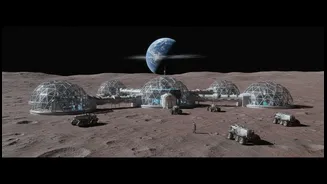
Beyond Earth's protective magnetic field, astronauts are exposed to a constant barrage of radiation from deep space (galactic cosmic rays) and unpredictable solar particle events. Radiation levels on the Moon are two to three times higher than on the International Space Station, posing significant long-term health risks, including cancer and cardiovascular disease. A simple habitat won't be enough; effective shielding is a must. This may involve burying habitats under several feet of lunar soil or building structures within natural lava tubes to provide protection. Understanding this radiation environment and testing shielding technologies is a critical safety check before committing to long-duration stays.
Mastering Life Off the Land
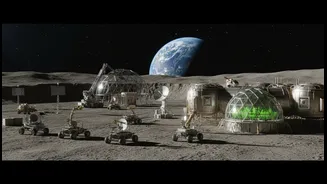
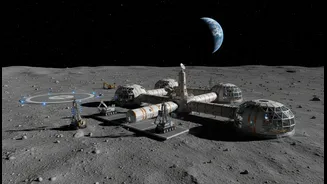
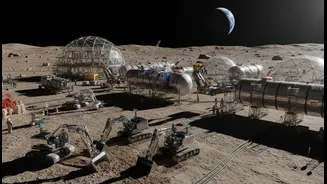
The key to a truly sustainable lunar presence is In-Situ Resource Utilization (ISRU), or living off the land. Carting everything from Earth is prohibitively expensive. A major focus is on the lunar South Pole, where permanently shadowed craters are believed to hold vast deposits of water ice. This water is vital, not just for drinking and life support, but also because it can be split into hydrogen and oxygen—the primary components of rocket fuel. Beyond water, the plan is to use lunar regolith as a raw material for construction, potentially using 3D printing techniques to build landing pads, habitats, and other structures. Proving these ISRU technologies at scale is fundamental to the entire moon base concept.