
The Threat From Our Star
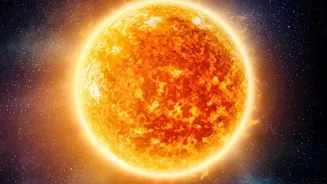
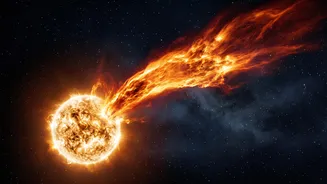
The sun, our source of life and light, has a volatile side. It regularly expels billions of tons of plasma and magnetic fields in colossal explosions known as coronal mass ejections (CMEs). While many miss our planet, a direct hit can have catastrophic
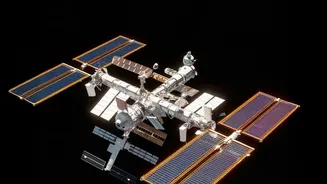
consequences. These solar storms can induce powerful electrical currents in our power grids, potentially causing widespread blackouts. They also pose a significant risk to the thousands of satellites we rely on for communication, navigation, and financial transactions, as well as disrupting radio signals used by aircraft. The most powerful geomagnetic storm on record, the 1859 Carrington Event, set telegraph offices on fire. A similar event today would impact nearly every aspect of our technologically dependent society, from GPS systems that guide tractors on farms to the stability of our energy infrastructure.
A Digital Storm Chaser Called DAGGER
Predicting exactly when and where a solar storm will impact Earth has been a major challenge. Current warnings, based on satellites positioned between the Earth and sun, often provide only 15 to 60 minutes of notice. To improve on this, an international team of researchers, working through a public-private partnership with NASA called the Frontier Development Lab (FDL), has created a new solution. It's an AI-powered computer model named DAGGER, which stands for Deep Learning Geomagnetic Perturbation. Unlike previous models, DAGGER combines AI's rapid pattern-recognition abilities with real-time data from a fleet of spacecraft and ground-based sensors to create a global forecast.
Training an AI Forecaster
The power of DAGGER lies in its training. Scientists fed the AI model vast amounts of data from past solar events. This included information on the solar wind—the constant stream of particles from the sun—as well as measurements from Earth's magnetic field and the ionosphere. By analyzing this historical data, the deep learning algorithm learned to identify the subtle, complex signatures that precede a geomagnetic disturbance. The goal is for the AI to spot patterns that human analysts might miss, or can't process fast enough, to provide a more timely and accurate warning. This initiative is part of a broader effort at NASA to apply machine learning to pressing science challenges, from planetary defense to heliophysics.
A Crucial 30-Minute Warning
The key advantage of the DAGGER system is its speed and precision. The model can generate a worldwide prediction of a storm's impact in less than a second and update it every minute. Most importantly, it aims to provide a reliable 30-minute advance warning before a geomagnetic storm hits a specific location on Earth. While 30 minutes may not sound like much, it is a critical window for mitigating damage. This lead time would allow power grid operators to reroute power, satellite operators to put their spacecraft into a protective safe mode, and other vulnerable systems to brace for impact. According to researchers, this capability could help minimize, or even prevent, major disruptions to modern society.
The Future of Space Weather Prediction
DAGGER represents a significant leap forward, but it's just the beginning. Researchers are continuously working to refine the model and integrate new data sources. Recently, NASA announced another experimental AI model that can spot the emergence of potentially storm-producing active regions on the sun up to 12 hours before they become visible, though it is not yet operational for real-time forecasting. The ultimate goal is not just to predict that a storm will happen, but to forecast its specific intensity and trajectory with greater accuracy. As humanity plans for extended missions to the Moon and beyond, out from under the protection of Earth's magnetic field, the ability to forecast space weather will become even more critical for astronaut safety.