



Medicine's Final Frontier
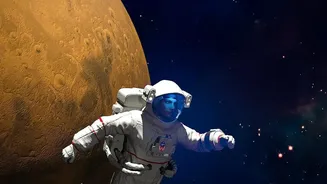
Space is an incredibly harsh environment for the human body. Beyond Earth’s protective atmosphere, astronauts face a barrage of challenges including microgravity, radiation, isolation, and confinement. Long-duration missions can cause muscle atrophy,
a loss of bone density up to ten times faster than on Earth, shifts in bodily fluids that affect vision and cardiovascular health, and a weakened immune system. Space medicine is the specialized field dedicated to understanding and mitigating these risks, ensuring that humans can not only survive but also perform complex tasks far from home. It is the ultimate test of remote healthcare, where there is no ambulance and every piece of medical equipment must be compact, reliable, and multi-purpose.
A Landmark National Partnership
Recognising these challenges as India prepares for its ambitious Gaganyaan human spaceflight mission, the Indian Space Research Organisation (ISRO) has joined forces with the nation's premier medical institution, the All India Institute of Medical Sciences (AIIMS), New Delhi. Through a formal Memorandum of Understanding signed in early 2026, the two institutions have established a framework for deep collaboration in space medicine. The partnership aims to conduct ground-based and space-based studies to build expertise, develop new medical devices and protocols, and ensure the health and safety of Indian astronauts on future missions to low Earth orbit and beyond.
From Space Suits to Stethoscopes
The core of this collaboration lies in translating space-centric solutions into Earth-based applications. The research focuses on several key areas. One major focus is studying the accelerated ageing-like symptoms that astronauts experience. By understanding the mechanisms behind rapid bone and muscle loss in microgravity, AIIMS researchers hope to gain new insights into treating osteoporosis, sarcopenia, and mobility issues in the elderly population on Earth. Similarly, studying how the cardiovascular system adapts to fluid shifts in space could lead to new treatments for patients with circulatory problems.
Powering Telemedicine and Remote Care
Perhaps the most immediate and tangible benefit lies in telemedicine. ISRO has a long history of using its satellite network to connect remote and rural health centres with specialist doctors in major cities, a program it started back in 2001. The technologies perfected for monitoring astronaut health from thousands of kilometres away—compact, wearable sensors that track vital signs in real-time—have direct applications on the ground. These systems can be deployed in underserved areas, allowing a doctor at AIIMS in Delhi to monitor a patient in a remote village, bridging the vast urban-rural healthcare divide in India and making expert medical advice more accessible.
A New Wave of Medical Innovation
The potential spin-offs do not end there. Research into the psychological stress of isolation can inform better mental healthcare practices. Developing compact, low-power diagnostic tools for space missions, like lab-on-a-chip devices, can lead to cheaper and more portable diagnostic kits for use in clinics with limited resources. ISRO has already developed several healthcare technologies as byproducts of its space program, including materials for low-cost artificial limbs and even a left ventricular assist device. The collaboration with AIIMS is set to formalise and accelerate this process, creating a powerful engine for indigenous medical innovation.