


The Invisible Danger in a Sealed Can
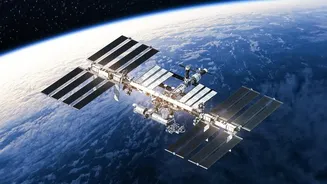
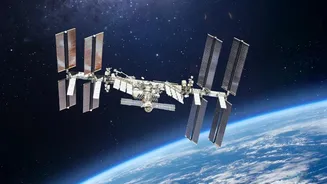
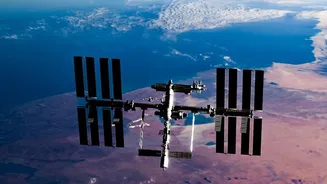
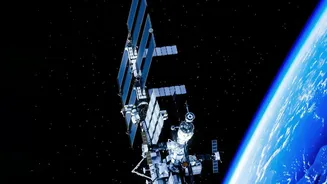
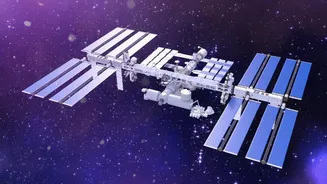
On Earth, vast natural cycles keep our atmosphere breathable. In the confined space of the International Space Station (ISS), these processes don't exist. Every breath an astronaut takes consumes oxygen and releases carbon dioxide (CO2). Without intervention,
CO2 levels would quickly become toxic. But it's not just CO2. Humans and equipment constantly off-gas hundreds of other trace contaminants, from ammonia to methane and acetone. This creates a complex chemical soup that must be continuously managed. Early space missions used consumable systems, like lithium hydroxide canisters, to scrub CO2, but these were finite and required constant resupply from Earth — an impossible strategy for long-duration missions to the Moon or Mars.
From Waste Product to Vital Resource
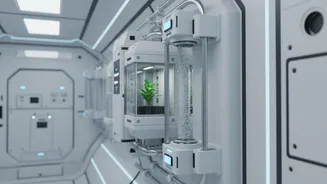
The heart of the ISS's air system is a philosophy of regeneration. Instead of just dumping waste products, the Environmental Control and Life Support System (ECLSS) recycles them. The most elegant example is the Sabatier system. This hardware takes two waste products — the CO2 scrubbed from the air and the excess hydrogen produced by oxygen generation — and uses a catalyst to react them. The result is water and methane. The water is then fed back into the station's water recovery system, where it can be purified for drinking or used to generate more oxygen. The methane is vented into space for now, but the process represents a crucial step in 'closing the loop' on life support. By turning a liability into a resource, it dramatically reduces the amount of water that needs to be launched from Earth.
Making Air From Water
With a reliable way to reclaim water from waste CO2, the ECLSS can generate its own breathable air. The Oxygen Generation System (OGS) uses a process called electrolysis to split water molecules (H2O) into their constituent parts: breathable oxygen and hydrogen. The oxygen is released into the cabin atmosphere, while the hydrogen is sent to the Sabatier system to create more water, completing the cycle. This regenerative loop means the station can produce much of its own air, with resupply missions only needed to top off the system and compensate for small, inevitable losses. This ability to create oxygen on-demand from recycled water is a fundamental requirement for any permanent habitat beyond low-Earth orbit.
Scrubbing Hundreds of Other Contaminants
While CO2 is the most abundant threat, it's far from the only one. The Trace Contaminant Control System (TCCS) acts as the station's ultimate air purifier. This multi-stage system continuously scrubs the air to remove potentially harmful gases emitted by electronics, plastics, and the crew themselves. Air first passes through activated charcoal beds that adsorb a wide range of organic compounds. To handle chemicals that might slip through, like methane, a portion of the air is then sent through a high-temperature catalytic oxidizer, which breaks them down into simpler, less harmful substances. A final stage can then remove any acidic byproducts from this oxidation process. This robust, multi-layered approach ensures the long-term health and safety of the crew from invisible chemical threats.
A Blueprint for Deep Space Exploration
The integrated systems aboard the ISS are more than just clever engineering; they are a working prototype for the future of human spaceflight. For missions to Mars, which can last for years, resupply is not an option. Every kilogram of mass launched from Earth is incredibly expensive, so creating a nearly closed-loop system that recycles air and water is not a luxury, but a necessity. The ECLSS, particularly its regenerative components like the Sabatier system and the Oxygen Generation System, has proven that long-term life support without constant resupply is viable. This technology is the milestone that makes planning for sustainable bases on the Moon and crewed voyages to Mars a realistic engineering challenge rather than a distant science-fiction dream.