




A Cosmic Chemical Factory
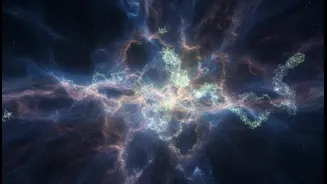
In a breakthrough observation, astronomers using the powerful James Webb Space Telescope (JWST) have detected a remarkable cocktail of complex organic molecules (COMs) frozen in cosmic ice and dust. The discovery was made in a galaxy far beyond our own
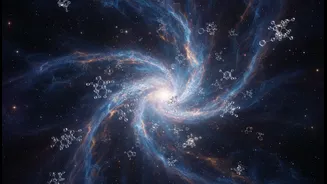
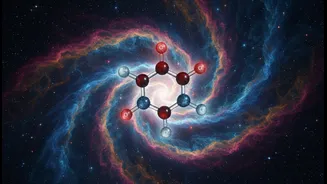
Milky Way, specifically around a young, developing star, or protostar. This isn't just a faint trace; researchers found a surprising treasure trove of carbon-rich compounds, including molecules like ethanol (alcohol), acetic acid (the key component in vinegar), and acetaldehyde. While finding alcohol in space is a fun headline, the reality is far more profound. These are the kinds of molecules considered to be the chemical precursors to the building blocks of life.
The Perfect Location
What makes this discovery so rare and significant is not just what was found, but where. These organic molecules were spotted in the icy dust surrounding a protostar in a region where planets are expected to form. This is precisely where you'd hope to find them if you're trying to understand how a barren rock can eventually become a life-bearing world. Previously, detecting these complex molecules in their cold, icy state was incredibly difficult. The unprecedented sensitivity of the JWST's instruments allowed scientists to see these chemical fingerprints, which confirm that the basic ingredients for life's chemistry are present right from the very beginning of a star system's formation.
From Stardust to Life
So, how do molecules in a distant galaxy connect to life on Earth? The leading theory is that life didn't have to invent all its chemical parts from scratch here on our planet. Instead, the early Earth was likely showered with these essential ingredients by comets and asteroids. These cosmic travelers, formed from the same icy dust cloud that birthed our sun, could have acted as delivery trucks, seeding our young world with the organic compounds needed to kickstart biology. Discoveries like this provide strong evidence for this "exogenous delivery" theory. They show that the chemical toolkit for life isn't unique to our solar system but is likely widespread throughout the cosmos, available to other fledgling planets.
Not Life, but a Recipe Book
It is crucial to be clear: scientists have not found life. They have found its chemical precursors. Think of it like finding flour, sugar, and eggs on a kitchen counter. You haven't found a cake, but you can see that all the necessary ingredients are there to bake one. Molecules like acetaldehyde and methyl formate are the backbones for even more complex structures, such as the amino acids and RNA molecules that form the basis of all known living things. This discovery confirms that the chemical process for building these more complex, life-essential molecules can begin in the cold, dark nurseries where stars and planets are born.
What Comes Next?
This finding has opened a new and exciting chapter in astrochemistry. Researchers are now eager to see how widespread these organic factories are. Are these complex molecules common around all types of young stars, or only specific ones? The next step will be to use the JWST to survey other star-forming regions, both in our galaxy and beyond, creating a map of where life's ingredients are located. Scientists will also be looking for even more complex molecules, like the tell-tale signs of simple amino acids. Each new detection helps piece together the epic journey from simple interstellar gas and dust to the rich biological complexity we see on Earth.