






The Orbital AI Vision
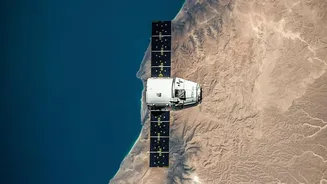
The fundamental idea is compelling. Artificial intelligence and high-performance computing are incredibly power-hungry, putting a strain on terrestrial electricity grids and water resources. By placing data centres in orbit, SpaceX and others envision
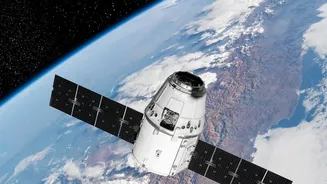
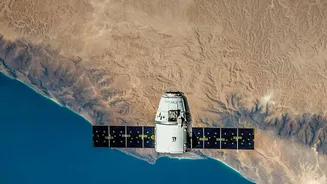
tapping into near-continuous solar power, free from earthly constraints like grid-connection queues and land-use disputes. These orbital facilities, potentially part of a network dubbed 'Starmind', would use high-speed laser links to communicate, building on the technology already deployed in the Starlink satellite network. The goal is to create a new frontier for computing where energy is abundant, bypassing the bottlenecks that are beginning to throttle AI's growth on the ground. Some, like Musk, have optimistically suggested that space could become the most cost-effective place for AI within years.
The Radiation Reality Check
The first major obstacle is the harsh radiation environment of space. Here on Earth, the atmosphere and magnetic field act as an invisible shield, protecting delicate electronics. In orbit, there is no such protection. Components are bombarded by high-energy particles from cosmic rays and solar flares. This radiation can cause a range of problems, from 'bit-flips' that corrupt data to permanent physical damage that renders a server useless. To combat this, electronics must be 'radiation-hardened'. This involves a suite of techniques, from using specialised materials and redundant circuits to physically shielding components. However, rad-hardened electronics are far more expensive—a single specialised processor can cost thousands of times more than its commercial equivalent—and the technology often lags years behind the cutting-edge chips used in terrestrial data centres. Simply launching standard server racks into space would create a fleet of expensive space junk in short order.
An Immense Cooling Challenge
A common misconception is that space is cold, making it easy to cool hot electronics. The reality is the opposite. The vacuum of space is an excellent insulator, much like the gap in a thermos flask. On Earth, data centres use air and water to carry heat away from processors through convection. In space, there is no air, so convection is not an option. Heat must be shed through conduction (transferring it to a solid object) and radiation (emitting it as infrared light). This is a far less efficient process. Cooling a dense rack of power-hungry GPUs would require massive, specially designed radiators to dump heat into the void. Solving this thermal management puzzle is a critical, and still unproven, piece of the engineering challenge.
Power, Repair, and the Bottom Line
Beyond radiation and cooling, other practicalities loom large. While solar power is abundant, satellites still move in and out of Earth's shadow, requiring heavy battery systems for continuous operation. And what happens when a hard drive fails or a component needs an upgrade? There is no sending a technician for a quick fix. Any orbital data centre would need an unprecedented level of reliability and perhaps even robotic maintenance capabilities, adding another layer of complexity and cost. Ultimately, the business case is the final hurdle. At current launch prices, putting a data centre into orbit is astronomically expensive compared to building one on the ground. While reusable rockets like SpaceX's Starship promise to drastically reduce launch costs, a significant gap remains. For the foreseeable future, the economics of orbital computing only make sense for highly specialised, niche applications, such as processing sovereign data that cannot cross borders or analysing data generated in space.