





The Perfect Parcel of Happiness
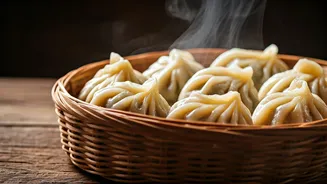
Let’s be honest. There’s a certain magic to a perfectly made momo. It begins with the delicate, almost translucent wrapper, pleated with expert precision. It must be thin enough to be tender, yet strong enough to hold the treasure within. As you take
the first bite, the wrapper gives way to a burst of hot, savoury filling—be it minced vegetables seasoned with ginger and coriander, juicy chicken, or soft, spiced paneer. It’s a complete sensory experience: the warmth, the soft texture of the dough, the umami-richness of the filling, and the sharp kick from the accompanying chutney. In that single moment, the world outside seems to fade away. It’s just you and this perfect parcel of joy.
From Tibetan Hills to Indian Streets
While it feels like an inseparable part of Indian street food culture today, the momo is a delicious import with a rich history. Its origins lie in the Himalayan regions of Tibet, Nepal, and Bhutan, where it has been a staple for centuries. The snack journeyed to India primarily with the Tibetan diaspora, who settled in places like Dharamshala, Darjeeling, Sikkim, and Delhi in the mid-20th century. They brought with them their culinary traditions, setting up small eateries and stalls. What started in niche pockets soon exploded in popularity. Indians, with their inherent love for complex flavours and street-side snacks, embraced the momo wholeheartedly. It was affordable, delicious, and offered something different from the usual fried chaat and samosas.
A Steamer for Every Taste
Part of the momo’s enduring appeal is its incredible versatility. The classic preparation is steamed, which keeps the wrapper soft and the filling moist, making it a relatively healthier option. But for those who crave a bit of crunch, there are fried momos, deep-fried to a golden-brown perfection. A happy middle ground is the 'kothey' or pan-fried momo, where the dumplings are steamed on one side and crisped on the other, offering a delightful contrast of textures. The innovation doesn't stop at the cooking method. Fillings have evolved from the traditional yak meat of the Himalayas to cater to the Indian palate. Today, you can find everything from corn and cheese momos to soya, mushroom, and even sweet dessert momos filled with chocolate.
The Soulmate: A Story of Sauces
A momo without its chutney is like a story without an ending. The accompaniment is just as crucial as the dumpling itself. The quintessential partner is a fiery red chutney, a potent concoction of red chillies, garlic, and tomatoes. Its sharp, spicy kick cuts through the richness of the momo, elevating the entire experience from tasty to unforgettable. This sauce is often so iconic that the quality of a momo stall is judged by the potency and flavour of its chutney. In recent years, a creamy mayonnaise-based dip has become a popular second accompaniment, offering a cool and smooth contrast to the heat of the red sauce. For many, the perfect bite involves a double dip—first into the fire, then into the cream.
More Than Just a Dumpling
How did this simple Tibetan dumpling become a cultural phenomenon in India? Because it represents so much more than just food. It’s a symbol of affordable comfort, a go-to snack for students after college, colleagues on a lunch break, and families on an evening out. A plate of momos is a social catalyst, a reason to gather around a tiny stall on a busy street corner and share a moment of simple pleasure. It’s a testament to India’s ability to adopt and adapt, to take a culinary tradition from another land and make it entirely its own. From the chilly lanes of Shillong to the bustling markets of Mumbai, the momo has steamed, fried, and folded its way into the heart of the nation.