





From Cane to Crystal
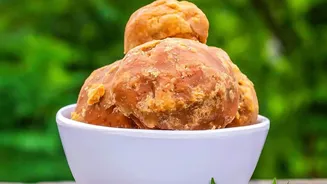
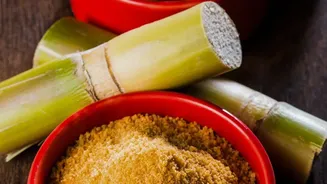
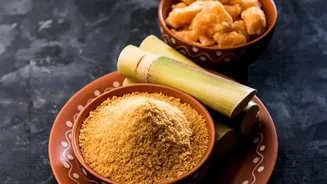
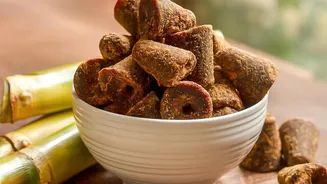
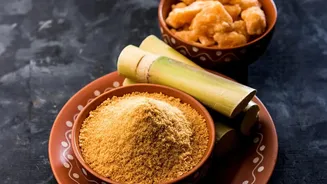
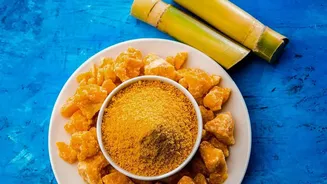
The fundamental difference between jaggery (gur) and white sugar lies in their processing. Jaggery is made by boiling raw, concentrated sugarcane juice until it solidifies. Because it is unrefined, it retains the molasses, which gives it a golden to dark
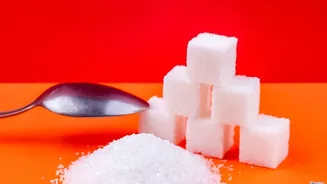
brown colour and a distinctive, caramel-like flavour. This minimal processing preserves some of the nutrients naturally present in sugarcane juice. White sugar, on the other hand, undergoes extensive refining. The sugarcane juice is processed to separate the molasses, then filtered, crystallised, and bleached to produce the pure white sucrose crystals we know. This process strips away virtually all minerals and vitamins, leaving behind what many call 'empty calories'.
The Nutritional Divide
Because it retains molasses, jaggery contains trace amounts of minerals that white sugar lacks. These include iron, magnesium, potassium, and calcium. However, the praise for jaggery's nutritional value needs a dose of realism. While a 100-gram serving does contain these nutrients, typical portion sizes are much smaller. A 10-gram piece of jaggery, for instance, provides only a small fraction of your daily mineral needs. You would have to consume a very large amount of it—and therefore a lot of sugar—to get a significant mineral boost. Calorie-wise, the two are nearly identical. Jaggery provides around 383 calories per 100 grams, while white sugar provides about 387. Both are, first and foremost, sources of sugar.
The Critical Blood Sugar Question
Here is the most crucial, and often misunderstood, part of the comparison. Many people switch to jaggery believing it is safer for blood sugar management, especially for diabetics. The data tells a different story. The Glycemic Index (GI), which measures how quickly a food raises blood glucose, is actually higher for sugarcane jaggery than for white sugar. Most sources place sugarcane jaggery's GI at around 84, classifying it as a high-GI food, while white sugar's GI is about 65. This means that despite being less processed, jaggery can cause a faster and sharper spike in blood sugar. For anyone with diabetes, pre-diabetes, or insulin resistance, this is critical information. The idea that jaggery is a 'safe' alternative is a dangerous myth; both sweeteners need to be strictly limited.
Winter's Warming Companion
The tradition of eating jaggery in winter is rooted in more than just taste. Jaggery is traditionally believed to have a 'warming' effect on the body. Its high calorific value provides a quick burst of energy, which the body can use to maintain its temperature in the cold. It’s also a staple in traditional remedies for common winter ailments like coughs and colds, as it is believed to help soothe the throat and clear the respiratory tract. Furthermore, winter is the season for making fresh gur in many parts of India, aligning its availability with the time its perceived benefits are most needed. It pairs perfectly with other winter staples like sesame seeds, peanuts, and ghee to create beloved seasonal treats like gajak and laddoos.
The Verdict: Less Processed, Not a Health Food
So, should you throw out your sugar and replace it all with jaggery? It’s not that simple. Jaggery is undoubtedly less processed and offers a marginal nutritional advantage over refined sugar due to its mineral content. However, this benefit is often negligible in the small quantities typically consumed. When it comes to the primary concern for many—its impact on blood sugar—jaggery is not a healthier choice. In fact, it can be worse. The health halo around jaggery often leads to overconsumption, under the mistaken belief that it is harmless. The truth is that sugar, whether it is a brown, unrefined block or a white, sparkling crystal, is still sugar.