
The Limits of Human Vision
Our eyes are incredible instruments, but they are tuned to a very narrow sliver of reality called the visible light spectrum. This is the rainbow of colours we see every day. However, light exists across a vast range of wavelengths, from long, low-energy
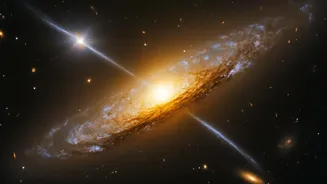
radio waves to short, high-energy gamma rays. Galaxies, like all celestial objects, emit radiation across this entire spectrum. Relying only on visible light is like trying to understand a symphony by only listening to the violins. You get a beautiful, but fundamentally incomplete, picture. Many of the most fascinating processes in the universe, such as the birth of stars or the activity around a black hole, are hidden from our sight.
Peering Through Dust with Infrared
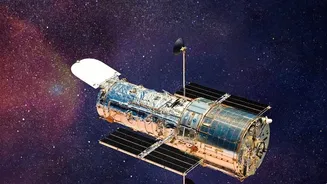
One of the biggest obstacles in astronomy is cosmic dust. Huge clouds of it obscure our view, especially towards the dense, busy centres of galaxies like our own Milky Way. Visible light scatters off these dust particles, hiding whatever is behind them. Infrared light, however, has a longer wavelength that allows it to pass through these dusty veils. Telescopes like the James Webb Space Telescope are designed to see in the infrared, allowing them to peer into stellar nurseries where new stars are forming and to see the swarms of stars at the galactic core. This reveals cooler, fainter objects and the very structure of star formation that is otherwise completely hidden from view.
The Most Violent Events in X-Ray Vision
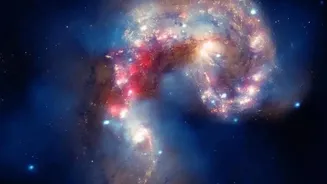
If infrared light shows us the cool and dusty parts of a galaxy, X-rays reveal its hot, violent, and energetic side. X-rays are a form of high-energy light emitted by material heated to millions of degrees. Space telescopes like the Chandra X-ray Observatory are used to detect these emissions, which point to the most extreme environments in the cosmos. X-ray observations can pinpoint superheated gas swirling into a supermassive black hole at a galaxy's centre, identify the remnants of massive exploded stars (supernovae), and locate neutron stars. Galaxy collisions, among the most titanic events in the universe, cause gas to heat up to extreme temperatures, creating a diffuse X-ray glow that tells astronomers about galactic evolution.
Listening to the Cosmos in Radio Waves
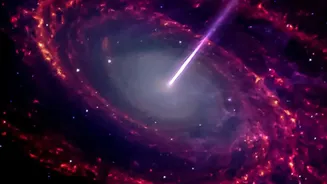
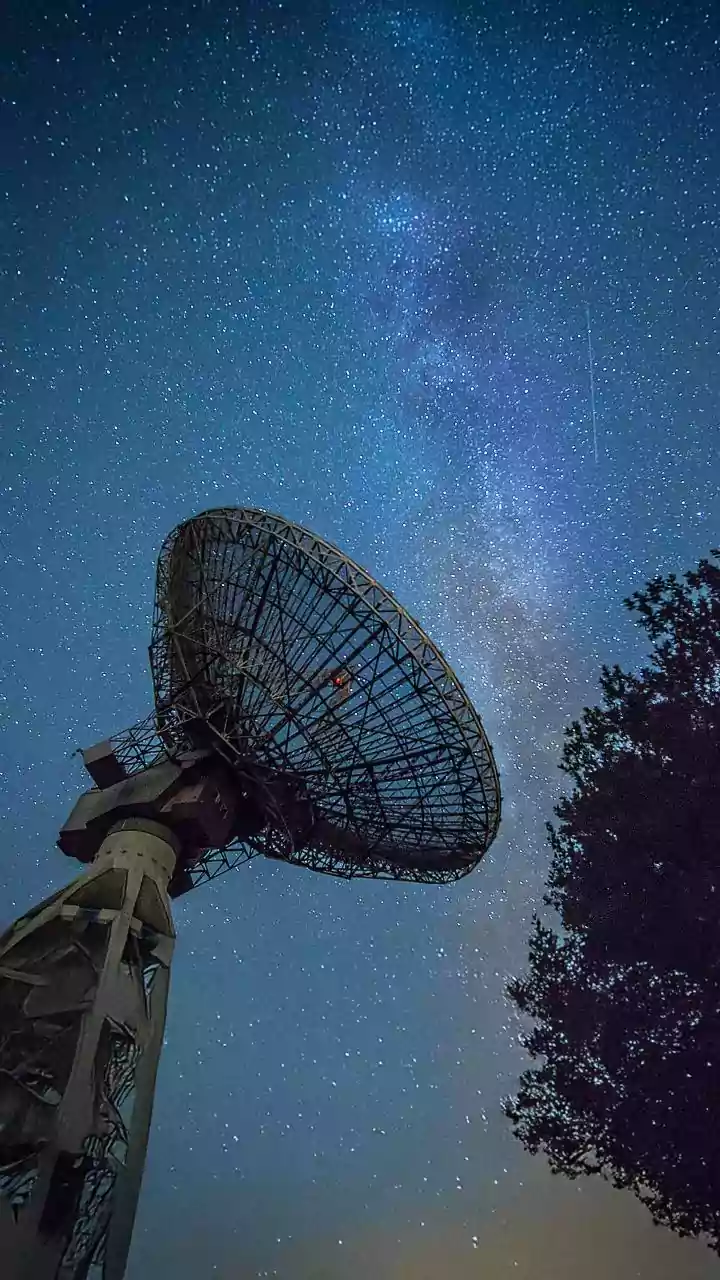
On the other end of the spectrum, radio waves offer another unique window into galactic processes. Radio telescopes don't 'see' in the conventional sense; they detect the long-wavelength radio emissions from various cosmic sources. These can reveal vast jets of particles being blasted out from a galaxy's central black hole, extending millions of light-years into space. Radio astronomy is also crucial for mapping cold hydrogen gas, which is the raw fuel for future star formation. By tracing this gas, astronomers can understand the potential for a galaxy to build new stars and how its structure is changing over time. It gives us a picture of a galaxy's fuel reserves and its most powerful engines.
Creating a Complete Picture
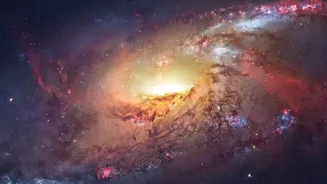
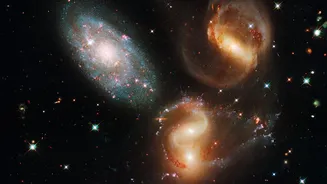
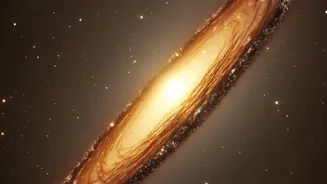
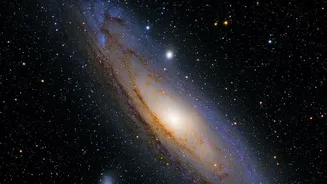
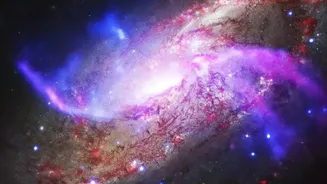
The true power of modern astronomy comes from combining all these different views. By overlaying images taken in visible, infrared, X-ray, and radio light, scientists can create composite images that tell a complete story. An ordinary-looking galaxy in visible light might reveal a furiously active black hole in X-rays, hidden star birth in infrared, and vast, invisible jets in radio waves. Each wavelength provides a different piece of the puzzle. In these multi-wavelength masterpieces, astronomers assign visible colours (like red, green, or blue) to the data from each invisible wavelength, creating the stunning, richly detailed images that not only captivate the public but also provide scientists with a comprehensive understanding of a galaxy’s structure, composition, and life story.