
A New Window on the Cosmos
Since it began its mission, the James Webb Space Telescope has fundamentally changed our view of the universe. What makes it so powerful is its ability to see in infrared light. While its predecessor, the Hubble Space Telescope, captured the cosmos primarily
in visible and ultraviolet light, Webb is designed to detect the faint heat signals that can travel through thick clouds of cosmic gas and dust. This capability allows astronomers to peer into environments that were previously opaque, including the dense, shrouded cocoons where new stars ignite. These regions, known as stellar nurseries, are where the action is, and Webb's unprecedented clarity is providing a front-row seat to the process of star formation.
Inside the Cosmic Nurseries
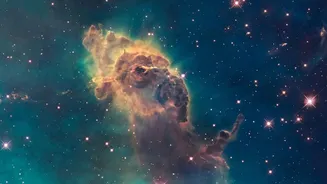
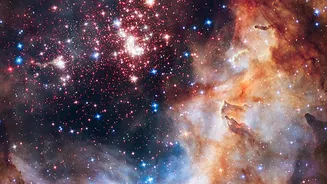
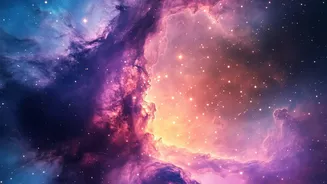
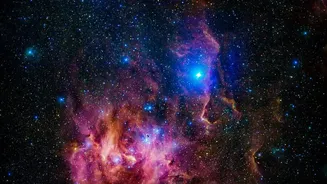
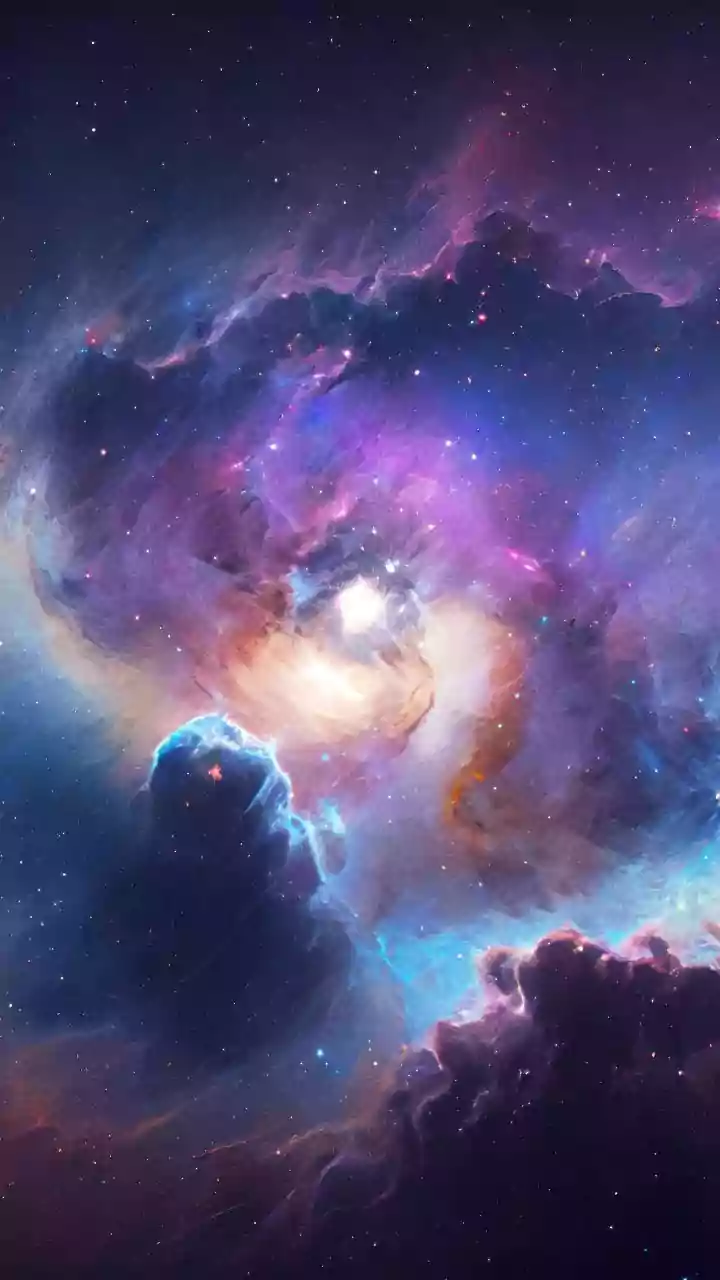
The term "star nursery" refers to vast, cold clouds of gas and dust where gravity slowly pulls material together into dense clumps. As these clumps contract, the pressure and temperature at their cores skyrocket, eventually becoming hot enough to trigger nuclear fusion—the moment a star is born. Webb’s images have targeted several of these regions, from the iconic "Cosmic Cliffs" in the Carina Nebula to the active star-forming cloud Sagittarius B2, located near the center of our Milky Way galaxy. In these images, what might look like ethereal mountain ranges or glowing clouds are actually walls of gas being sculpted by intense radiation and stellar winds from massive young stars nearby.
What Makes These Views Unprecedented
For decades, astronomers knew these nurseries were birthing stars, but the details were obscured. Webb has changed that entirely. Its high-resolution infrared imaging has revealed dozens of previously hidden jets and outflows erupting from young protostars. These are streams of matter blasted into space as a star gathers mass, and observing them helps scientists understand how stars like our own Sun came into being. In regions like W51 and the Lobster Nebula, Webb has uncovered hidden, young massive stars, allowing scientists to study their formation mechanisms in detail for the first time. The clarity is so sharp that astronomers can now see individual pods of star formation blooming within distant galaxies from the early universe.
The Science Behind the Spectacle
These stunning visuals are packed with scientific data. The colors in the images are assigned to different infrared wavelengths, allowing scientists to map the chemical composition and temperature of the cosmic clouds. For instance, red areas can indicate the presence of thick dust, while blue or green regions may be populated with hydrocarbons and other compounds. By studying these details, astronomers can investigate how the birth of massive stars influences their surroundings, sometimes triggering the formation of even more stars and, potentially, planets. One recent Webb survey of 72 young star systems is helping to explain how quickly giant planets like Jupiter must form before the gas in their stellar nursery is blown away. Each image helps refine our models of how galaxies form and grow.