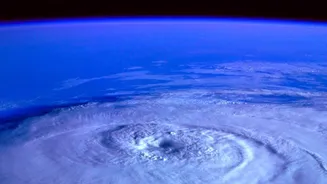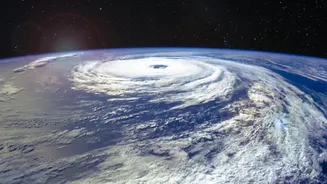





The US climate agency NOAA has issued a significant warning: there is a nearly 60% chance of a historically strong El Niño. This isn't just a weather report; for India, it's a critical alert that could shape our seasons and economy.
What Exactly Is El Niño?
El Niño is a natural,
recurring climate pattern characterized by the unusual warming of surface waters in the eastern and central tropical Pacific Ocean. This isn't just a patch of warm water; it's a massive shift in the ocean-atmosphere system. Normally, trade winds blow from east to west, pushing warm water toward Asia and Australia. During an El Niño, these winds weaken or even reverse, causing the warm water to slosh back towards the coast of South America. This change might seem distant, but it sets off a chain reaction, disrupting weather patterns, ocean conditions, and marine life across the globe.
From Strong to 'Exceptional'
Not all El Niños are created equal. Their strength is measured by how much the sea surface temperature deviates from the average. An event is officially designated 'very strong' or 'super' when temperatures in a key region of the Pacific Ocean rise by 2°C or more above average. The latest bulletins from the US National Oceanic and Atmospheric Administration (NOAA) are sounding the alarm because the current event is tracking to be one of these high-impact phenomena. The agency's November 12 update placed the probability of this El Niño becoming a 'historic' event—exceeding records dating back to 1950—at about 60%. This is based on specific temperature thresholds being met, with some parts of the Pacific already showing anomalies greater than 4°C.
What This Means for India's Monsoon
For India, the primary concern with any El Niño is its well-documented link to a weaker southwest monsoon. The monsoon is the lifeblood of Indian agriculture, delivering about 75-80% of the country's annual rainfall. A strong El Niño often correlates with deficient rainfall and even drought conditions in India. It disrupts the normal atmospheric circulation, essentially 'stealing' the moisture that would otherwise fall over the subcontinent. While it's not a perfect one-to-one correlation—not every El Niño year results in a drought—the risk is significantly higher. Some studies suggest that under global warming, the link between El Niño and a poor monsoon is actually getting stronger.
Beyond a Weakened Monsoon
The impacts of a super El Niño in India extend beyond just the summer rains. The phenomenon is also linked to warmer winters, especially across the northern parts of the country. A recent forecast from the International Centre for Integrated Mountain Development (ICIMOD) suggests that the current super El Niño could lead to above-normal temperatures and heavier winter precipitation, including snow, in parts of the western Himalayas, potentially increasing risks of floods and landslides. Conversely, southern India might experience drier-than-usual conditions during the northeast monsoon season. These altered weather patterns can affect everything from water reservoir levels, which are already strained after a poor monsoon, to the sowing of winter (Rabi) crops like wheat.
The Ripple Effect on the Economy
The economic consequences of a powerful El Niño can be widespread. With nearly half of India's workforce dependent on agriculture, a poor monsoon directly impacts rural incomes and purchasing power. This slowdown in rural demand can affect industries from tractors to fast-moving consumer goods. Furthermore, lower crop yields can lead to shortages of essential food items, pushing up food inflation and putting pressure on household budgets. The government may face increased fiscal pressure from the need for subsidies or relief measures. Even the energy sector is not immune; reduced rainfall can lead to lower output from hydropower plants, increasing reliance on other sources like coal.