







A World of Metal on a Long Journey
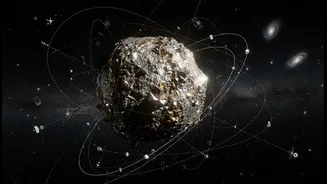
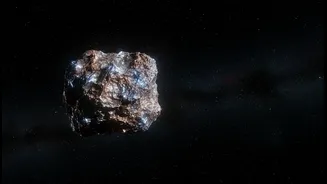
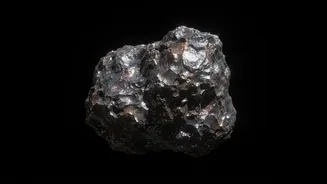
So, what exactly is 16 Psyche? Unlike most asteroids, which are rocky or icy, Psyche is believed to be the exposed metallic core of a protoplanet—a small world that failed to fully form during the early days of our solar system. It's a massive body, about
225 kilometers in diameter, thought to be composed largely of iron and nickel, with potential traces of gold and platinum. This unique composition makes it a scientific goldmine, offering a rare glimpse into the building blocks of planets like Earth. To study it, NASA launched the Psyche spacecraft in October 2023. However, the journey is long; after a successful gravity-assist flyby of Mars in May 2026, the probe is now on a direct course to arrive at the asteroid in the summer of 2029. The mission's goal is purely scientific: to understand planetary formation. But its destination has inadvertently highlighted a major gap in how we govern the final frontier.
The Quadrillion-Dollar Question
The conversation around Psyche often includes an almost unbelievable number: estimates of its value have reached as high as $10,000 quadrillion. While this figure is a theoretical calculation based on current commodity prices, it has captured the imagination of a burgeoning private space industry. Companies are no longer just launching satellites; they are actively developing plans for mining resources in space. The logic is simple: if resources like rare Earth elements are finite on our planet, asteroids could become the mines of the future. Psyche represents the ultimate, if distant, prize in this new economic race. The potential for such immense wealth raises fundamental questions. If a private company were to mine an asteroid, who would own the resources they extract? This isn't just a hypothetical scenario; it's the central conflict driving the debate over the future of the space economy.
A Legal and Ethical Vacuum
The primary legal framework for space, the 1967 Outer Space Treaty, declares that celestial bodies are not subject to national appropriation. Essentially, no country can plant a flag on the Moon or an asteroid and claim it as their own. The treaty establishes space as the "province of all mankind." However, it is largely silent on whether private companies can extract and sell resources. This ambiguity has created a legal grey area. The United States, through its 2015 Commercial Space Launch Competitiveness Act and the more recent Artemis Accords, has taken the stance that private entities are entitled to the resources they recover. This has been praised by commercial space advocates but criticized by others. Nations like Russia and China have argued this approach is a form of colonialism that violates the spirit of the Outer Space Treaty. The Accords are not universally signed, leaving the world without a consensus on who is allowed to profit from space.
More Than Just Mining
This is where the term "cosmic colonization" enters the conversation. Critics of the first-come, first-served approach championed by the Artemis Accords warn that it could replicate historical patterns of colonization on Earth. Wealthy nations and powerful corporations could dominate space resources, widening the gap between them and the rest of the world. The debate is about ensuring that the benefits of space exploration and resource utilization are shared equitably among all of humanity, as the Outer Space Treaty originally intended. Proponents argue that allowing for private enterprise is the only way to fund the massive investment required for space development, which could ultimately benefit everyone. This ideological clash—between space as a shared commons versus a frontier for commercial opportunity—is at the heart of the Psyche debate. The asteroid itself is just a symbol of a much larger argument about our future in the cosmos.