




Not Just More or Less, But When and How
When we talk about changing rainfall, it's easy to think in simple terms of droughts or floods. The reality for India's forests, however, is far more nuanced. It’s not just about the total volume of rain that falls in a year, but about its timing, intensity,
and duration. A delayed monsoon can stress trees that have evolved to expect water at a certain time. A shorter season with more intense downpours can lead to rapid runoff and soil erosion, meaning less water is actually absorbed into the ground where tree roots can access it. Recent climate data shows that while some parts of India may see an increase in total precipitation, many regions are experiencing more variable and extreme rainfall events. This unpredictability disrupts the delicate lifecycle, or phenology, of forests that have been synchronized with stable seasonal cues for millennia.
The Vulnerability of Dry Forests
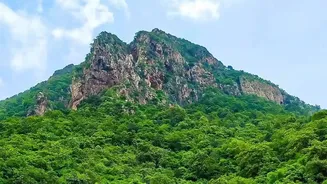
India's tropical dry deciduous forests, which cover large parts of the country's centre and the Deccan Peninsula, are particularly sensitive to these shifts. These forests are naturally adapted to long dry seasons, but their resilience has limits. A 2026 study focusing on the Panchmarhi Biosphere Reserve in central India revealed that shifts in rainfall, combined with rising temperatures, contributed to a 13% loss of forest cover over nearly five decades. The dry teak forests within this reserve saw the most significant decline in canopy cover. Researchers note that dry forests operate closer to their moisture stress limits, making them more vulnerable to extended droughts or shifts in monsoon timing. Even a seemingly small change in rainfall can have a significant impact on their health, growth, and even increase the risk of forest fires.
A Different Challenge for Wet Forests
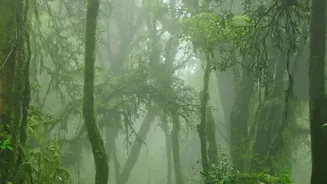
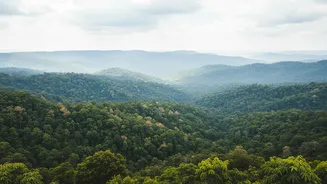
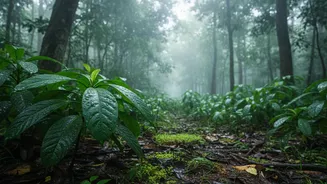
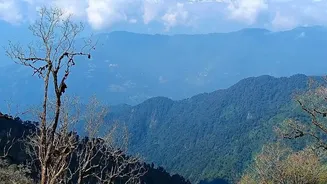
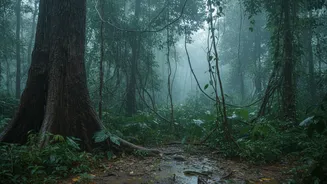
One might assume that wetter forests, like the evergreen canopies of the Western Ghats and the Northeast, would be more resilient. To an extent, they are. Their high average rainfall provides a buffer against short-term dry spells. However, they face a different set of challenges. Studies have raised concerns that under scenarios of very high carbon dioxide emissions, these biodiversity hotspots could see a shift from evergreen to deciduous characteristics if rainfall decreases significantly. Furthermore, an increase in extreme rainfall events, which has been observed over the past few decades, is not necessarily beneficial. Intense deluges can wash away topsoil, leach essential nutrients, and damage the forest structure, showing that even for regions known for being the wettest places on earth, there can be too much of a good thing.
A Complex and Varied Picture
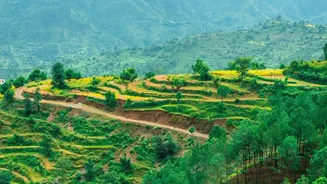
The impact of changing rainfall is not uniform across the subcontinent. The picture is a complex mosaic of gains and losses. Some research projects an overall increase in forest carbon storage by the end of the century, with the largest gains potentially happening in semi-arid and desert zones that become wetter. However, this greening trend might mask a decline in forest health. Studies from IIT Kharagpur have pointed out a paradox: while satellite data shows India getting greener, the photosynthetic efficiency—the ability of forests to convert light and carbon into biomass—has declined in some of India's most pristine forests. This suggests that while there may be more vegetation in some areas, the ecosystems themselves could be growing weaker and less resilient to stress from warming temperatures and erratic moisture levels.