



What is Nordic Walking?
At its core, Nordic walking is an enhanced walking technique that uses specially designed poles to engage the upper body with every stride. Originating in Finland as a summer training method for cross-country skiers, it transforms a standard walk into
a more comprehensive exercise. Unlike hiking or trekking poles, which are primarily for stability on uneven terrain, Nordic walking poles are used to actively propel yourself forward. This specific motion is the key to activating muscles in your arms, shoulders, chest, back, and core, turning a lower-body exercise into one that works almost your entire body.
The Full-Body Fitness Advantage
The primary benefit of Nordic walking is its incredible efficiency. While regular walking engages around 50% of your body's muscles, primarily below the waist, adding the specific poling technique of Nordic walking activates 80% to 90% of your muscles. This increased muscle engagement leads to a significant boost in calorie expenditure, with studies showing it can burn anywhere from 18% to over 45% more calories than regular walking. This heightened activity also elevates your heart rate more effectively, providing a superior cardiovascular workout without the high-impact stress of running. Research has linked it to reductions in fat mass and improvements in muscle strength, endurance, and flexibility.
More Than Just a Workout
The benefits extend beyond calorie burn and muscle toning. The use of poles provides four points of contact with the ground, which significantly improves stability and balance, making it an excellent activity for older adults or those with balance concerns. This added support can also reduce the load and pressure on lower-body joints like the knees. Furthermore, studies have shown that Nordic walking can help reduce chronic pain, ease muscle tension in the neck and shoulders, and improve posture by strengthening back and core muscles. Its rhythmic, coordinated movement of opposite arms and legs also helps reinforce normal gait mechanics.
Getting Started: Poles and Technique
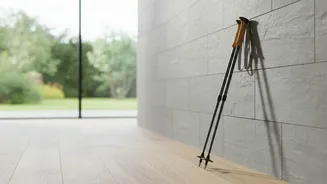
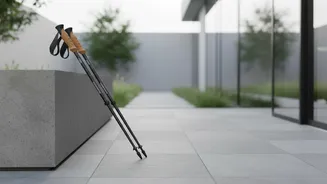
To begin, you need the right equipment. Nordic walking poles are distinct from hiking poles; they are lighter and feature a special glove-like strap system that allows you to push off and propel yourself forward correctly. Poles can be made from lightweight aluminium or even lighter carbon fibre, which also dampens vibration. They come in fixed-length or adjustable models; adjustable poles are often recommended for beginners as you can fine-tune the height. The basic technique involves walking with your opposite arm and leg forward, keeping the poles angled diagonally backward. As you step forward with your left foot, your right arm swings forward to plant the pole. You then push off the pole as your arm swings back, opening your hand at the end of the movement to maintain a fluid motion.
Why the Renewed Popularity?
Nordic walking's resurgence can be attributed to a growing desire for fitness activities that are low-impact, accessible, and can be done outdoors. It's a highly adaptable workout, suitable for all ages and fitness levels, from athletes cross-training to beginners seeking a gentle way to get active. It can be done in a city park, on a country trail, or along a coastal path, offering a social and enjoyable way to exercise. As people look for sustainable fitness routines that are easy on the joints but still deliver real results, Nordic walking has emerged as a perfect solution that combines strength, cardio, and the simple joy of being outdoors.