

The Universe’s ‘Missing Link’
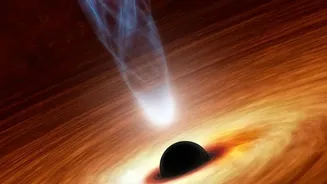
When it comes to black holes, size matters. For decades, scientists have had strong evidence for two main categories. First, there are stellar-mass black holes, typically five to 50 times the mass of our Sun, formed from the collapse of individual giant
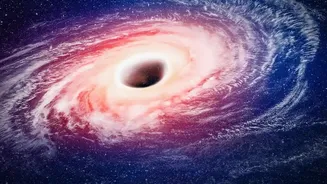
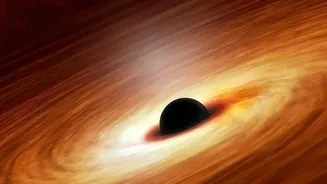
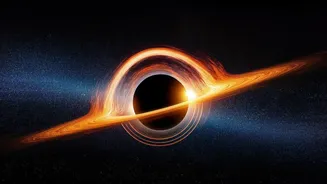
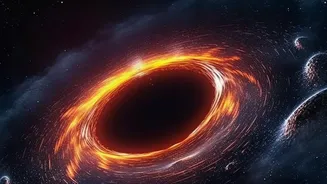
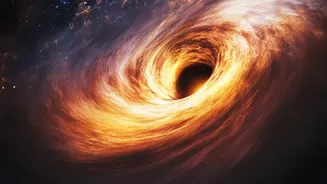
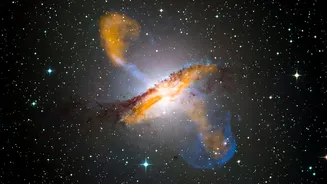
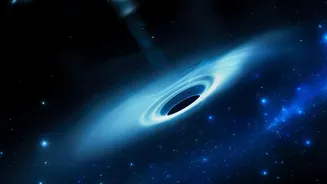
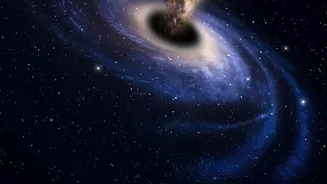
stars. At the other extreme are the supermassive black holes, behemoths millions or even billions of times our Sun’s mass that sit at the heart of nearly every large galaxy, including our own Milky Way. But what about the ones in between? This gap in the family portrait belongs to intermediate-mass black holes (IMBHs). Ranging from 100 to over 100,000 solar masses, these objects have been frustratingly difficult to find, earning them the title of the “missing link” in black hole evolution. Scientists have theorized that supermassive black holes must grow by swallowing smaller ones, suggesting IMBHs are a crucial stepping stone in this process. Finding them is key to confirming how the universe's largest structures came to be.
Listening to Spacetime Ripples
Finding IMBHs requires a revolutionary tool, because they are often dark and dormant. This is where gravitational waves come in. First predicted by Albert Einstein, these are invisible ripples in the very fabric of spacetime, created by the most violent events in the cosmos, such as the collision of two black holes. As these waves travel across the universe at the speed of light, they carry information about their source. By the time they reach Earth, these ripples are incredibly faint, thousands of times smaller than the nucleus of an atom. Giant L-shaped detectors, like those of the LIGO (Laser Interferometer Gravitational-Wave Observatory) in the U.S. and the Virgo detector in Italy, are designed to catch these minuscule vibrations. By triangulating signals between these observatories, scientists can pinpoint where a cosmic collision happened and, most importantly, calculate the masses of the objects involved.
New Detections Rewrite the Story
Recent observing runs by the global network of gravitational wave detectors, including LIGO, Virgo, and KAGRA in Japan, have been incredibly fruitful. A new catalog of gravitational wave events released in mid-2026 nearly doubled the number of black hole collisions ever identified. Among these new cosmic “chirps” are several definitive signals from the mergers of black holes in the intermediate-mass range. These observations provide the strongest evidence yet that IMBHs not only exist but are actively merging. One line of evidence comes from spotting what are called “hierarchical mergers.” This is when a larger black hole, itself the product of a previous merger, collides with another. Scientists have identified several of these “second-generation” events, which are a key pathway for building up to IMBH sizes and eventually, supermassive black holes.
Expanding Our Cosmic Timeline
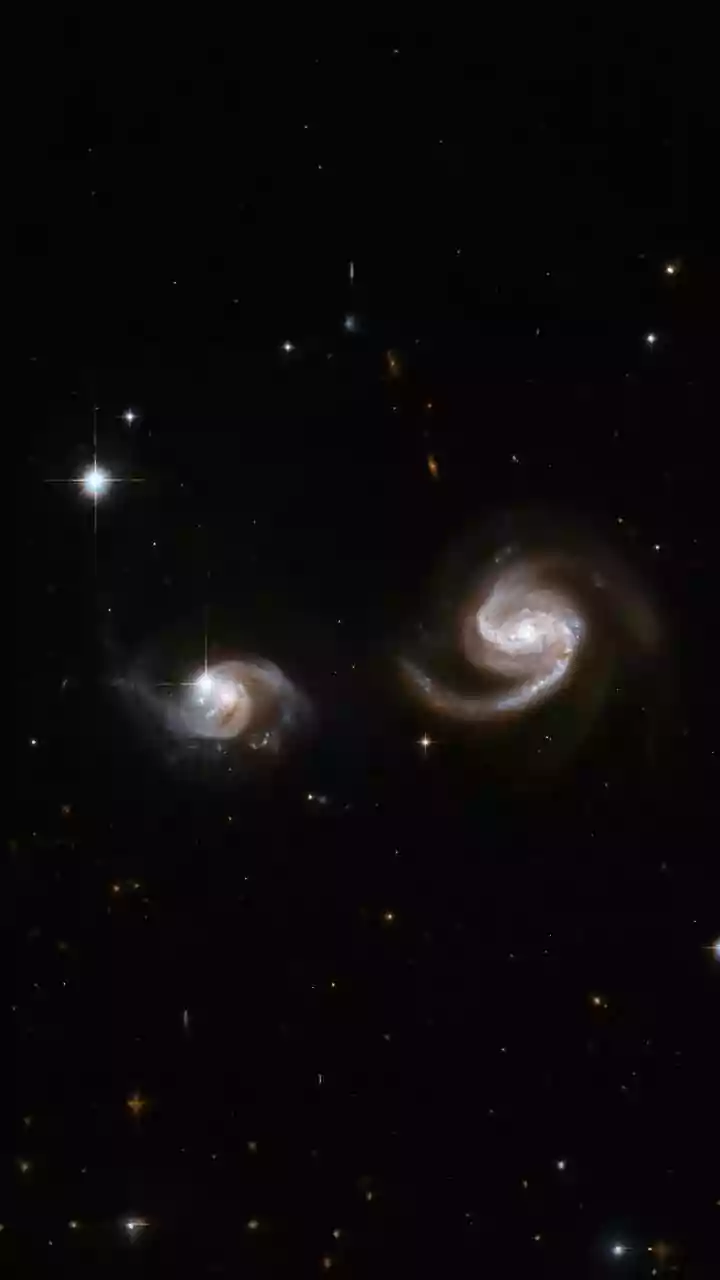
So how does this expand our cosmic timeline? The discovery of these IMBH mergers doesn't mean the universe is older. Instead, it pushes back the date for when large cosmic structures began forming. By detecting these events from billions of light-years away, astronomers are essentially looking back in time. The presence of IMBHs in the early universe suggests that the seeds of today's supermassive black holes were planted sooner and grew faster than some models predicted. These new detections are providing the first observational data points for a crucial, previously invisible era of cosmic history. We are no longer just theorizing about how galaxies might have built their central giants; we are now directly observing the building blocks in action. This allows scientists to refine their models of galaxy formation and evolution, giving us a clearer, more complete picture of the universe's adolescence.