



Get Ready for the Night
To make the most of your stargazing session, a little preparation goes a long way. Find a spot away from city lights; even a short drive out of town can dramatically increase what you can see. The best stargazing happens during the week around the New
Moon, which falls on October 10th this year, providing the darkest skies. Allow your eyes about 20-30 minutes to fully adapt to the darkness—avoid looking at your phone screen, as its white light will reset your night vision. If you need a light, use a red torch. Mobile apps like Stellarium or Sky Tonight can be invaluable, acting as a live map of the sky above you.
A Parade of Planets
October 2026 is a brilliant month for planet watchers. The star of the show is Saturn, which reaches opposition on October 4th. This means Earth is directly between the Sun and Saturn, making the ringed planet appear at its brightest and largest for the year. It will be visible all night long, rising in the east around sunset. While you need a telescope to see its rings clearly, its bright, steady, yellowish glow is unmistakable to the naked eye. Early risers can catch a beautiful pairing in the pre-dawn sky: reddish Mars will be visible above the intensely bright, white light of Jupiter. On the morning of October 5th, the crescent Moon will appear near Mars. Though visible, Mercury and Venus will be low on the western horizon after sunset early in the month and may be difficult to spot.
Two Meteor Showers to Catch
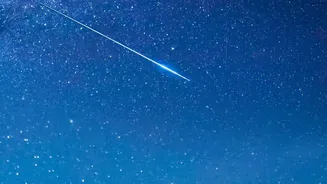
October offers two opportunities to see shooting stars. First up is the Draconid meteor shower, which peaks on the evening of October 8-9. This is a minor shower, typically producing about 5 to 10 meteors per hour, but viewing conditions are perfect this year as the peak coincides with a nearly new moon, meaning dark skies. Unlike most showers, the Draconids are best viewed in the evening, just after full darkness falls. The main event is the Orionid meteor shower, which peaks in the pre-dawn hours of October 21-22. Produced by debris from the famous Halley's Comet, the Orionids are known for being fast and bright, sometimes leaving persistent trails. You can expect to see up to 20 meteors per hour under dark skies. A bright waxing gibbous Moon will be in the sky, but it sets around 3 a.m., leaving a window of dark sky until dawn—the prime time to watch.
Constellations and a Distant Galaxy
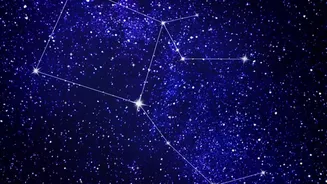
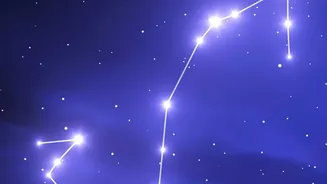
With the skies now clear after the monsoon, it's a great time to learn some new constellations. Look high in the sky for the Great Square of Pegasus, a large and easily identifiable asterism that forms the body of the mythical winged horse. This celestial signpost is prominent throughout the month. Using the Great Square, you can find the nearby constellation Andromeda. From a truly dark site, you might spot a faint, fuzzy patch of light known as the Andromeda Galaxy (M31). This is the most distant object you can see with your naked eye, located 2.5 million light-years away. Binoculars will make this smudge of light much more distinct, revealing it as an entire galaxy outside our own. Also look for the distinctive 'W' shape of Cassiopeia high in the northern sky.