





A First Taste of Glory
India's journey with the Games began in 1934 in London, back when they were called the British Empire Games. A small contingent of six athletes represented a nation still under colonial rule. It was here that wrestler Rashid Anwar etched his name in history,
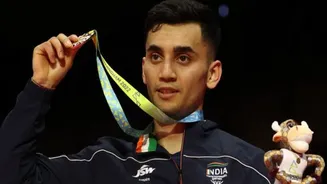
winning a bronze medal—India's very first at the event. But the moment that truly announced India's arrival came in 1958 at Cardiff. The legendary sprinter Milkha Singh, the 'Flying Sikh', won gold in the 440-yard race, becoming the first Indian to stand atop the podium at the CWG. This victory was more than a medal; it was a powerful statement of intent from a young, independent nation and sparked a new belief in Indian athletics.
The Launchpad for Future Champions
For decades, the Commonwealth Games has served as a crucial stepping stone for Indian athletes. The competition, while fierce, is often seen as a more accessible international stage compared to the pressure cooker of the Olympics. It provides athletes with invaluable exposure and a chance to test their mettle against world-class competitors from nations like Australia, England, and Canada. Countless Indian sporting heroes had their first major multi-sport success at the CWG before going on to achieve greatness at the Asian Games or the Olympics. This makes the Games a vital part of the development pipeline, building confidence and experience that pays dividends on bigger stages.
An Arena of Dominance
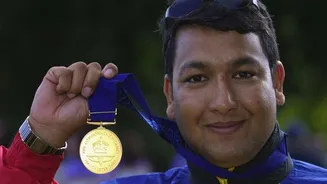
While success has come across various disciplines, certain sports at the CWG have become synonymous with Indian dominance. For many years, shooting was India's most successful event, contributing a staggering 135 medals to the nation's overall tally. Shooters like Jaspal Rana, who won 15 medals, became household names thanks to their CWG exploits. In recent times, wrestling, weightlifting, and badminton have become fortresses for the Indian contingent. The sight of Indian athletes consistently winning a flurry of medals in these sports creates a unique sense of national pride and anticipation that is specific to the Commonwealth Games.
The Transformative Delhi 2010 Games
Hosting the Commonwealth Games in Delhi in 2010 was a watershed moment for Indian sport. Despite controversies surrounding the preparations, the event itself was a spectacular success for the home team. Indian athletes delivered their best-ever performance, finishing second in the medal tally for the first and only time with an unprecedented haul of 101 medals, including 38 golds. The energy of the home crowds and the state-of-the-art infrastructure created a powerful legacy. It boosted government and corporate funding for sports, gave a generation of athletes top-tier facilities, and arguably ignited the self-belief that has led to improved performances across the board.
Beyond Medals: Camaraderie and Future Ambitions
The significance of the Games also lies in its spirit. It is often called the 'Friendly Games' for a reason. The shared history among Commonwealth nations, however complex, creates a unique atmosphere of camaraderie. For India, it’s a platform not just for competition but also for soft power and diplomacy. Looking ahead, India's relationship with the CWG is set to deepen. Ahmedabad is slated to host the Games in 2030, exactly two decades after the Delhi spectacle. This is seen as a crucial step in India's ambition to bid for the 2036 Olympic Games, further cementing the CWG's special role as both a link to the past and a bridge to the future of Indian sport.