





What is the PJ.2.1 Variant?
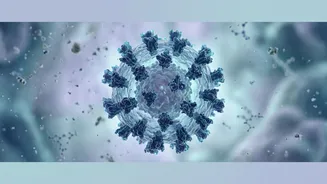
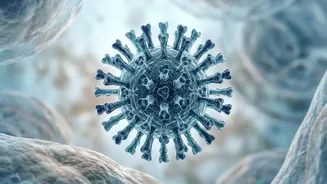
First detected in Canada in May 2026, PJ.2.1 is a descendant of the JN.1 lineage, which belongs to the wider Omicron family of SARS-CoV-2. It has since been identified in the United States, Europe, Asia, and Australia. Scientists are paying attention
because it is a 'saltation' variant, meaning it has a large number of genetic changes, particularly in its spike protein, which the virus uses to enter human cells. These extensive mutations are why organisations like the World Health Organization (WHO) are monitoring it closely to understand its behaviour. However, it's important to note that as of mid-November 2026, PJ.2.1 has not been designated a 'variant of interest' or 'variant of concern' by the WHO.
Is It More Dangerous?
This is the crucial question on everyone's mind. Currently, there is no evidence to suggest that PJ.2.1 causes more severe disease, higher rates of hospitalisation, or increased mortality compared to other circulating variants. While preliminary lab studies indicate that its mutated spike protein may bind more efficiently to human cells, this doesn't automatically translate to more severe illness in people. Experts stress the distinction: a variant can be more transmissible without necessarily being more virulent or deadly. As one physician noted, while new variants will continue to emerge, there's currently no convincing evidence that recent ones are causing more severe illness or require different treatments.
What Are the Symptoms?
The symptoms associated with PJ.2.1 are largely indistinguishable from other COVID-19 variants and even other common respiratory illnesses like the flu or a cold. The WHO has noted that symptoms can include fever, cough, sore throat, runny nose, headache, muscle aches, and fatigue. Some reports mention a particularly severe sore throat or prolonged fatigue, but these have not been established as unique features of PJ.2.1. Because the symptoms overlap so much, the only definitive way to know if you have COVID-19 is to get tested.
Do Vaccines and Prior Immunity Offer Protection?
Early findings are cautiously optimistic. One preliminary study found that PJ.2.1 was not substantially better at escaping antibodies from variant-adapted vaccines compared to other variants. In fact, the reduction in antibody effectiveness against PJ.2.1 was less significant than for several other circulating variants. This suggests that current vaccines should still offer a degree of protection. Experts also note that there is extensive cross-immunity between different COVID-19 lineages, meaning infection with one variant likely improves the body's ability to fight off another. However, as the virus evolves, continued monitoring and vaccine updates remain crucial.
The Situation in India
As of mid-November 2026, there has been no official public confirmation of PJ.2.1's detection in India by the Indian SARS-CoV-2 Genomics Consortium (INSACOG). However, with international travel connecting India to countries where the variant is present, its arrival is a possibility. Indian health experts are calling for strengthened genomic surveillance to track its potential circulation. Doctors advise that there is no need for panic. Instead, the public should remain informed and follow familiar, sensible precautions, especially with the festive season and winter increasing social gatherings and travel.