




From Paper Charts to Pocket Planetariums
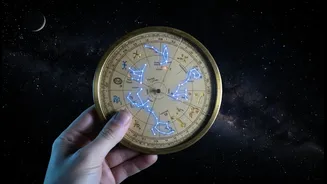
For centuries, star maps were static, two-dimensional guides to the heavens, evolving from Babylonian clay tablets to meticulously drawn charts. They required skill to use, forcing budding astronomers to learn the celestial sphere's geography by cross-referencing
their charts with the stars above. Today, that entire process is condensed into a smartphone app. Applications like Stellarium, SkyView, and Star Walk act as dynamic, interactive planetariums. They use your phone's internal sensors—its GPS, compass, and gyroscope—to know exactly where and when you are, presenting a perfect simulation of the sky above you in real-time.
The Magic of Augmented Reality
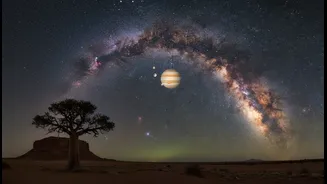
The most transformative feature of these digital tools is augmented reality (AR). By simply pointing your phone towards any part of the sky, the app overlays information directly onto your camera's view. That faint dot becomes identified as Jupiter, constellation lines are drawn to connect scattered stars into familiar shapes, and the path of the International Space Station is traced across the twilight. This technology removes the guesswork that often frustrated beginners. Instead of wondering if you're looking at the right star, you get instant identification and a wealth of information, turning a confusing starfield into a navigable, annotated map.
Lowering the Barrier to Entry
The steep learning curve of traditional astronomy once kept many would-be stargazers at bay. Digital sky maps have flattened that curve dramatically. Now, anyone with a smartphone can step outside, identify planets, and learn the names of constellations within minutes. This democratization of astronomy has ignited curiosity in a whole new audience, from children to casual campers who might never have considered buying a telescope or a complex star atlas. The experience is more accessible and immediately rewarding, fostering a connection to the cosmos without demanding extensive prior knowledge.
More Than Just Identification
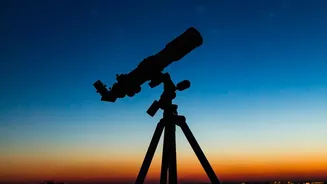
Modern astronomy apps go far beyond simple star-naming. Many serve as comprehensive tools for planning and enrichment. They feature calendars of upcoming celestial events, sending you notifications for meteor showers, eclipses, or visible satellite passes. Apps like Stellarium and SkySafari boast massive databases, containing billions of stars and millions of deep-sky objects like nebulae and galaxies. For advanced users, some apps offer telescope control, allowing you to automatically point your telescope at an object you've selected on your screen. Many also include a red-light mode to preserve your night vision.
A New Kind of Wonder
Some traditionalists argue that these apps remove the romance of the 'hunt' and the satisfaction of finding a faint galaxy through skill and patience. It's a valid point; the experience is different. However, it's not lesser, just reframed. The wonder is no longer solely in the discovery, but also in the immediate comprehension of what you are seeing. Learning that a dim star is actually a galaxy a million light-years away, or seeing the 3D structure of a constellation, provides a different but equally profound sense of awe. These apps offer layers of context—from mythology behind constellations to high-resolution images of planets—that enrich the viewing experience instantly.