






Our Air: A Breath of Concern
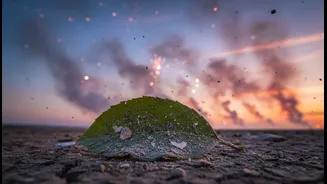
Let's talk about air. In 2026, cities like Delhi, Ghaziabad, and others across northern India continue to struggle with air pollution. According to the World Air Quality Report, India ranked as the sixth most polluted country globally in 2025. The main
culprit is PM2.5 – tiny particles that can enter our lungs and cause health issues. While a recent spell of rain brought temporary relief to Delhi, giving it a rare 'good' air day, the underlying problem persists. Experts point out that a vast majority of India's population lives in areas without air quality monitors, meaning the problem could be even wider than we know. The annual average PM2.5 concentration in India remains nearly ten times higher than the World Health Organization's guideline, highlighting a long-term public health challenge.
The Water Story: A Tale of Extremes
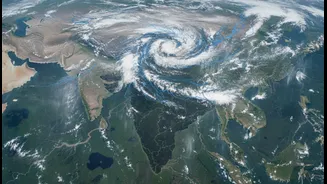
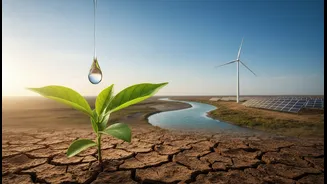
India's water situation is a paradox of too much and too little. On one hand, extreme weather events, intensified by climate change, caused devastating floods in 2025. On the other hand, many parts of the country are facing a severe water crisis. With only 4% of the world's freshwater but 18% of its population, the strain is immense. Agriculture uses about 80% of our freshwater, often inefficiently, leading to rapid depletion of groundwater in nearly 70% of districts. By early 2026, water levels in many of the nation's major reservoirs had dropped to alarming lows even before summer. This isn't just about scarcity; it's about management. Cities lose a huge amount of treated water to leaky pipes, and less than a third of urban wastewater is properly treated before being discharged.
Waste Mountain: Where Does It All Go?
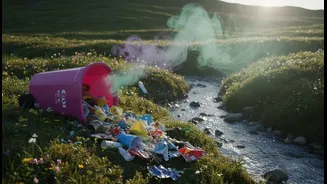
Think about the trash your household generates. Now multiply that by millions. India's cities are grappling with a massive waste management problem. Overflowing landfills, poor segregation of wet and dry waste at the source, and inefficient processing are common sights. New Solid Waste Management Rules were introduced in 2026 to tackle this, focusing on digital tracking and making large waste generators more responsible. However, challenges remain. Waste management has emerged as one of the biggest environmental hurdles for most states, even those performing well on other indicators. A concerning trend in the new rules is a push towards waste-to-energy incineration, which can create toxic ash and discourage the crucial practice of separating waste at its source.
The Green Shift: A Ray of Sunshine?
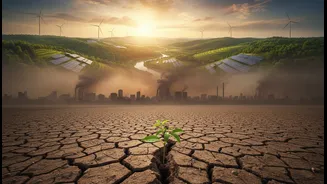
It's not all grim news. India is making significant strides in renewable energy. As of April 2026, the country's renewable energy capacity stood at nearly 280 GW, with solar power leading the charge. India now has the world's third-largest renewable energy capacity. This shift is crucial for meeting our rising electricity demand, which is projected to hit 270 GW in 2026. In a landmark achievement, clean energy sources like solar, wind, hydro, and nuclear met over 50% of the country's electricity demand for the first time on July 6, 2026. This progress is vital for India's goals of reducing its carbon footprint and achieving net-zero emissions by 2070. States like Gujarat, Rajasthan, and Tamil Nadu are leading this green transition.
Our Wild Neighbours: Protecting Our Heritage
India is one of the most biodiverse countries in the world, home to iconic species like tigers and elephants. Conservation efforts have shown success, with India strengthening its protected areas and launching community-led programs. However, our wildlife faces increasing pressure. The 2026 State of India's Environment report highlights rising human-tiger conflicts, partly driven by invasive plants like Lantana camara that degrade forest habitats. While flagship species get attention, critical ecosystems like grasslands and wetlands often remain underfunded and are sometimes misclassified as 'wastelands'. The path forward involves balancing development with conservation and moving towards protecting entire ecosystems, not just individual species. India has also committed to global goals like the '30x30' target, aiming to conserve 30% of its land and oceans by 2030.