




The Hidden Danger of Potholes
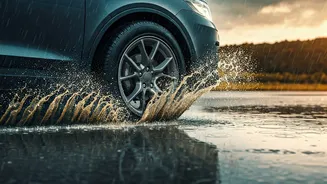
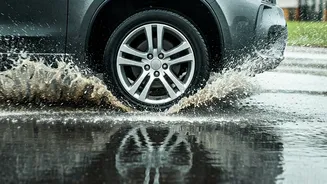
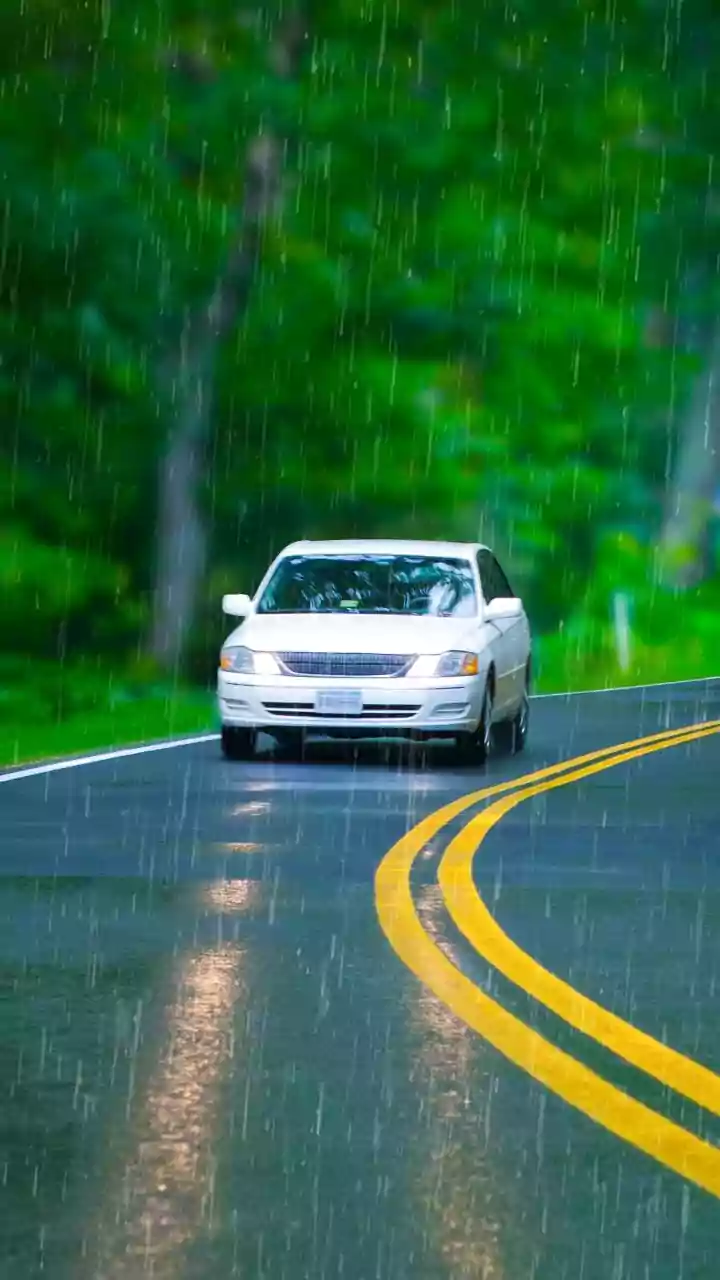
Potholes are a year-round menace, but the monsoon makes them exponentially more dangerous. Rainwater fills them up, completely obscuring their depth and size. What looks like a shallow puddle could be a deep crater capable of severely damaging your car's
tyre, rim, or suspension. Hitting one at speed can even cause a loss of control. Furthermore, swerving suddenly to avoid a last-minute pothole can be just as risky, potentially causing a collision with another vehicle. The best defence is to reduce your speed significantly on water-logged roads and avoid driving through large, standing puddles whenever possible. Assume every puddle hides a potential threat.
The Silent Threat of Aquaplaning
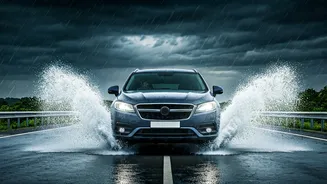
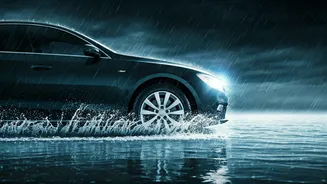
Aquaplaning, or hydroplaning, is one of the most frightening experiences a driver can have. It occurs when a layer of water builds up between your tyres and the road surface, leading to a complete loss of traction. Your steering and brakes become temporarily useless, and the car effectively skims across the water. It happens most often at higher speeds (above 55-60 km/h) on very wet roads. To prevent it, ensure your tyres have adequate tread depth and are properly inflated. If you feel the car start to aquaplane, do not slam on the brakes or jerk the steering wheel. Instead, ease your foot off the accelerator and keep the steering wheel straight until you feel the tyres regain their grip on the road.
Drastically Reduced Visibility
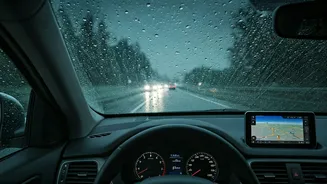
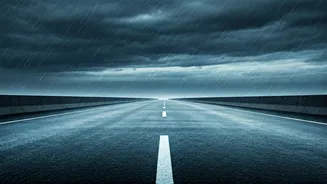
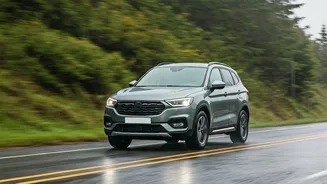
Heavy rainfall is an obvious visibility blocker, but it's not the only one. Your own windscreen can fog up from the inside due to the temperature difference, and spray from large vehicles ahead can completely blind you for a few crucial seconds. Before the monsoon begins, check that your wiper blades are in good condition and can clear water effectively. Use your car’s defogger to keep the windshields clear. Most importantly, turn on your low-beam headlights (not high beams, which reflect off the rain and worsen visibility) even during the day. This not only helps you see but, more critically, helps other drivers see you.
Compromised Braking Efficiency
Your brakes do not work as well in the wet. Water on the brake pads and discs reduces friction, meaning it will take you a longer distance to come to a complete stop. This is a simple law of physics that many drivers forget in the moment. To compensate, you must increase the following distance between your vehicle and the one in front. A three-second gap is a minimum; in heavy rain, a five or six-second gap is much safer. Avoid sudden, hard braking. Instead, anticipate stops and apply gentle, steady pressure on the pedal. If you've driven through deep water, lightly tap your brakes a few times afterwards to help dry them out.
Unpredictable Road Users
During a downpour, everyone is in a hurry to get out of the rain. This leads to erratic behaviour from all road users. Pedestrians may dash across the street without looking, and two-wheelers might swerve unexpectedly to avoid a puddle or seek shelter under a flyover, often blocking a lane. As a driver, you must be on high alert. This is the time for defensive driving. Scan your surroundings constantly, be extra cautious at intersections and pedestrian crossings, and be prepared for the unexpected. Your awareness is your best tool for avoiding an accident caused by someone else's haste.
Waterlogging and Electrical Failure
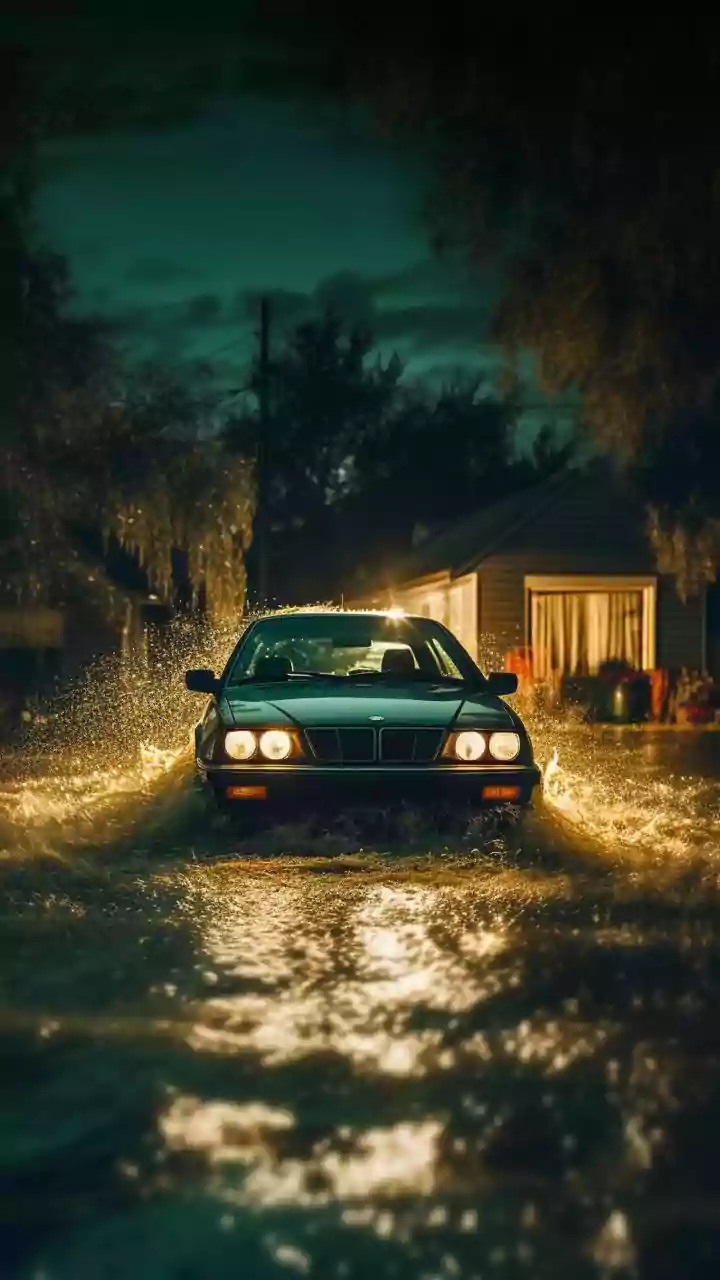
Driving through heavily waterlogged streets is a gamble. You risk water entering your engine's air intake, which can cause it to stall and lead to catastrophic, expensive damage (an issue known as hydrostatic lock). Moreover, modern cars are packed with electronics. Submerging the undercarriage can lead to short circuits and long-term electrical problems that are difficult to diagnose and fix. If you are unsure about the depth of the water, it is always safer to stop, turn around, and find an alternative route. A delay is far better than a dead car stranded in the middle of a flood.