



More Than Just Sunshine
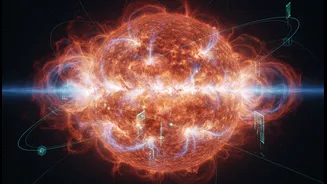
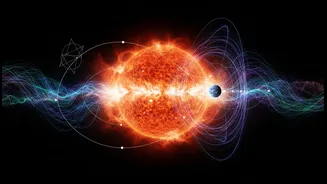
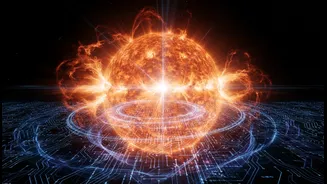
When we think of the sun, we picture a steady source of light and warmth. But its surface is a turbulent place, home to violent eruptions. These are solar storms, and they come in a few forms. The most significant are solar flares and coronal mass ejections
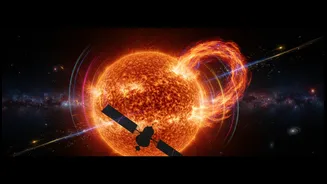
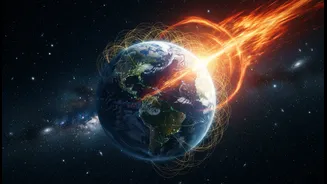
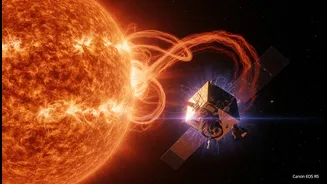
(CMEs). A solar flare is an immense burst of radiation, primarily X-rays and UV light, that can reach Earth in just eight minutes. A CME is even more dramatic: a colossal explosion of plasma and magnetic fields from the sun's outer atmosphere, the corona. These clouds of charged particles can contain billions of tons of matter and travel at speeds up to 3,000 kilometres per second, sometimes reaching Earth in less than a day.
A Cosmic Collision Course
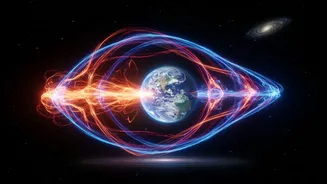
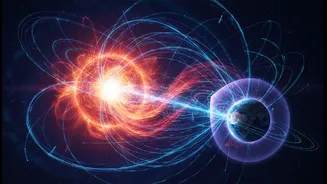
Fortunately, Earth has a natural defense: the magnetosphere, an invisible magnetic shield that deflects most of this solar onslaught. However, a powerful and correctly oriented CME can overwhelm this shield. The interaction between the solar plasma and our magnetic field triggers a geomagnetic storm. The most beautiful effect of this collision is the aurora, the stunning northern and southern lights, which are created when solar particles excite gases in our upper atmosphere. But these storms are not just pretty light shows; they represent a massive injection of energy into our planet's environment, with the potential to wreak havoc on our technological infrastructure.
The Technology at Risk
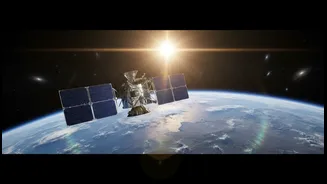
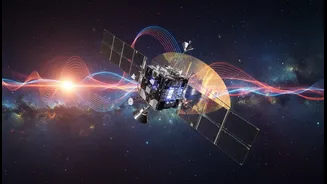
Our modern, hyper-connected world is particularly vulnerable. Geomagnetic storms can induce powerful electrical currents in the ground. These currents can flow into power grids, overloading transformers and causing them to fail, potentially leading to widespread and long-lasting blackouts. Satellites are on the front line. The surge of high-energy particles can damage their electronics, degrade solar panels, and disrupt their function. This directly threatens the services we take for granted, from GPS navigation and weather forecasting to global communications. Even the submarine cables that form the backbone of the global internet are susceptible to these induced currents. The increased radiation and atmospheric drag from a storm can also cause satellites to lose altitude and interfere with radio signals used by aircraft.
A Modern-Day Carrington Event?
History offers a stark warning. In 1859, the most intense geomagnetic storm ever recorded, known as the Carrington Event, struck Earth. It was so powerful that auroras were seen near the equator, and telegraph systems across Europe and North America failed, with some operators receiving electric shocks and pylons throwing sparks. At the time, the impact was limited to this nascent technology. If a storm of that magnitude were to happen today, the consequences would be catastrophic. It could trigger a cascade of failures across interdependent systems—power, communications, finance, and transport—on a global scale. Experts warn that replacing critical, large-scale transformers could take months or even years, highlighting our modern vulnerability.
Watching the Solar Weather
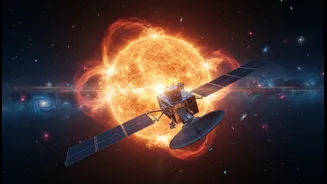
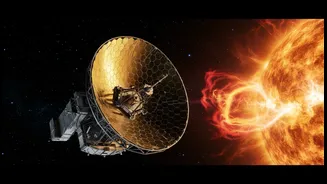
Recognising this threat, scientists and space agencies around the world are keeping a close watch on the sun. This is the field of 'space weather' forecasting. Observatories on the ground and in space, including India's first solar mission Aditya-L1, monitor the sun for sunspots and other signs of impending activity. Aditya-L1, positioned at a unique vantage point 1.5 million km from Earth, provides crucial data on solar eruptions and their structure, helping to assess their potential impact. This monitoring allows for warnings to be issued, giving satellite operators, airlines, and power grid managers time to take protective measures. With the sun currently in an active phase of its 11-year cycle, Solar Cycle 25, which has been stronger than predicted, this constant vigilance is more important than ever.