


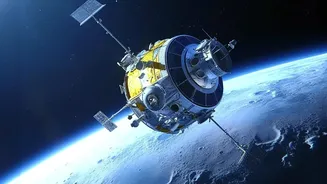

The Next Great Leap: Lunar Sample Return
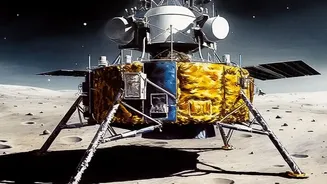
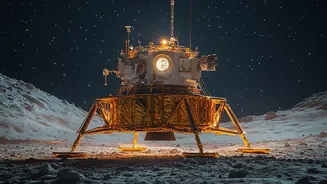
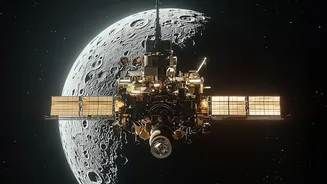
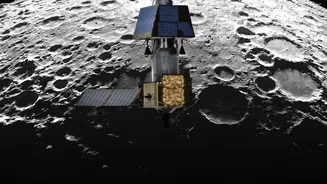
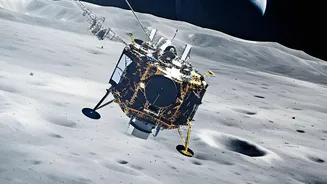
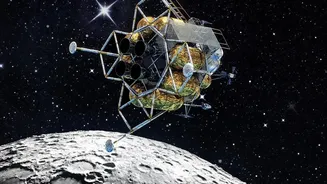
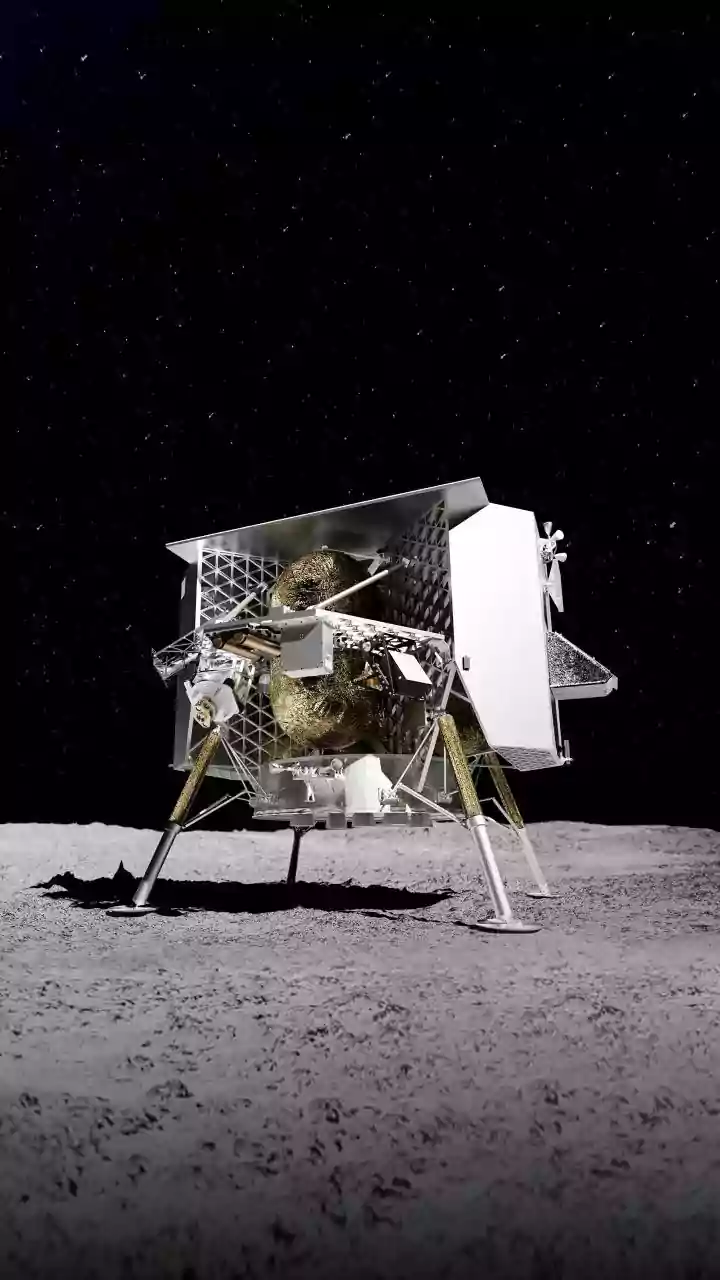
Chandrayaan-4 represents a monumental challenge for the Indian Space Research Organisation (ISRO). Scheduled for launch around 2028, the mission aims to collect up to 3 kilograms of lunar soil and rock—known as regolith—from the Moon's surface and return
it to Earth. If successful, India will join an exclusive club of nations, including the United States, the former Soviet Union, and China, that have accomplished this incredible feat. The mission is far more complex than its predecessors, involving two separate rocket launches, in-orbit docking of multiple modules, a soft landing, robotic sample collection with a drill and scooping arm, and a high-speed re-entry to Earth. The entire endeavour is a critical step towards India's long-term goal of sending an astronaut to the Moon by 2040.
What is an Earth Receiving Lab?
Bringing lunar samples back is only half the battle; receiving them safely is just as crucial. This is where an Earth Receiving Laboratory comes in. This highly specialized facility, which ISRO is in the process of designing, serves a dual purpose. Firstly, it must protect the invaluable lunar samples from contamination by Earth's atmosphere, moisture, and microbes. The samples must be kept in a pristine condition, as close as possible to how they existed on the Moon. Secondly, the lab must protect Earth. Although the risk is considered extremely low, scientists must take precautions to prevent any unknown extraterrestrial materials or potential 'moon germs' from escaping and harming our planet's biosphere, a concept known as back-contamination.
Designing a Pristine Lunar Haven on Earth
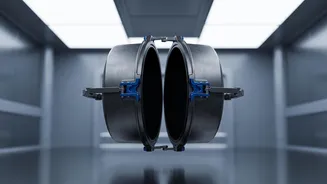
The design of a lunar receiving lab is a marvel of engineering. Inspired by the facilities built by NASA for the Apollo missions, India's lab will be an ultra-clean environment. The core of the facility will be a series of cleanrooms and vacuum-sealed glove boxes. Scientists will handle the lunar rocks and soil using remote manipulators or specialized gloves built into the chambers. The atmosphere inside these cabinets will be inert, likely filled with purified nitrogen, to prevent the lunar material from reacting with oxygen or water vapor. The entire facility is built with biological barriers and complex air pressure systems that ensure air always flows into the secure areas, never out, preventing any potential escape of lunar dust. This is essential for preserving the scientific integrity of the samples for decades of study.
Unlocking the Moon's Deepest Secrets
The scientific payoff from studying these returned samples is immense. By analysing the regolith in advanced laboratories on Earth, scientists can use equipment far more powerful than anything that can be sent on a rover. The primary target for Chandrayaan-4 is the Moon's south polar region, a site of global scientific interest due to the suspected presence of water ice in permanently shadowed craters. Analysing this ice could reveal secrets about the origin of water in our solar system. Furthermore, studying the composition of the rocks can provide a clearer picture of the Moon's geological history, its fiery origin, and its resource potential for supporting future human exploration.
ISRO's Blueprint for a New Chapter
ISRO has confirmed it is establishing a dedicated Curation Facility specifically for the Chandrayaan-4 mission, with Union Minister Dr. Jitendra Singh acknowledging the plans in Parliament. This state-of-the-art lab will be responsible for the entire chain of handling, from receiving the returned capsule to preserving and preparing samples for distribution to scientific institutions across India and potentially the world. While the exact location and full specifications are part of the ongoing mission development, the planning for this facility is a clear signal of India's commitment. It transforms the nation from simply an explorer of space to a custodian of priceless extraterrestrial materials, paving the way for a new era of planetary science led from Indian soil.