




The Balcony Gardener's Dilemma
Caring for plants in pots on a balcony presents a unique set of challenges. Unlike garden beds, containers have a finite amount of soil, which can dry out quickly or become waterlogged with no place for excess water to go. Factors like pot size, material,
drainage, and exposure to sun and wind all create a complex equation. The most common cause of houseplant death is not neglect, but overwatering. Well-intentioned plant owners often water on a fixed schedule, but the top layer of soil can be deceivingly dry while the root zone at the bottom of the pot remains saturated. This suffocates the roots, leading to root rot, a fungal disease that is often irreversible. Guessing when to water is a risky game, but technology now provides a reliable referee.
What Are Smart IoT Probes?
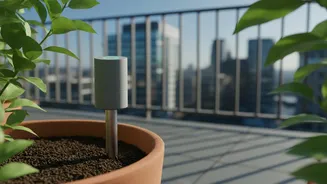
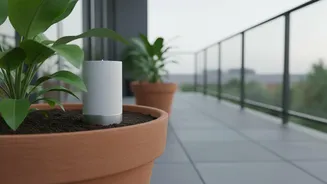
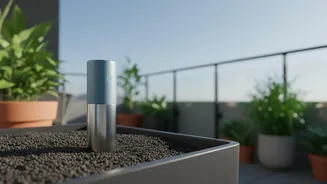
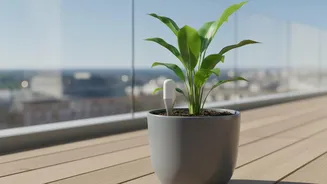
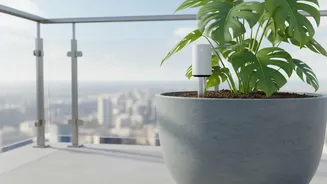
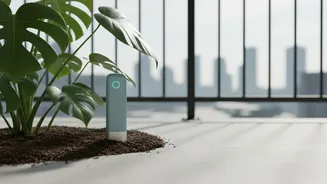
A smart IoT probe, also known as a smart plant sensor, is a small device you insert into the soil of your potted plant. It’s part of the 'Internet of Things' (IoT)—a network of physical objects embedded with sensors and software that connect to the internet to exchange data. These probes typically contain several high-precision sensors to measure the key conditions for plant health. The most crucial of these is the soil moisture sensor. The probe collects data from the root zone and transmits it wirelessly via Bluetooth or Wi-Fi to a dedicated app on your smartphone, giving you a real-time look at what's happening beneath the soil.
Real-Time Data to the Rescue
The core function of a smart probe is to replace guesswork with precise data. Instead of relying on a fingertip test or a rigid watering calendar, the sensor provides an accurate measurement of the water content in the soil. Most smart sensors use a capacitive method, which measures the soil's ability to hold an electric charge to determine moisture levels without using exposed metal that can corrode. When the moisture level drops below a threshold that you can often set based on your specific plant's needs, the connected app sends an alert directly to your phone. This means you water only when the plant actually requires it, eliminating the primary risk of overwatering.
More Than Just Moisture Monitoring
While preventing overwatering is their main selling point, many advanced IoT probes offer a more holistic view of your plant's environment. In addition to moisture, they often measure ambient light intensity, air temperature, and humidity. Some premium models even measure soil electrical conductivity (EC), which is an indicator of fertilizer and nutrient levels. This suite of sensors helps you make smarter decisions beyond just watering. For instance, the light sensor can confirm if your sun-loving hibiscus is getting enough rays or if your shade-preferring fern needs to be moved away from a harsh afternoon sun. The app often includes a database of thousands of plant species, providing specific care recommendations based on the real-time data it collects.
Are They Worth the Investment?
For a casual owner of a few hardy plants, a simple, inexpensive analogue moisture meter might be enough. However, for those with larger collections, expensive or fussy plants, or a history of failures due to overwatering, a smart probe system can quickly pay for itself by saving plants from an early demise. They are particularly useful for busy people or frequent travellers, as you can monitor your plants' needs from anywhere. While there is an initial cost and a need to occasionally charge or replace batteries, the convenience and peace of mind can be invaluable. They turn plant care from an act of anxiety-ridden guesswork into an informed, responsive, and ultimately more successful hobby.