



Beyond the Six-Pack: What Is Functional Core Strength?
Before jumping into the exercises, it's important to understand the goal. While a visible 'six-pack' targets the superficial rectus abdominis muscles, functional core training is much more comprehensive. Your core is a complex system of muscles that wraps
around your entire torso, including your abs, obliques, lower back, and glutes. A strong, functional core acts like a natural corset, stabilising your spine, improving your posture, and reducing the risk of back pain. It's the foundation of all movement, from lifting groceries to playing sports, ensuring you can transfer power efficiently and safely.
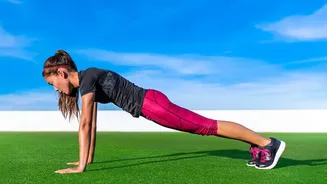
1. The Plank
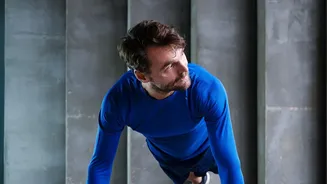
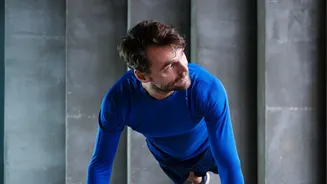
The plank is a fundamental exercise for a reason: it engages your entire core. It teaches your body to brace and remain stable, which is crucial for almost every other physical activity. How to do it: Lie face down and prop yourself up on your forearms, with your elbows directly under your shoulders. Lift your hips so your body forms a straight line from your head to your heels. Avoid letting your hips sag or rise too high. Engage your abdominal muscles and glutes. Hold this position, breathing steadily. Start with a 30-second hold and gradually increase the time as you get stronger.
2. The Bird-Dog
This exercise might look simple, but it is incredibly effective for improving stability and coordination. The bird-dog challenges your ability to keep your trunk stable while your limbs are in motion, targeting the deep muscles that support your spine. How to do it: Start on all fours, with your hands directly beneath your shoulders and your knees under your hips. Keeping your back flat and your core engaged, slowly extend your right arm straight forward and your left leg straight back. The key is to avoid any twisting in your hips or back. Hold for a few seconds, then slowly return to the starting position. Repeat on the other side, extending your left arm and right leg. That's one repetition. Aim for 10-12 reps.
3. The Dead Bug
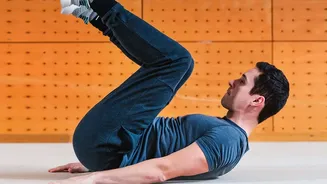
The dead bug is another fantastic exercise for enhancing core stability without putting strain on your lower back. It teaches your body to coordinate opposite limb movements while keeping the core tight and the spine in a neutral position. How to do it: Lie on your back with your knees bent at a 90-degree angle and your shins parallel to the floor (a 'tabletop' position). Extend your arms straight up towards the ceiling. Slowly lower your right arm and your left leg towards the floor simultaneously, going only as far as you can without your lower back arching. Exhale as you lower, and inhale as you return to the start. Repeat with the opposite arm and leg. Aim for 10-15 repetitions per side.
4. The Glute Bridge
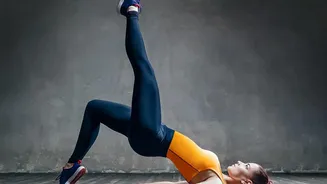
Your glutes are a vital part of your core, and the glute bridge is a perfect way to activate them along with your lower back and hamstrings. This exercise helps to counteract the effects of prolonged sitting and builds strength in your posterior chain. How to do it: Lie on your back with your knees bent, feet flat on the floor about hip-width apart, and your arms at your sides with palms facing down. Squeezing your glutes and engaging your abs, lift your hips off the floor until your body forms a straight line from your shoulders to your knees. Hold for a moment at the top, then slowly lower your hips back down. Aim for 15-20 repetitions.
5. Bicycle Crunches
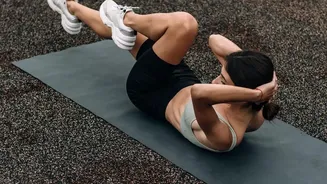
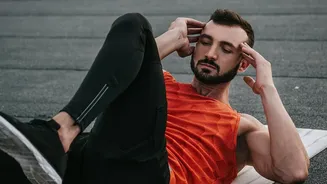
When performed correctly, bicycle crunches are an excellent exercise for targeting both the rectus abdominis and the obliques (the muscles on your sides). The key is to focus on slow, controlled movement rather than speed. How to do it: Lie on your back with your hands lightly behind your head and your knees bent. Lift your head, shoulders, and feet off the floor. Bring your right knee towards your chest while simultaneously twisting your torso to bring your left elbow towards your right knee. As you do, straighten your left leg. Then, switch sides, bringing your left knee in and your right elbow to meet it, while extending your right leg. Continue alternating in a smooth, pedalling motion. Aim for 15-20 reps per side.