


What is a Superhabitable World?
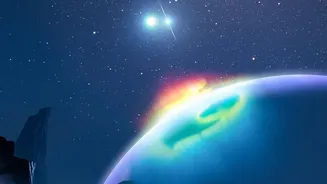
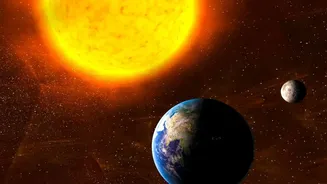
A superhabitable world is a hypothetical planet or moon that could support more biodiversity and a greater biomass than Earth. The concept, introduced in 2014 by scientists René Heller and John Armstrong, challenges the long-held assumption that Earth is the pinnacle
of planetary habitability. Instead of just looking for Earth's twin, they proposed a 'biocentric' approach, identifying characteristics that could make a world even more friendly to the emergence and evolution of life. This shifts the focus from finding a planet where humans could live to finding one where life, in general, could thrive more abundantly. It’s not about finding another Earth, but potentially a 'better' one.
The Recipe for a Better Planet
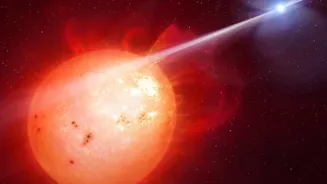
Scientists have outlined several key ingredients that could make a planet superhabitable. It starts with the star. Instead of a G-type star like our Sun, a slightly smaller, cooler, and longer-lived K-type star might be ideal. These 'orange dwarfs' have lifespans of 20 to 70 billion years, compared to our Sun's 10 billion, giving complex life much more time to evolve. The planet itself would likely be slightly older, larger, and warmer than Earth. A world up to 1.5 times Earth's mass could retain its internal heat longer, driving beneficial geological activity like plate tectonics, and its stronger gravity would help it hold onto its atmosphere. A slightly warmer global average temperature, combined with more moisture, could expand the planet's tropical zones, which on Earth are hotspots of biodiversity. Finally, shallow, distributed oceans rather than vast, deep ones could promote greater marine life diversity.
Cosmic Candidates on the List
Armed with these criteria, astronomers have scoured catalogues of the thousands of known exoplanets. In 2020, a team led by geobiologist Dirk Schulze-Makuch identified 24 top contenders for superhabitability. It's important to note that none of these planets perfectly fit all the criteria, and they are all more than 100 light-years away, making them impossible to visit. They are simply promising targets for future observation. These candidates were selected because they orbit within their star's habitable 'Goldilocks' zone and meet some of the key metrics for size, age, or stellar type. While this list gives astronomers a valuable starting point, it highlights how much we still have to learn before we can confirm any of them as truly life-friendly.
Why This is Still a Hypothesis
For now, the idea of a superhabitable world remains purely theoretical. The primary challenge is the immense distance and the technological limitations of our current instruments. Exoplanets are incredibly far away, small, and faint compared to their host stars, which makes detailed observation extremely difficult. We cannot yet measure an exoplanet's atmospheric composition with enough precision, confirm the presence of liquid water, or detect geological activity from light-years away. Furthermore, our entire understanding of life is based on a single data point: Earth. We are assuming which conditions would lead to more life, but until we find life elsewhere, it's an educated guess. The concept is a powerful tool for guiding our search, but it requires much more data to be proven.
The Search Continues
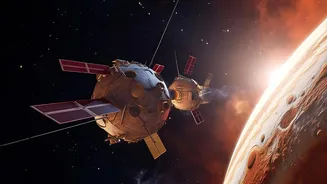
The next generation of observatories is poised to change the game. Telescopes like the James Webb Space Telescope (JWST) have the power to analyze the atmospheres of some of these distant worlds in unprecedented detail. By looking for biosignatures — gases like oxygen and methane that could indicate biological processes — scientists can begin to test the superhabitable hypothesis. Future proposed missions, such as the Large UV/Optical/IR Surveyor (LUVOIR), are being designed specifically to characterize Earth-like and potentially superhabitable planets around other stars. The search is no longer just about finding a pale blue dot, but about identifying the most promising environments in the cosmos, wherever they may be.