


The Grand Return to Evening Skies
For the past few months, catching a glimpse of Saturn required waking up in the pre-dawn hours. But August marks a welcome shift for stargazers. The ringed planet is now rising progressively earlier in the evening, making it far more accessible. At the beginning
of the month, you can find it rising in the eastern sky around 11 p.m. local time. By the end of August, it will be gracing the sky as early as 9 p.m., placing it in a prime position for viewing after dinner. This transition from a morning object to an evening star means more people, including families and casual observers, can easily join in on the spectacle without losing sleep. This month-long journey across the night sky makes it the perfect time to start tracking this distant world.
Setting the Stage for Opposition
The main reason for the growing excitement is that August is the run-up to Saturn's opposition. Opposition, which for Saturn occurs on October 4, 2026, is the point in its orbit where Earth passes directly between the sun and the planet. This alignment is the astronomical equivalent of a celestial red carpet event. During opposition, a planet is at its closest point to Earth for the year, making it appear at its largest and brightest in our sky. While the peak is in October, the weeks leading up to it are a period of dramatic improvement in viewing conditions. Every night in August, Saturn will get incrementally brighter and its apparent size will increase, offering a visual story of our planets in motion. Think of August as the exciting trailer before the blockbuster premiere.
A Spectacular View of the Rings
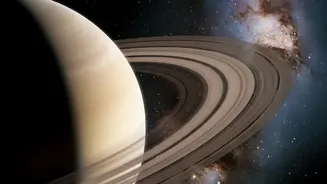
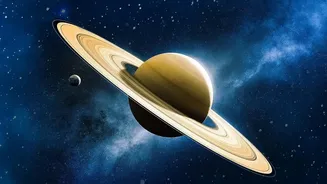
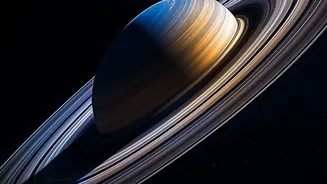
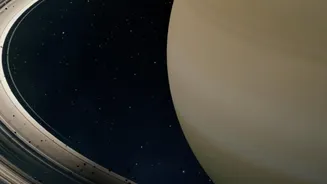
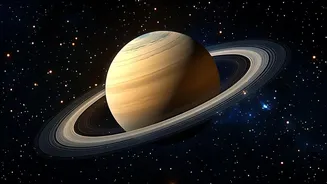
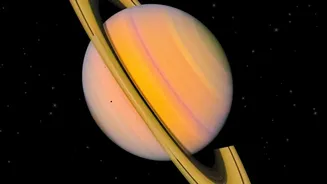
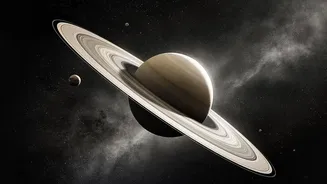
What truly sets Saturn apart is its magnificent ring system, and 2026 offers a fantastic opportunity to see it. After a period where the rings appeared nearly edge-on from our perspective, they are now tilted favorably towards Earth. Throughout August, the rings will be tilted at an angle of about 7 to 9 degrees, making them clearly visible as a distinct structure separate from the planet itself, even in modest telescopes. This generous tilt allows observers to appreciate the planet's most iconic feature in all its glory. For many who may have been underwhelmed by the view in recent years, this is a chance to see the rings in a way that inspires awe and wonder. This improved view makes spotting the Cassini Division—a gap within the rings—a rewarding challenge for those with larger amateur telescopes.
How to Find the Ringed Planet
Finding Saturn this month is relatively straightforward. Look towards the eastern sky during the late evening. The planet is located in the constellation Pisces, a region of the sky without many bright stars. This works in our favour, as Saturn, shining with a steady, yellowish-white light, will be one of the brightest objects in that area, making it stand out. Unlike stars that twinkle, planets often shine with a more constant light. To help you get your bearings, the Moon will serve as a handy guide at the end of the month. On the nights of August 30 and 31, the Moon will appear close to Saturn, making the planet unmistakable. Stargazing apps on your smartphone can also point you directly to its location in real-time.
What You Can Expect to See
Your viewing experience will depend on your equipment, but Saturn offers a rewarding sight at every level. To the naked eye, it appears as a bright, star-like point of light. With a good pair of binoculars, you might be able to discern that it is not a perfect point, and perhaps even make out its slightly oval shape due to the rings, though you will not see them clearly. The real magic begins with a telescope. Even a small beginner's telescope with about 50x magnification will clearly reveal the rings. With a bit more power, you can start to see the gap between the planet and its rings. Observers with larger backyard telescopes may even spot Saturn's largest moon, Titan, which will look like a tiny star very close to the planet.