



The Planet's Engine Room
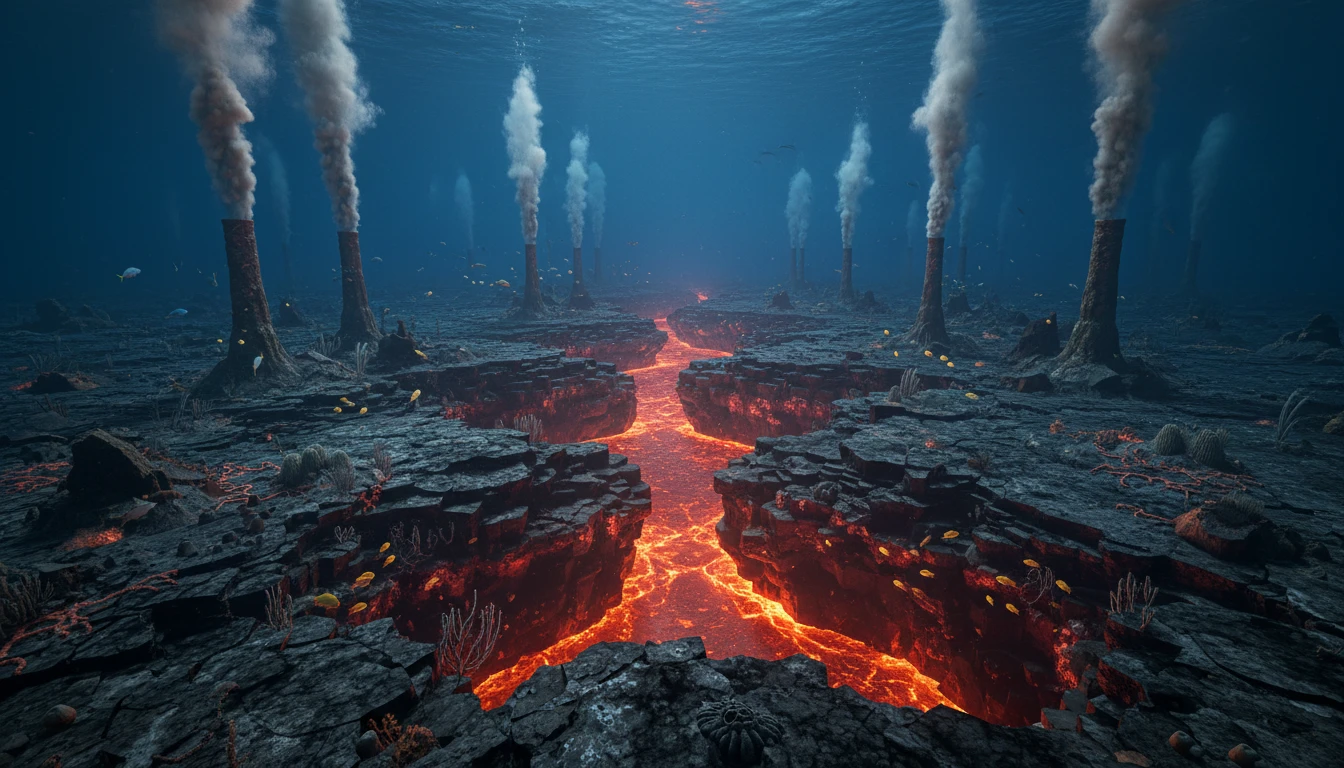
At the bottom of our oceans lies a globe-spanning chain of underwater mountains called mid-ocean ridges. These are not static landforms but dynamic boundaries where tectonic plates drift apart. As they separate, they create a vast gap, allowing superheated
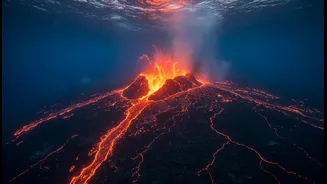
magma from the Earth's mantle to rise and fill the void. When this molten rock meets the cold seawater, it cools and solidifies, forming brand-new oceanic crust. This fundamental process, happening continuously for billions of years, is called seafloor spreading. It is the engine of plate tectonics, constantly renewing about two-thirds of the planet's surface. For decades, scientists understood this process in theory, but witnessing it in action remained a challenge due to the extreme depths and remote locations.
A Uniquely Slow and Violent Dance
The Indian Ocean is home to some of the world's slowest- and ultraslow-spreading ridges, like the Southwest Indian Ridge. Here, the plates are pulling apart at a mere fraction of the speed seen in the Pacific, sometimes less than 20 millimetres per year. This slow-motion separation creates a unique environment. Instead of a steady flow of magma, the process is more intermittent and tectonically violent. The crust is often thinner, and in some places, the Earth's mantle itself is exposed on the seafloor. This makes the Indian Ocean a natural laboratory for studying what happens when the magmatic processes of crust creation are starved, allowing scientists to observe the raw mechanics of tectonic stretching in greater detail.
Capturing the Earth in Motion
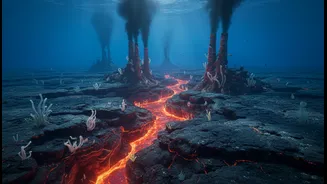
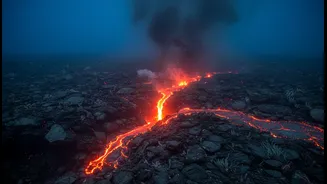
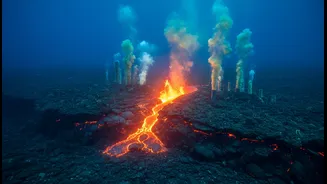
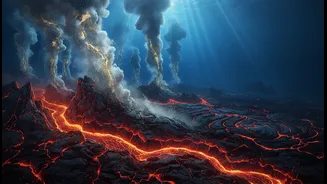
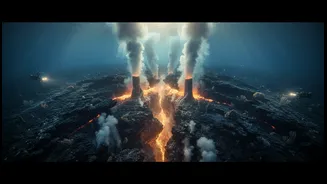
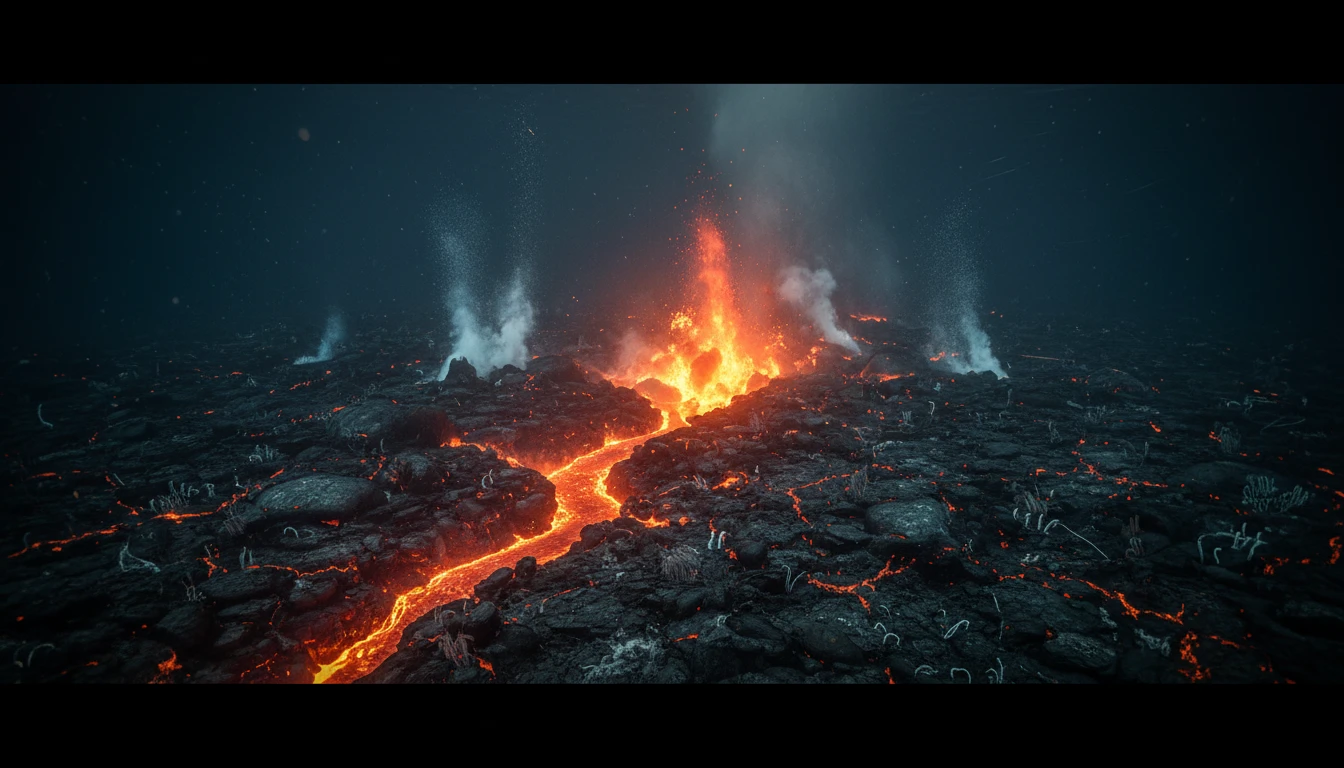
In a landmark event, scientists recently captured a complete seafloor spreading episode in real-time for the very first time. An observatory network, deployed just months earlier on the Southeast Indian Ridge, was perfectly placed when a section of the ridge began to rift apart in April 2024. Over several days, a swarm of earthquakes migrated along the ridge, the seafloor sank by as much as four metres, and an estimated 160 million cubic metres of lava erupted. This event demonstrated that crustal growth doesn't happen smoothly but in sudden, massive lurches, releasing decades of accumulated strain in a matter of days. The observation, combining seismic, acoustic, and pressure data, provided a comprehensive picture of how magma chambers deflate and feed eruptions that build the ocean floor.
Rewriting Our Understanding of Crust
These direct observations are transforming how researchers understand the formation of oceanic crust. The traditional view often assumed a more uniform process. However, the Indian Ocean studies show that crust formation is incredibly varied and complex. The recent event revealed that magma can drive both seismic tremors and 'aseismic' slips—fault movements that happen without any shaking. This helps solve a long-standing mystery known as the "seismic deficit," where the observed movement of faults never seemed to match the small number of recorded earthquakes. It appears that a significant portion of the plate movement happens quietly. By studying the ultra-slow ridges, scientists can see how magma supply, tectonic pulling, and hydrothermal activity interact to create a wide diversity of crustal structures, from thick volcanic centres to thin, fractured seafloor.
The Earthquake Prediction Question
While this research involves monitoring earthquakes, it is crucial to understand its limitations. Studying seafloor spreading provides profound insights into the mechanics of plate tectonics and the build-up of stress in the Earth's crust. For example, observing how a rifting event can trigger seismic activity on an adjacent fault helps scientists model how stress is transferred through the tectonic system. However, this is fundamentally different from being able to predict the precise time, location, and magnitude of a future earthquake. The headline's caution is well-founded; this research is about understanding the fundamental physics of the Earth, not developing an instant forecasting tool. The goal is to build a better foundational knowledge of geological hazards, which in the long run, can inform risk assessment, but it does not offer a crystal ball for imminent quakes.