







New Lifelines: The Expressway Network
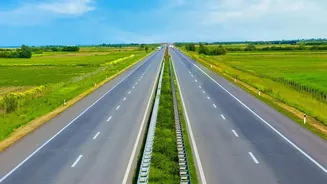
Road travel is getting a significant upgrade with several key expressway projects. The highly anticipated Ahmedabad-Dholera Expressway, a 109-km corridor, was inaugurated in March 2026. This four-lane expressway, which is expandable to eight lanes, is designed
to cut the travel time between Ahmedabad and the Dholera Special Investment Region (SIR) from over two hours to just about 45-60 minutes. It is a crucial part of the Delhi-Mumbai Industrial Corridor and will also connect to the upcoming Dholera International Airport. Additionally, major upgrades are improving National Highway 48, a vital artery. Projects launched in September 2026 include the six-laning of the Kamrej-Chalthan section and the construction of new bridges over the Tapi and Narmada rivers on the Vadodara-Surat section, aimed at easing congestion and improving safety. The Gujarat portion of the massive Delhi-Mumbai Expressway is also progressing, with sections like Vadodara-Bharuch already operational and easing traffic on industrial routes.
Revolutionising Rail Travel
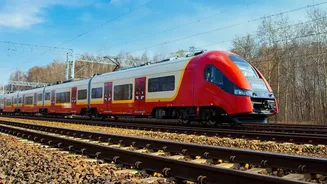
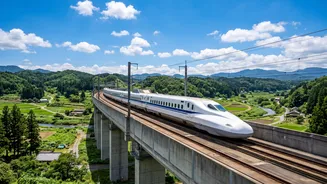
Gujarat's railway network is undergoing a significant transformation. A major part of this is the Western Dedicated Freight Corridor (WDFC), designed to streamline the movement of goods. In September 2026, key sections including New Sanand-New Makarpura were inaugurated, making the entire freight corridor operational. This provides direct connectivity to the JNPA port, which is expected to reduce logistics costs and decongest the busy Mumbai rail network. For passengers, the Mumbai-Ahmedabad High-Speed Rail, popularly known as the bullet train, is steadily taking shape. Civil construction on the Vapi-Surat section is expected to finish by December 2026, with the first test coach already manufactured. While the first service on the Surat-Bilimora stretch is targeted for 2027, the entire corridor is a monumental undertaking that will eventually cut the journey time between Ahmedabad and Mumbai to just over two hours. In addition, new conventional rail lines are being laid to connect remote areas, such as the Jobat-Tanda Road line which will bring the tribal areas of Alirajpur onto the national network.
Boosting Regional Rail Capacity
Beyond the headline projects, substantial investment is being made to decongest existing lines and improve local and regional connectivity. Foundation stones were laid in September 2026 for projects worth over Rs 9,700 crore. This includes adding third and fourth railway lines between Vadodara and Ratlam, a crucial link between Gujarat and Madhya Pradesh. Other significant upgrades include gauge conversion of the Miyagam Karjan-Choranda-Malsar section and the doubling of the Vishwamitri-Dabhoi line. In the Kutch region, the doubling of the Adipur-Bhuj line has been approved to handle increasing passenger and freight traffic from industrial growth in the area. These projects are vital for increasing the handling capacity for both passenger and freight trains, reducing travel delays, and strengthening the overall logistics ecosystem of the state.
Taking to the Skies: Aviation Upgrades
Air travel in Gujarat is also receiving a major push. The state now has 19 operational airports, including three international ones, reflecting a significant expansion of its aviation infrastructure. A key development is the new greenfield airport at Dholera, which is being constructed to serve the Dholera SIR and act as a second airport for Ahmedabad. Phase 1 of the Dholera International Airport is expected to be complete by December 2026. In another boost for international travellers, Ahmedabad's Sardar Vallabhbhai Patel International Airport recently launched international hub-and-spoke services. This allows passengers from Gujarat to complete customs and immigration in Ahmedabad before taking a domestic flight to a larger hub like Delhi for their onward international journey, making global travel more convenient.