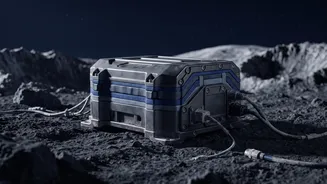






The Moon's Brutal Power Problem
The Moon is an environment of stark contrasts, with no atmosphere to regulate temperature. During the long lunar day, surfaces can heat up to 100°C, while the two-week-long night sees temperatures plummet to as low as -200°C in some regions. For the batteries
we rely on, this is a nightmare scenario. Traditional lithium-ion batteries, like those in our phones and laptops, use a liquid electrolyte to function. In the intense lunar cold, this liquid can freeze, damaging the battery's internal structure and halting its performance. Conversely, high temperatures can also prevent them from working until cooled. To survive, current space missions rely on heavy, power-hungry thermal management systems to keep batteries within a narrow operational window, adding significant weight and complexity to any lunar hardware.
Enter the Solid-State Solution
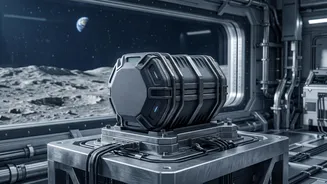
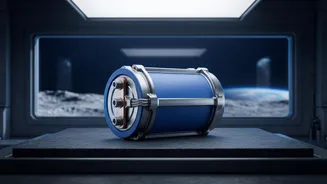
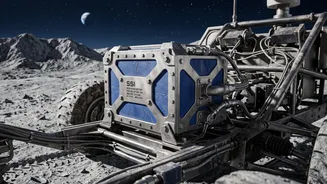
This is where solid-state batteries come in. The core innovation is simple but profound: they replace the flammable, temperature-sensitive liquid electrolyte with a solid material, often a ceramic or polymer. This solid electrolyte still allows lithium ions to move between the anode and cathode to generate power, but it fundamentally changes the battery's properties. By eliminating the liquid, solid-state batteries become inherently safer, as the risk of flammable leakage and fire is drastically reduced. This design also allows for a more compact and lightweight battery pack, a crucial advantage in space exploration where every gram counts.
Built for the Extremes
The key advantage for lunar missions is resilience. Solid-state batteries can operate over a much wider temperature range than their liquid-based counterparts. Recent NASA tests, under a project named SPEARS (Solid Power for Extreme Environment Adaptability and Resilience in Space), have shown that prototype cells can function at temperatures down to -80°C. Even more impressively, these batteries can survive exposure to temperatures as low as -170°C without sustaining permanent damage. While they can't produce power at such frigid extremes, they don't freeze and break like liquid batteries. They can be gently warmed up and brought back to life, drastically reducing the continuous power needed for heating systems.
More Power, Less Weight
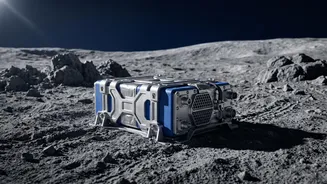
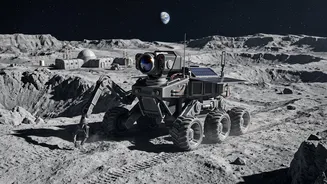
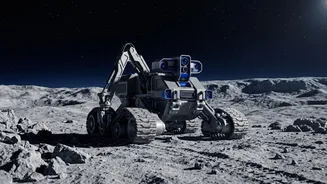
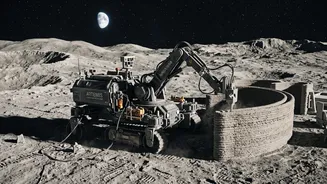
Beyond temperature resilience, solid-state technology promises a significant boost in energy density. This means they can store more energy in the same amount of space, or provide the same amount of power in a lighter, smaller package. For a lunar rover, this could translate to a longer range for exploration, the ability to carry more scientific instruments, or longer operational times during the punishing lunar night. NASA's goal is to develop cells that far exceed the energy capacity of today's best batteries, potentially offering a three- to five-fold improvement. This leap would be transformative, enabling more ambitious missions, from robotic exploration of permanently shadowed craters to supporting a sustained human presence on the Moon.
From Lab to Launchpad
While the technology is incredibly promising, it is still in the development phase. Researchers at NASA's Glenn and Langley research centers are actively testing and refining these batteries. The SPEARS project has already demonstrated the core viability of the concept, proving that the cells can survive the thermal vacuum of space. The next steps involve scaling up the technology from small coin-sized prototypes to larger, mission-ready power systems. The modular nature of the technology is also a key benefit; engineers believe they can 'tune' the battery's chemistry for specific applications, whether it's for a power-hungry rover or a low-draw scientific instrument. While it may be some years before solid-state batteries are powering missions, the research represents a critical step toward making long-term lunar exploration a sustainable reality.