

Start with Your Greatest Asset
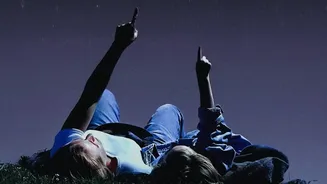
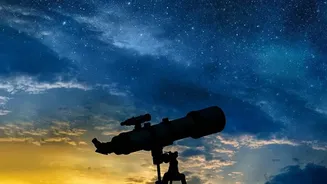
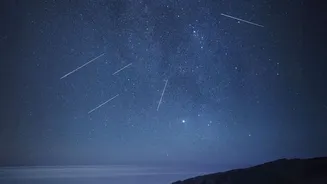
The most powerful tool for stargazing is completely free: your eyes. On a clear night, away from bright city lights, the unaided eye can spot an incredible number of celestial wonders. You can easily see the Moon, several planets, and even meteor showers.
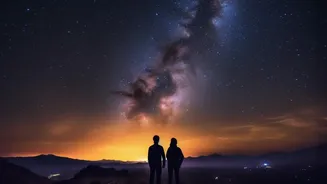
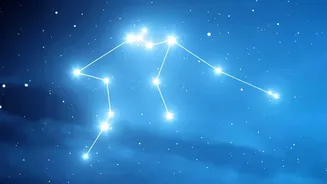
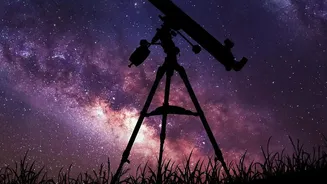
To get the best view, you need to let your eyes fully adapt to the dark, a process that takes about 20 to 30 minutes. During this time, avoid looking at your bright phone screen. If you need a light, use a red flashlight, as red light is less disruptive to your night vision. With dark-adapted eyes, you can trace the shapes of major constellations and even spot the faint, milky band of our own galaxy, the Milky Way, stretching across the sky.
Your Smartphone Is a Planetarium
The single biggest game-changer for amateur astronomy is the smartphone. Modern stargazing apps have put the power of a full-fledged planetarium into your pocket. Apps like Stellarium Mobile, Star Walk 2, and SkyView Lite use your phone's sensors to identify exactly what you're pointing at in the sky. Simply hold your phone up, and the app will overlay the names of stars, planets, and constellations on your screen. Many of these apps are free and can help you locate specific objects, track satellites like the International Space Station, and learn the stories behind the constellations. They remove the guesswork and make learning the night sky an interactive and intuitive experience.
The Best First 'Telescope' is Binoculars
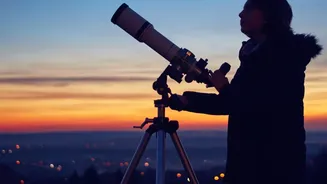
Before you even think about a telescope, consider a good pair of binoculars. Many seasoned astronomers recommend them as the ideal first instrument. Binoculars are portable, affordable, and offer a wide field of view, which makes it much easier to find and track objects compared to the narrow view of a telescope. They can reveal stunning details that are invisible to the naked eye, such as the craters on the Moon, the four largest moons of Jupiter, and the fuzzy glow of distant star clusters and nebulae. Even the Andromeda Galaxy, a smudge to the naked eye, begins to show its shape through binoculars. A standard pair of 7x50 or 10x50 binoculars is an excellent starting point for any budding stargazer.
Location, Location, Location
The quality of your stargazing experience often depends more on where you are than what equipment you have. The biggest obstacle for most people is light pollution—the glow from cities and towns that washes out all but the brightest stars. Finding a dark location is key. You don't necessarily need to travel to a designated dark-sky park; often, just driving to the outskirts of your town or finding a local park away from streetlights can make a huge difference. The goal is to get away from direct sources of light and find a spot with a clear, unobstructed view of the sky. Also, be mindful of the Moon's phase; a bright full Moon acts as a natural form of light pollution, so the best nights for viewing faint objects are around the new Moon.
Simple Tips for a Better Viewing Night
A little preparation can make your stargazing session much more enjoyable. First, check the weather forecast for clear skies. Next, plan what you want to see. An app can tell you which planets or constellations will be prominent. Comfort is also crucial. Stargazing involves a lot of looking up and staying still, so bring a reclining chair or a blanket to lie on. Even on summer evenings, it can get chilly at night, so dressing in warm layers is always a good idea. With your eyes, a good app, and perhaps a pair of binoculars, you have everything you need for a successful and awe-inspiring night under the stars.