




From Compact Package to Sprawling Home
Imagine launching a tightly packed bundle, not much bigger than a large closet, and watching it expand in orbit to the size of a multi-room apartment. That is the core concept behind inflatable, or expandable, space habitats. These structures are built
from advanced, flexible, multi-layered fabrics that are folded for launch. Once in space, they are inflated with breathable air, and the internal pressure pushes the walls out to create a rigid and stable structure. This ingenious approach allows companies to bypass the significant constraints imposed by the payload fairing—the nose cone of a rocket—which has always dictated the maximum diameter of space station components. By launching compressed, these habitats can deliver a much larger volume of living and working space for a given mass, a game-changing metric in the economics of space travel.
The Decisive Volume-to-Mass Advantage
In space exploration, every kilogram counts. The cost of launching anything into orbit is astronomical, so engineers are constantly striving to reduce mass. This is where inflatable habitats truly shine. Compared to traditional aluminum or titanium modules, which must be built with thick, heavy walls to withstand the launch environment, inflatable structures are significantly lighter. An inflatable module can provide substantially more internal volume than a metallic habitat of the same mass. For example, a single inflatable habitat from Sierra Space, known as LIFE (Large Integrated Flexible Environment), is designed to offer about one-third of the entire pressurized volume of the International Space Station (ISS) in a single launch. This efficiency doesn't just lower launch costs; it fundamentally changes what's possible in orbit, enabling larger science labs, more comfortable crew quarters, and dedicated areas for exercise and recreation.
A Concept Proven on the ISS
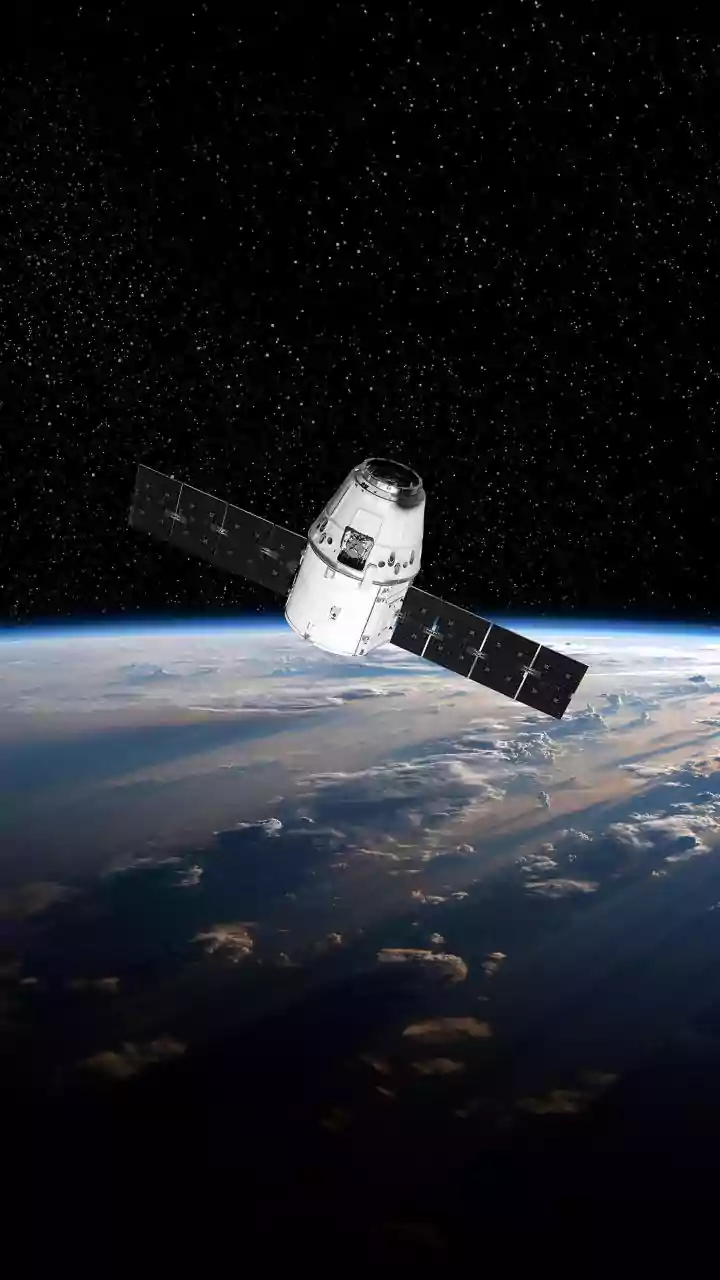
The idea of inflatable habitats isn't just theoretical; it has been tested and proven in the harsh environment of space. In 2016, the Bigelow Expandable Activity Module (BEAM) was attached to the International Space Station. Launched by SpaceX in the trunk of a Dragon cargo capsule, the module was inflated and has been attached to the station ever since. Originally planned as a two-year technology demonstration, BEAM has far exceeded expectations. It has proven to be durable and reliable, providing valuable data on radiation protection and resistance to space debris. Its success has given NASA and commercial partners the confidence needed to invest in larger, more ambitious expandable structures. Today, BEAM serves as a valuable storage closet for the station, a testament to its long-term viability and a crucial stepping stone for future commercial habitats.
The New Commercial Players
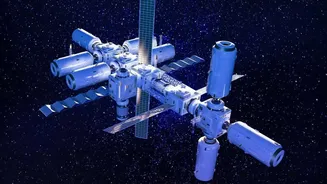
With the ISS scheduled to be decommissioned around 2030, a new commercial race is on to build its successors, and inflatable technology is at the forefront. Sierra Space is a major player, developing its LIFE habitat for the Orbital Reef space station, a joint project with Blue Origin. A single LIFE module is a three-story structure designed to house four astronauts, complete with labs, sleeping quarters, and even a garden to grow fresh produce. Other companies like Lockheed Martin and Max Space are also developing their own proprietary inflatable designs. These efforts are supported by NASA through programs aimed at fostering a robust low-Earth orbit economy driven by private enterprise. Recent full-scale burst tests of Sierra Space's habitat have been highly successful, proving the technology can meet and exceed NASA's stringent safety requirements.
Tougher Than They Look
A common question is whether a “soft” habitat can be safe from the dangers of space, such as micrometeoroids and radiation. The answer lies in the advanced materials used in their construction. The walls of these habitats are composed of multiple layers, including an inner bladder to hold air and an outer restraint layer made of incredibly strong fabrics like Vectran—a material five times stronger than steel. This layered design acts like a sophisticated shield. When a tiny piece of space debris hits, it shatters on the outer layers, with the energy dissipating before it can puncture the inner bladder. This can actually offer superior protection compared to a single-wall metal design. While radiation remains a challenge for all long-duration spaceflight, the materials used in inflatable habitats can provide shielding equivalent to or better than that of the ISS.