



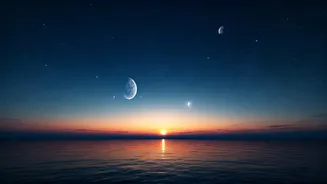


What Is a Planetary Alignment?
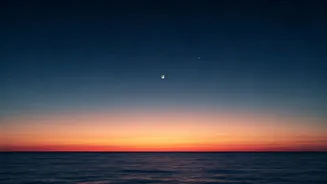
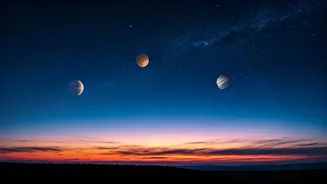
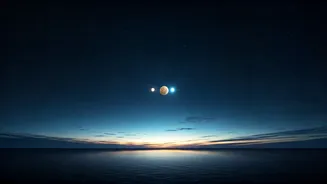
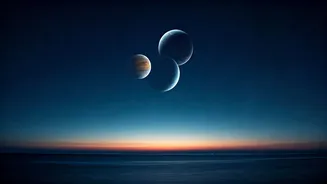
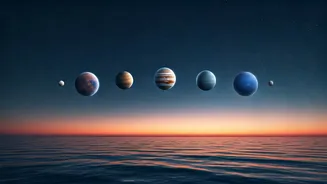
While the term “planetary alignment” might bring to mind images of planets lining up in a perfectly straight line in space, the reality is a bit different and, from our perspective, even more beautiful. What we are seeing is not a true physical alignment in 3D
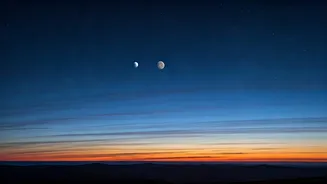
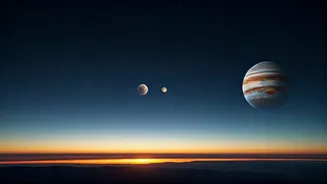
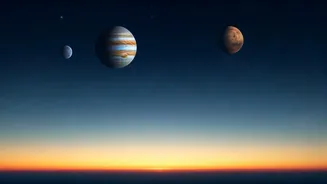
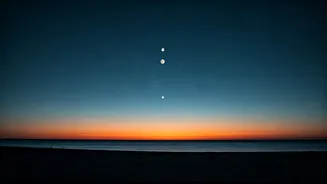
space but an optical one. From our vantage point on Earth, the orbits of Mercury, Venus, and Jupiter cause them to appear close together in a small patch of our sky. Astronomers often call this a “conjunction” or a “grouping.” It’s a spectacular line-of-sight effect that allows us to see multiple worlds in a single glance. These events are not just beautiful; they are a powerful reminder of our solar system's constant, graceful motion.
The Celestial Trio: Meet the Planets
To appreciate the show, it helps to know the stars of the night. First, there's **Venus**, the undisputed queen of the evening sky. It will be the brightest object in the group, shining with a brilliant, steady white light. You can’t miss it. Then there's **Jupiter**, the king of the planets. While not as dazzlingly bright as Venus, it will still be one of the brightest points of light in the sky, easily visible to the naked eye. The real challenge, and the prize for keen-eyed observers, is **Mercury**. As the closest planet to the Sun, it’s often lost in the Sun’s glare. This alignment offers a rare chance to spot it, likely appearing as a faint, star-like point very low on the horizon, close to where the sun has set.
Your Viewing Guide: When and Where to Look
Timing and location are everything for successful stargazing. This planetary gathering will be visible in the western sky shortly after sunset. Your best viewing window is during twilight, starting about 30 to 45 minutes after the sun dips below the horizon. The sky will be dark enough for the planets to shine but not so dark that Mercury has already set. Find a spot with an unobstructed view of the western horizon. Rooftops, parks, or fields away from tall buildings and trees are ideal. The planets will be relatively low in the sky, so a clear horizon is crucial, especially for catching a glimpse of elusive Mercury before it disappears.
Naked Eye, Binoculars, or Telescope?
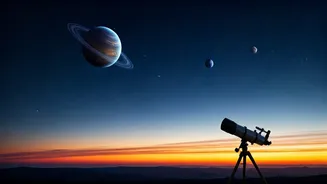
The good news is that you don’t need expensive “telescope gear” to enjoy this event. Venus and Jupiter are bright enough to be easily seen with the naked eye. This is a perfect opportunity for a simple, awe-inspiring moment of looking up. However, bringing along a pair of binoculars will significantly enhance your experience. Binoculars will make Mercury much easier to spot and may even reveal Jupiter's four largest moons (the Galilean moons), which will look like tiny pinpricks of light flanking the planet. If you do have a telescope, you’re in for a treat. A telescope will not only make Mercury pop but could also reveal the phases of Venus and even faint cloud bands on Jupiter. Start with your eyes, upgrade to binoculars, and if you have a telescope, now is the time to use it.
Tips for the Best Stargazing Experience
To make the most of this celestial event, a little preparation goes a long way. First, try to get away from city lights. Light pollution is the biggest enemy of stargazing, as it washes out fainter objects like Mercury. Second, give your eyes time to adapt to the dark—it can take up to 20 minutes for them to become fully sensitive. Avoid looking at your bright phone screen. If you need a light, use a red torch, which preserves your night vision. You can also use a stargazing app on your phone (in night mode) to help you pinpoint the planets' exact locations. Finally, be patient. Take a moment, breathe, and simply enjoy the magnificent view of our solar system neighbours paying a visit to our evening sky.