
The Foundation: More Than Just a Leaf
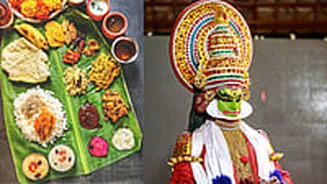
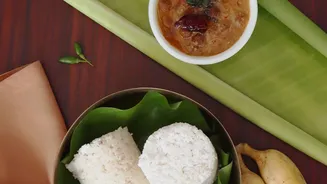
The Sadhya, which means 'banquet' in Malayalam, is the culinary centerpiece of Onam, Kerala's annual harvest festival. It celebrates the legendary King Mahabali's return with a feast symbolising prosperity and togetherness. The meal is always served on
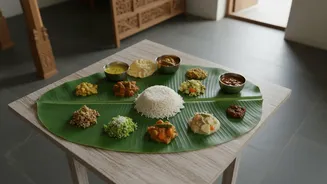
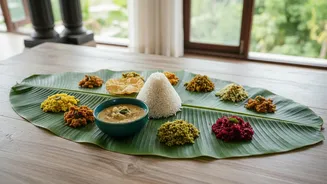
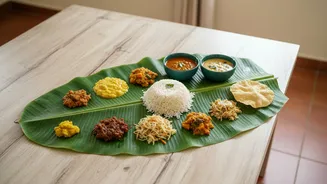
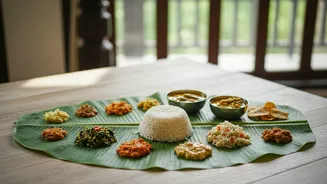
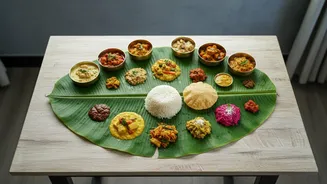
a plantain leaf, called 'thooppila'. The leaf is placed with its narrower end pointing to your left. Tradition holds that when warm food is served on the leaf, it releases beneficial compounds. Before eating, some people sprinkle a little water on the leaf and gently wipe it clean.
The Opening Act: Pickles and Chips
The serving follows a specific order, creating a map of flavours on your leaf. The top half of the leaf is for accompaniments. Starting from the far left, servers will place a pinch of salt, followed by banana chips ('nendrakai nurukku'), and jaggery-coated banana chips ('sharkara varatty'). Next come the pickles, a vibrant array including mango ('manga achar') and lime ('naranga achar'), and the essential 'inji puli', a sweet, sour, and spicy ginger and tamarind chutney. These are all taste enhancers, meant to be eaten in small amounts with the main courses.
The Supporting Cast: Vegetable Delights
Continuing on the top row, a variety of vegetable dishes are served. You will find 'thoran', a stir-fry of finely chopped vegetables like cabbage or beans with grated coconut. You will also see 'pachadi' and 'kichadi', which are yogurt-based dishes; pachadi is typically sweeter (like a pineapple version), while kichadi is more savoury. 'Olan' is a mild curry of ash gourd and red beans in coconut milk, while 'avial' is a thick mixture of various vegetables in a coconut and cumin paste, representing unity and abundance. These sides offer a balance of textures and tastes.
The Main Event: Rice and Its Partners
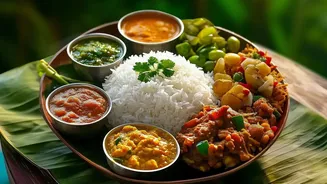
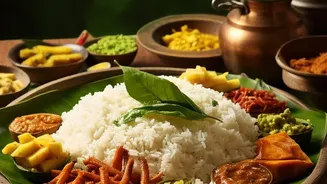
Once the sides are served, a generous mound of steamed Kerala Matta rice appears on the bottom half of your leaf. The meal proceeds in courses. The first is 'parippu', a simple moong dal curry, served with a spoonful of ghee. You mix this with a small amount of rice and begin your meal. Following the parippu, 'sambar', a flavourful lentil and vegetable stew, is ladled over your next portion of rice. You can use your fingers to mix the rice with the curries and enjoy them with the various side dishes you were served earlier.
The Later Courses and Sweet Finale
After sambar, the meal progresses to tangier curries like 'pulissery'. This is followed by 'rasam', a thin, peppery, and tamarind-based soup served with rice, which acts as a palate cleanser and aids digestion. Now, it's time for the much-awaited dessert: 'payasam'. There are many varieties, such as 'ada pradhaman' (made with rice flakes, jaggery, and coconut milk) and 'palada payasam' (made with milk and rice flakes). It is often served directly on the leaf, and some people enjoy mixing it with a mashed banana and a piece of pappadam for a unique sweet and salty combination.
The Graceful Exit: How to Finish
The feast traditionally concludes with a serving of curd or spiced buttermilk ('sambharam') to aid digestion. Once you have finished your meal, there is a customary way to show your appreciation. You should fold the banana leaf in half, away from you if you are at a regular celebration, which signifies you enjoyed the meal. The leaf is typically folded towards you only after a funeral feast. It's a small but significant gesture that completes the Sadhya experience.