





An Atmosphere of Stress
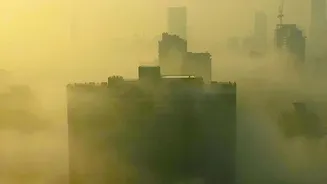
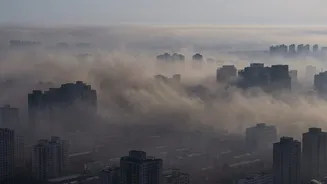
Delhi's air quality has once again plummeted to alarming levels. On Friday, November 13, the city's overall Air Quality Index (AQI) neared 500, firmly in the 'Severe' category. This isn't just a number; it's a constant, visible threat that children live
with. Studies have increasingly shown a direct link between air pollution and mental health in young people. Fine particulate matter, like PM2.5, which is currently the dominant pollutant in Delhi's air, can affect the nervous system, exacerbating or contributing to symptoms of anxiety and depression. Researchers have noted that for every increase in PM2.5, there is a corresponding rise in mental health distress scores among adolescents. The very air they breathe is creating a physiological and psychological stress response, forming the foundation of a widespread anxiety problem.
The Prison of Home
When the air outside is poison, the only refuge is indoors. But this sanctuary can quickly become a cage. Health advisories and the implementation of measures like the Graded Response Action Plan (GRAP) Stage III mean outdoor activities are severely restricted. For children, this means no running in the park, no cycling with friends, and no unstructured play, all of which are crucial for mental well-being. Research overwhelmingly confirms that outdoor time is a powerful antidote to anxiety. It reduces stress, boosts mood-regulating chemicals like serotonin, and improves focus. Natural light helps regulate sleep cycles, which are often disrupted in anxious children. Being deprived of these natural mood stabilizers, children are left to grapple with their worries in confined spaces, a situation known to heighten feelings of frustration and helplessness.
The Double-Edged Sword of Online School
In response to the pollution, many schools in Delhi have shifted primary classes to a hybrid or fully online model. While intended to protect physical health, this move brings its own set of psychological burdens. The problems that became apparent during the pandemic—screen fatigue, social isolation, and digital inequity—are now a recurring feature of life in Delhi. Staring at a screen for hours can be mentally exhausting, a phenomenon dubbed 'Zoom fatigue'. Children miss out on the subtle social cues, peer interactions, and physical presence of teachers that are vital for emotional development. This lack of genuine social connection can deepen feelings of loneliness and anxiety. For many, the pressure to keep up with online lessons, sometimes with inadequate technology, adds another layer of stress, transforming education from a place of learning into a source of anxiety.
What Parents Are Seeing
The combination of these factors is manifesting in noticeable behavioural changes. Parents and mental health experts report that children are showing increased irritability, frustration, disturbed sleep patterns, and a general lack of enthusiasm. The loss of physical activity contributes to restlessness, while the absence of social play can hamper the development of crucial skills like cooperation and conflict resolution. This triple burden—a toxic environment, physical confinement, and social isolation—creates a perfect storm for childhood anxiety. Experts warn that what begins as frustration can evolve into more significant mental health challenges if not addressed. The anxiety is not just about the pollution itself, but about a childhood being reshaped and constrained by it.