








Beyond Basic Recommendations
For years, AI in fashion meant recommendation engines suggesting items based on what others bought. Today’s technology goes much deeper. Modern AI platforms analyze a user's past purchases, browsing history, social media activity, and even Pinterest boards
to create a nuanced style profile. This allows them to function less like a generic sales clerk and more like a personal stylist who understands your unique tastes. Instead of just suggesting another pair of blue jeans, the AI can identify that you prefer a high-waisted, straight-leg cut in a specific wash and recommend new arrivals that precisely match your aesthetic. This level of detail boosts customer loyalty and helps shoppers find what they're genuinely looking for.
The Virtual Stylist in Your Pocket
The next evolution is the AI-powered virtual stylist, often available through dedicated apps. These tools can build entire outfits from your existing wardrobe, suggest combinations you might not have considered, and even factor in context like the weather or an event on your calendar. Some apps feature an AI chat where you can describe an occasion—like a job interview or a beach vacation—and receive complete outfit suggestions. This transforms the daily dilemma of "what to wear" into a seamless, data-driven decision. The aim is to make styling accessible to everyone, not just the wealthy, by providing personalized advice on demand.
The Perfect Fit, Found Virtually
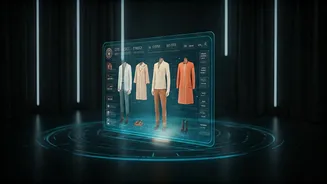
One of the biggest obstacles in online fashion is the inability to try on clothes, leading to high return rates that cost retailers billions. AI-powered virtual try-on technology is tackling this problem head-on. Using a phone's camera or an uploaded photo, these tools create a digital avatar of the user. The AI then realistically drapes digital garments onto the avatar, simulating how different fabrics would stretch, fold, and move on that specific body shape. Some platforms report significant reductions in returns after implementing these features. This technology not only gives consumers more confidence in their purchases but also helps brands operate more sustainably by reducing the environmental impact of return shipping.
AI as a Creative Co-Designer
Perhaps the most groundbreaking shift is AI's move from curating existing fashion to helping create new, personalized items. Generative AI, trained on vast datasets of fashion history and trends, can produce thousands of original design concepts in minutes based on a simple text prompt. This allows designers to explore new creative territories, using AI as a co-creator to generate patterns, silhouettes, and color palettes. For consumers, this opens the door to hyper-personalization, where they can co-create bespoke designs tailored to their exact preferences. Brands like PUMA have already experimented with platforms allowing fans to design their own merchandise using generative AI tools, pointing towards a future of on-demand, individualized fashion.
A New Conformity or True Individuality?
While AI offers unprecedented personalization, it also raises important questions. An overreliance on algorithms could lead to a homogenization of style, where trends are amplified within highly specific bubbles, ultimately suppressing the unique creativity that defines fashion. There are also significant challenges regarding data privacy, as these systems rely on vast amounts of personal information. Algorithmic bias is another concern; if the data used to train AI models is not diverse, the recommendations and designs produced may not be inclusive. Experts suggest that the most successful applications will involve a balance, using AI to augment, not replace, the creative intuition and ethical oversight of human designers.