





Why Downhill Treks Stress Your Knees
Running or walking downhill feels easier on your lungs, but it places significant stress on your joints. As you descend, your quadriceps muscles work like brakes to control your speed and absorb impact. This braking action is an 'eccentric' muscle contraction,
where the muscle lengthens under tension. Without adequate strength, this repetitive braking force can overload the patellar tendon, which connects your kneecap to your shinbone, and the surrounding structures. This can lead to that familiar ache around the kneecap, often called runner's knee or patellar tendinopathy.
Meet Eccentric Loading: Your Body's Braking System
Every muscle movement has two main phases. The concentric phase is when the muscle shortens to create force, like when you push up from a squat. The eccentric phase is when the muscle lengthens while still under tension, like the slow, controlled movement as you lower yourself into that squat. Eccentric exercises specifically focus on this lengthening, or 'negative', phase. By emphasising this controlled lowering, you train your muscles and tendons to become better at absorbing force, which is exactly what they need to do when you're navigating a steep descent.
How It 'Bulletproofs' Your Knees
The magic of eccentric training lies in its ability to remodel and strengthen tissues. This type of controlled loading stimulates the cells in your tendons to produce more collagen, the protein that gives them strength and structure. Over time, this makes the tendons more resilient and capable of handling greater loads without irritation. It also builds significant muscle strength and improves neuromuscular control, essentially teaching your brain and muscles to work together more efficiently. This enhanced control helps stabilise the knee joint during the impact of each step downhill, reducing strain and preventing the micro-trauma that leads to pain and injury.
Your Starter Eccentric Workout
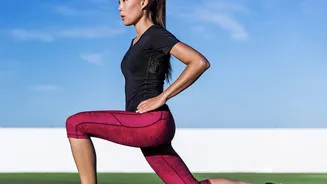
Integrating a few key exercises into your routine can make a world of difference. Focus on the slow, controlled lowering phase of each movement. Aim for a 3- to 5-second descent. 1. Single-Leg Step-Downs: Stand on a low step or box. Keeping your hips level, slowly bend one knee to lower your other foot toward the floor, taking several seconds to do so. Lightly tap your heel to the ground and then return to the start. This directly mimics the motion of walking downhill. 2. Bulgarian Split Squats: Place the top of one foot on a bench or chair behind you. With your front foot planted firmly, lower your body down slowly until your front thigh is nearly parallel to the floor. Focus on a slow, deliberate descent. Push back up through your front heel. 3. Decline Squats: If you have access to a slant board, stand on it with your feet pointing downhill. This position specifically targets the patellar tendon. Slowly lower yourself into a squat, then use both legs or your arms to help you push back up. The focus is entirely on the slow lowering phase.
Smart Integration Into Your Routine
You don't need to spend hours on these exercises. Start by incorporating them into your routine two to three times a week on non-consecutive days. You can perform them after a run or on a dedicated strength day. It's normal to feel some muscle soreness (DOMS) 24 to 48 hours after your first few sessions, as eccentric work is demanding. Start with a low number of repetitions, such as 3 sets of 8-10 reps per leg, and focus on perfect form. As you get stronger, you can increase the reps, add weight, or use a higher step for the step-downs. Always listen to your body; if you feel sharp pain in the joint, stop and consult a professional.