





The Persistent Pattern
The issue is as consistent as it is concerning: a vulnerability to the incoming ball. Across formats, but most glaringly in Test cricket, a clear pattern has emerged. Bowlers who can bring the ball back into the right-hander, either through seam or spin,
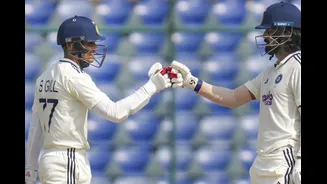
have found a reliable method of attack. Dismissals like LBW and bowled have become alarmingly frequent. This isn't a new phenomenon; it's a technical issue that has haunted Gill throughout his career, even as he piles on runs in other areas. Whether it's a fast bowler like James Anderson or a domestic left-arm spinner, the method of getting him out often looks remarkably similar: attack the stumps with a delivery that nips or turns back in.
A Technical Breakdown
So what is the root cause? Analysts and former coaches point to a combination of factors. Former India batting coach Sanjay Bangar has highlighted how Gill's strike rate drops significantly against deliveries on a straight line. This is often attributed to his initial trigger movement and front-foot commitment. There seems to be a slight reluctance or slowness in transferring his weight fully onto the front foot, especially against good-length deliveries that move back in. Another technical aspect frequently discussed is his bat path. Former players like Ravichandran Ashwin and WV Raman have noted that Gill's bottom-hand dominant grip can cause his bat to come down at an angle, creating a gap between bat and pad. When a bowler gets the ball to straighten or seam in, this small gap becomes a fatal doorway to his stumps.
How Bowlers Exploit It
International bowling attacks are ruthless in their planning. Once a weakness is identified, it is relentlessly targeted. Fast bowlers from South Africa, Australia, and New Zealand have consistently troubled Gill by bowling a hard length on or around the off-stump, forcing him to play at deliveries that could either leave him or, more dangerously, jag back in. In September 2024, a Duleep Trophy dismissal where he shouldered arms to a ball that nipped back and crashed into his stumps was a stark reminder of a similar dismissal in a prior World Test Championship final, showing how deeply ingrained the issue is. This forces Gill into a difficult position: play and risk an inside edge or LBW, or leave and risk being bowled. This tactical dilemma often leads to tentative footwork and indecisive shots early in his innings, the very time he is most vulnerable.
The Search for a Fix
To his credit, Gill is aware of the problem and has made efforts to correct it. There have been periods, such as a successful tour of England in mid-2025, where tweaks made after consulting with legends like Sachin Tendulkar seemed to work. He focused on a more pronounced front-foot stride, aiming to meet the ball closer to his body and nullify the late movement. However, the flaw tends to reappear, particularly with the constant switching between red-ball and white-ball cricket, which demand different approaches. Gill himself admitted in early 2025 that red-ball batting was a concern, noting a tendency to get out after making promising starts of 25-30 runs, sometimes by putting too much pressure on himself.
A Hurdle on the Path to Greatness
No batter is without flaws, but for a player of Gill's immense calibre, this particular weakness feels like the final boss in a video game. It is the one challenge that prevents him from achieving the undisputed consistency expected of a top-tier Test batsman. The problem isn't a lack of talent—his drives through the off-side are a thing of beauty. Instead, it's a specific, recurring technical and mental challenge. Overcoming it requires more than just a temporary fix; it demands a permanent rewiring of a habit developed over many years. The talent is undeniable, but this lingering vulnerability is what separates the great from the legendary.