
The Dusty Riddle of the Moon
For decades, the Moon's soil, or regolith, has been a subject of intense study and speculation. It’s not soil in the earthly sense; it contains no organic matter and hasn't been shaped by wind or water. Instead, it’s a product of relentless mechanical
weathering—billions of years of micrometeorite impacts and bombardment by energetic solar particles have crushed and ground lunar rock into a layer of fine, sharp-edged dust and rock fragments. While the Apollo missions brought back precious samples, they represented only a few specific locations. The rest of the Moon's vast surface remained a complex chemical question mark, its properties difficult to predict, making plans for future colonisation and resource extraction a challenge.
A Chemical Bridge from Sky to Soil
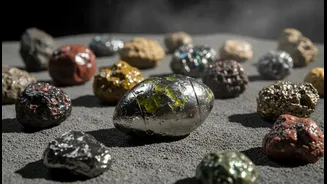
The breakthrough came from looking not just at the Moon, but at the objects that have been hitting it for eons. Meteorites, which are fragments of asteroids, act as time capsules from the early Solar System. When they strike the Moon, they vaporize, melt, and mix with the lunar surface, leaving behind a distinct chemical fingerprint. The Moon's lack of a significant atmosphere or geological activity means these impact records are perfectly preserved, unlike on Earth. By studying lunar meteorites found on Earth—rocks blasted off the Moon by larger impacts—and analysing meteorite fragments within Apollo samples, scientists can build a more complete picture of the Moon's global composition.
Decoding the Isotopic Fingerprints
Recent studies have employed advanced techniques to analyse the specific chemistry of these cosmic visitors. One powerful method involves examining isotopes—different versions of elements like oxygen, potassium, and rubidium. Researchers found that at least 1% of the lunar regolith is made of material from carbon-rich meteorites. By analysing the precise ratios of these isotopes in lunar soil samples, scientists can determine what kind of meteorites hit the Moon and in what quantity. For instance, a 2024 study showed that at least 70% of the Moon’s extremely thin atmosphere is created by micrometeorite impacts vaporizing the soil. This confirms that meteorite chemistry is not just an additive but a primary driver of surface and atmospheric processes on the Moon.
A Boost for India’s Lunar Ambitions
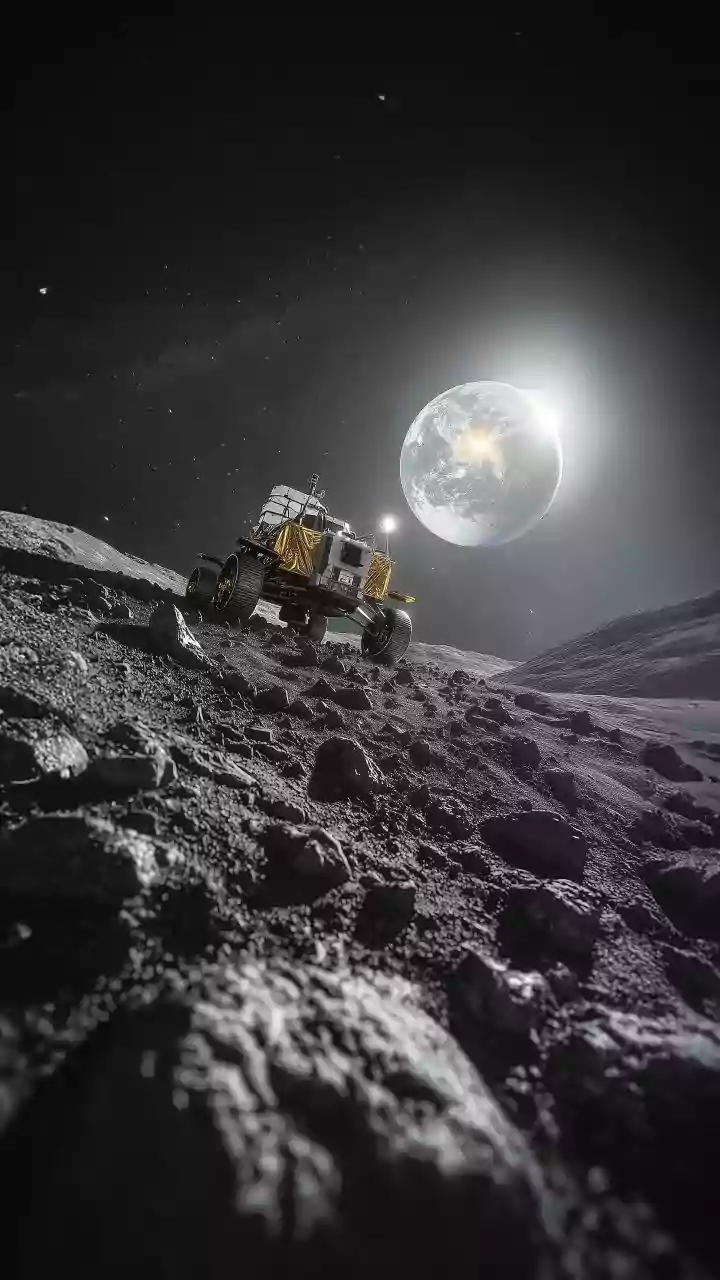
This newfound understanding has profound practical implications. For nations with ambitious lunar programs like India, knowing the soil composition is crucial. It informs the design of rovers, habitats, and resource extraction technology. A groundbreaking study in July 2026 from India's Physical Research Laboratory did exactly this, directly connecting measurements from the Chandrayaan-3 rover at its Shiv Shakti landing site with the composition of ALHA 81005, the very first meteorite identified as being from the Moon. This analysis revealed that the soil at the lunar south pole has lower aluminum and higher iron and magnesium compared to typical highland areas. This kind of detailed chemical map, made possible by comparing in-situ data with meteorite analysis, makes future missions safer and more efficient. It helps scientists predict where to find valuable resources like water ice, which may have been delivered by these same water-rich meteorites.